Paver Stones vs Concrete: Pros, Cons, and Long-Term Repairability

Paver Stones vs Concrete: Pros, Cons, and Long-Term Repairability
Paver Stones vs Concrete: The Fast Choice for Your Outdoor Space
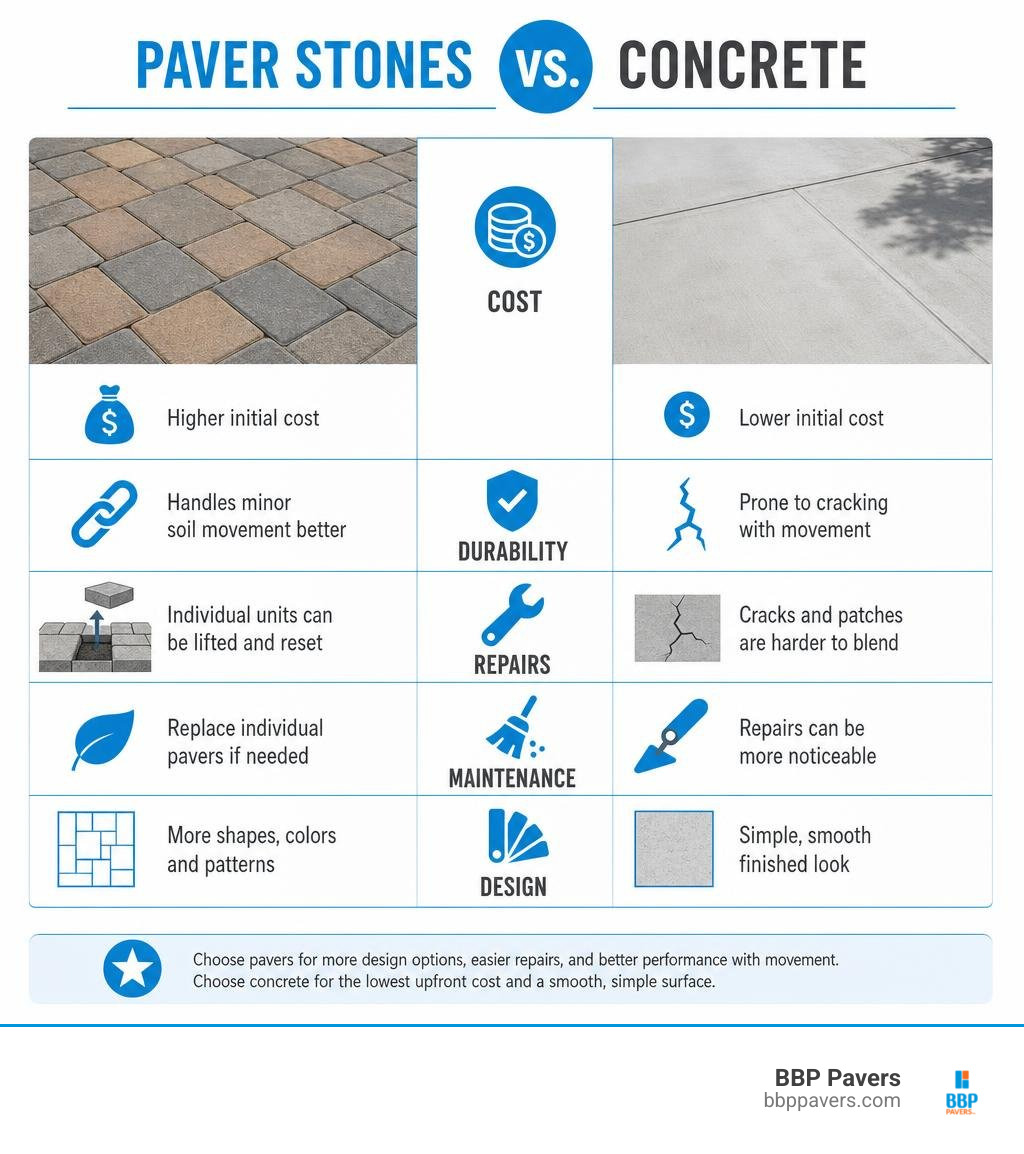
Choose paver stones when you want more design options, easier repairs, and a surface that can better handle minor soil movement. Choose concrete when your main goal is the lowest upfront cost and a smooth, simple surface.
Pavers cost more to install because each unit sits on a prepared base and is placed individually. But if one area settles, cracks, or needs access for a utility repair, the affected pavers can usually be lifted and reset. A concrete slab is generally less expensive at first, but cracks and patches can be difficult to hide.
For Bay Area patios, walkways, and driveways, the right choice comes down to your budget, design goals, drainage, and how long you plan to own the home. Proper base preparation matters for both materials. It is the difference between a hardscape that performs well and one that moves too soon.
Comparing Paver Stones vs Concrete: Durability, Lifespan, and Climate Resilience
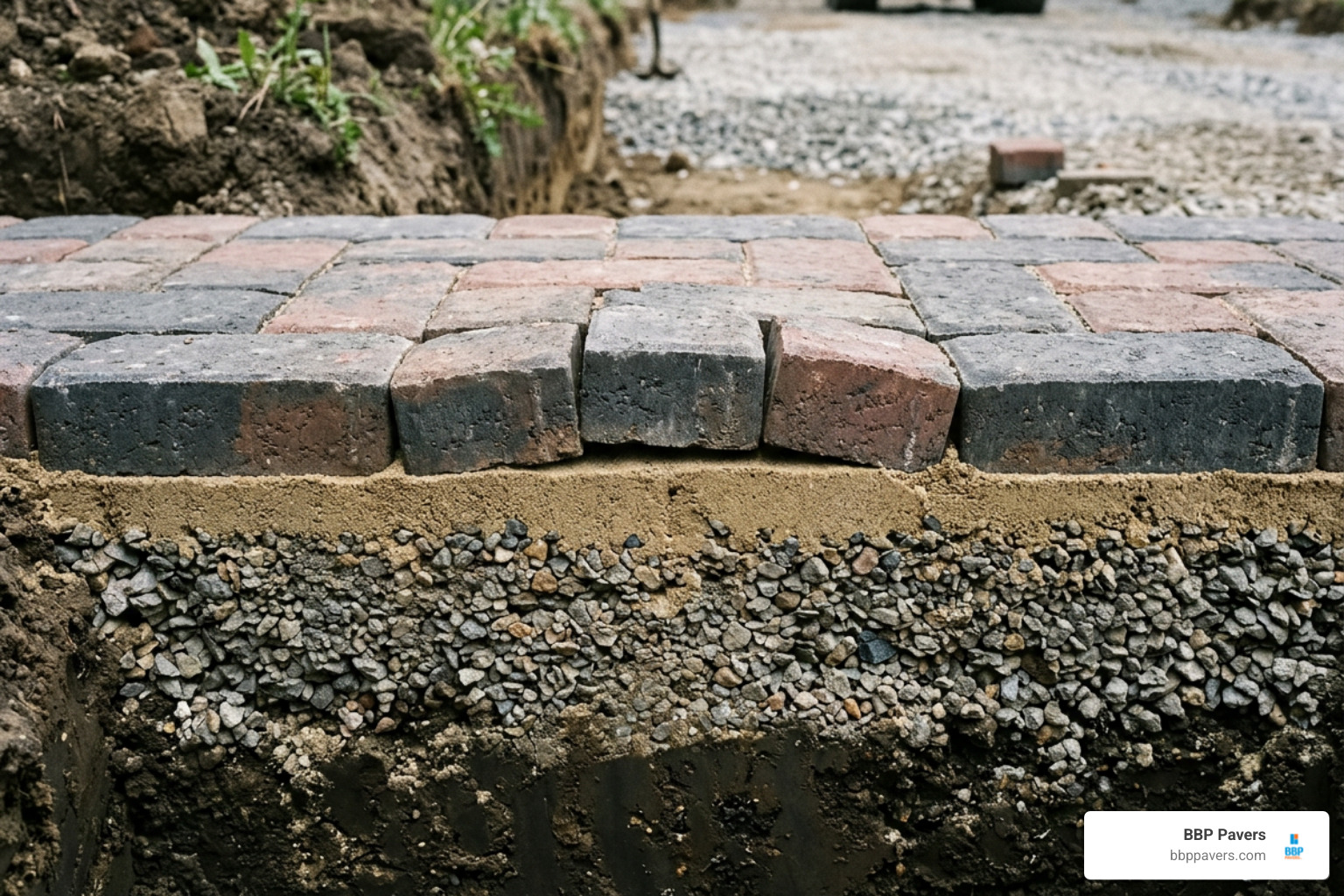
When evaluating the longevity of your outdoor hardscaping, understanding the physical structure of each material is key. Poured concrete forms a single, rigid monolithic slab across your yard. In contrast, an interlocking paver system consists of hundreds of individual units resting over a flexible aggregate base, locked tightly together by joint sand.
This structural distinction translates into a major difference in expected lifespan. Standard poured concrete typically lasts between 20 and 40 years before widespread cracking, scaling, or structural degradation requires major resurfacing or total demolition. High-density Concrete Pavers, manufactured under extreme hydraulic pressure and steam-cured, boast an expected lifespan of 30 to 50+ years.
Because pavers distribute surface loads across an integrated network of independent blocks, they avoid the structural tension that causes rigid slabs to snap. To dive deeper into structural differences, explore our comprehensive breakdown on Pavers vs Concrete Durability and Aesthetics for Outdoor Spaces.
Freeze-Thaw Performance and Shifting Soils
Climate and ground conditions play a decisive role in whether your surface stays pristine or cracks within a few seasons. In regions with freezing temperatures, such as the Northeast or mountainous zones, moisture infiltrates microscopic pores in concrete. When that trapped moisture freezes, it expands by roughly 9%, generating internal hydraulic pressure. Over repeated freeze-thaw cycles, unreinforced or standard slabs inevitably develop surface spalling and deep structural fractures.
Even in milder climates like Northern California, expansive clay soils swell during rainy winters and shrink during hot summers. A monolithic concrete slab cannot flex with this subgrade movement; it resists the pressure until the tension exceeds its tensile strength, resulting in uncontrolled surface cracks.
Paver systems thrive in shifting ground conditions. The sand-filled joints between units act as microscopic expansion joints. When the subgrade swells or experiences frost heave, the individual pavers shift slightly and settle back down naturally without fracturing the surface material.
Long-Term Repairability: Paver Stones vs Concrete Slabs
The true test of any outdoor investment comes when something underneath or on top of the surface goes wrong. Ground settling, invasive tree roots, or underground utility repairs eventually impact every property.
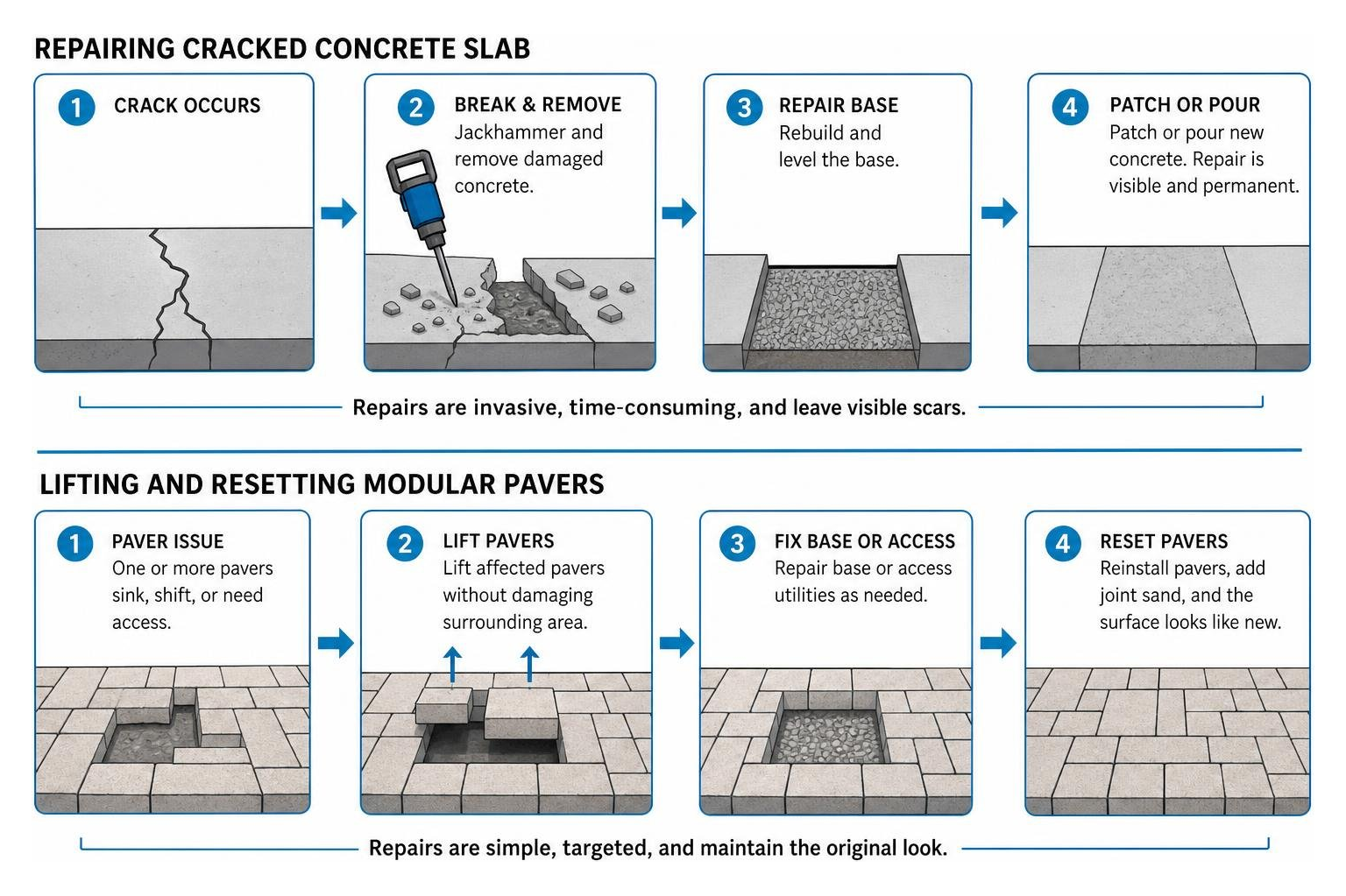
When concrete cracks or settles unevenly:
- Patching is visible: Patching compound never truly matches the color, texture, or weathering of the original slab, leaving an unsightly “scar.”
- Structural integrity is compromised: Once a slab cracks through, water enters the sub-base, accelerating erosion underneath.
- Demolition is required: Fixing underground plumbing or severe root damage requires a jackhammer, full section removal, and a costly pour.
When pavers shift, stain, or require utility access:
- Surgical repairs: You can pry up the specific units above the problem area, set them aside, address the sub-base or pipes, and re-lay the exact same stones.
- Stain removal: If motor oil or grease permanently discolors a stone, simply pull that single unit out and drop in a spare paver without disturbing the rest of the patio.
- No visual evidence: Once re-sanded and compacted, the repaired section blends seamlessly with the surrounding surface.
To see an objective mathematical model of lifecycle wear, check out the detailed Concrete vs Pavers — Patio and Driveway Comparison (2026) | MaterialCalc.
Cost Analysis: Upfront Investment vs 30-Year Lifetime Value
Budget is often the primary factor when homeowners choose between materials. While concrete is cheaper on day one, evaluating hardscaping strictly on initial price ignores maintenance, resurfacing, and eventual replacement costs over time.
| Metric / Cost Factor | Standard Poured Concrete | Stamped / Decorative Concrete | Interlocking Paver Stones |
|---|---|---|---|
| Upfront Cost (per sq. ft.) | $6 – $15 | $8 – $22 ($13–$22 in higher-cost regions) | $10 – $30 ($18–$35+ for premium installs) |
| Average 300 sq. ft. Patio Install | $1,800 – $4,500 | $4,500 – $5,500 | $6,000 – $9,000+ |
| Expected Lifespan | 20 – 40 Years | 20 – 30 Years | 30 – 50+ Years |
| Routine Maintenance Schedule | Clean & seal every 3–5 yrs | Reseal every 2–3 yrs ($1–$2/sq. ft.) | Re-sand every 1–2 yrs ($0.50–$1/sq. ft.), seal optional |
| 10-Year Cumulative Cost (300 sq. ft.) | ~$3,000 – $5,500 | ~$6,000 – $7,500 | ~$7,500 – $11,000 |
| 30-Year Cumulative Cost (400 sq. ft.) | ~$6,300 (includes install + resurfacing) | ~$8,500 – $10,500 (install + frequent resealing) | ~$9,400 (install + minimal spot repairs) |
| Resale ROI at Home Sale | 50% – 60% | 55% – 65% | 70% – 80% |
Upfront Installation Costs: Paver Stones vs Concrete
A standard poured concrete slab carries the lowest initial price tag because the installation process is straightforward and fast. Crews build wooden forms, lay wire mesh or rebar, and pour the liquid mix directly from a truck.
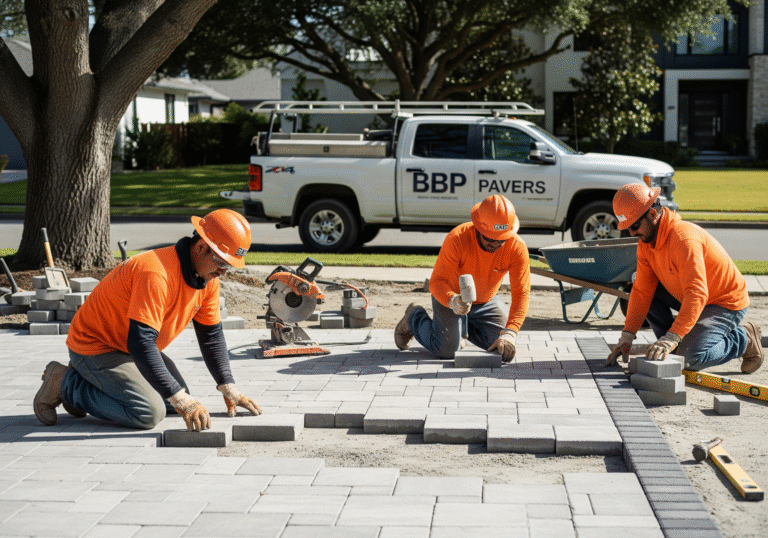
Interlocking Pavers carry a higher upfront installation cost because they require significantly more labor, equipment, and materials. Crews must excavate 6 to 10 inches of soil, haul in and mechanically compact multiple layers of crushed stone aggregate, screed bedding sand, and hand-lay hundreds of individual blocks before compacting the entire field. For a detailed breakdown of labor, equipment, and material drivers, see our guide on Why Do Pavers Cost So Much and review our Paver Patio Installation Cost resource.
Long-Term Maintenance Costs and Resale ROI
While pavers have a higher starting price, their long-term maintenance costs are predictable and manageable. Stamped concrete surfaces demand a fresh application of high-grade acrylic sealer every 2 to 3 years to maintain color and prevent moisture intrusion. If you hire this out, expect to pay $1 to $2 per square foot each cycle.
Paver systems primarily require occasional joint sand replenishment ($0.50 to $1 per square foot every few years) and simple spot weeding if polymeric sand is not used.
When it comes time to sell your home, real estate market data demonstrates that paver installations yield a significantly higher return on investment. Homeowners typically recoup 70% to 80% of their paver patio investment at sale, compared to just 50% to 60% for standard concrete slabs. Premium curb appeal, custom textures, and guaranteed crack-free surfaces make a lasting impression on prospective buyers. For full financial trends, review the latest Do Pavers Increase Home Value Data.
Aesthetics, Design Flexibility, and Best Hardscape Applications
Your outdoor space should feel like a seamless extension of your interior architecture. The material you select determines how well your hardscape complements your home’s exterior colors, rooflines, and garden layout.

Standard brushed concrete offers a clean, utilitarian aesthetic, but it lacks architectural warmth. Stamped concrete attempts to mimic stone or brick by pressing textured polyurethane mats into wet concrete. While stamped concrete looks great immediately after installation, its repeating patterns can look artificial upon close inspection.
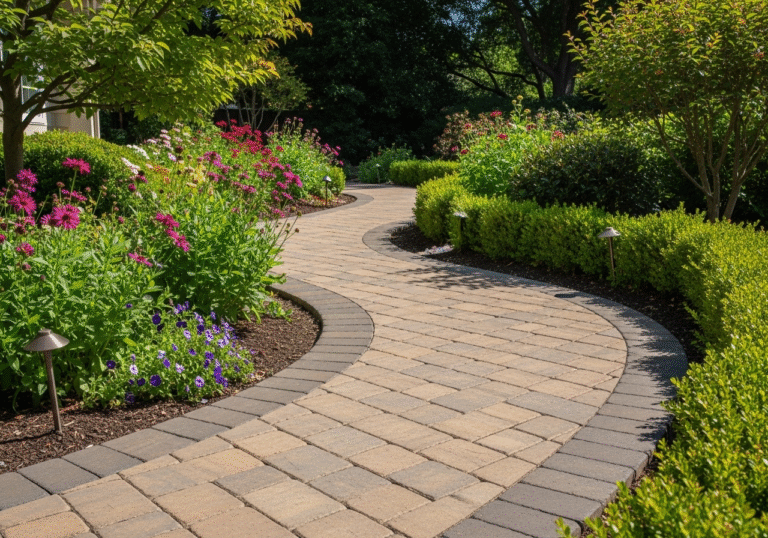
Paver stones deliver unmatched design versatility. With hundreds of shapes, multi-hue color blends, and textures ranging from tumbled antique cobblestones to sleek architectural slabs, you can create intricate layouts including herringbone, basketweave, running bond, and circular motifs. Homeowners can also integrate distinct materials like Natural Stone vs Porcelain Pavers Which is Better into focal areas.
Driveway Performance: Stamped Concrete vs Interlocking Pavers
Driveways endure immense mechanical stress from vehicle weight, turning tires, and oil drips.
- Weight Distribution: Interlocking pavers boast a compressive strength exceeding 8,000 to 10,000 PSI—roughly double that of typical 4,000 PSI poured concrete slabs. Heavy trucks, RVs, and delivery vans distribute weight across individual units without cracking the driveway field.
- Tire Scuffing & Stains: Turning vehicle wheels can leave unsightly rubber scuffs on sealed stamped concrete, and motor oil stains can permanently mar decorative coatings. Paver driveways handle friction better, and heavily stained individual pavers can be replaced in minutes.
- Winter Plowing: Smooth concrete edges allow snowplows to glide easily, though steel plow blades can scratch acrylic coatings on stamped concrete. Well-installed paver driveways with tight, flush joints handle snow blowers and plastic-edged plows safely without snagging.
Before making a driveway commitment, read the essential facts on What Nobody Tells You Driveway Paver Installation.
Patio and Pool Deck Applications
Around backyard patios, outdoor kitchens, and swimming pools, surface safety and bare-foot comfort matter most.
Stamped concrete is notoriously slick when wet because the smooth topical sealers create a glass-like barrier over the slab. While contractors can mix anti-slip aggregate into the sealer, that grit wears down over time, requiring constant reapplication around pool surrounds. Furthermore, dark stamped concrete absorbs solar radiation, making it painfully hot for bare feet on sunny summer afternoons.
Paver stones provide natural slip resistance through their textured surface profiles and sand-filled joints, which allow standing water to drain quickly off the walking path. For a comprehensive comparison of surface temperatures, slip ratings, and cost factors, review our guide on Pool Deck Pavers Best Materials Cost alongside industry insights from Stamped Concrete vs. Pavers – What’s Best? What Costs Less? – Concrete Network.
Installation Timeline, Soil Preparation, and Maintenance Demands
The structural longevity of any hardscape is determined entirely by what lies underneath the surface. Skipping proper excavation, subgrade compaction, or drainage slopes will destroy both poured concrete and paver systems.
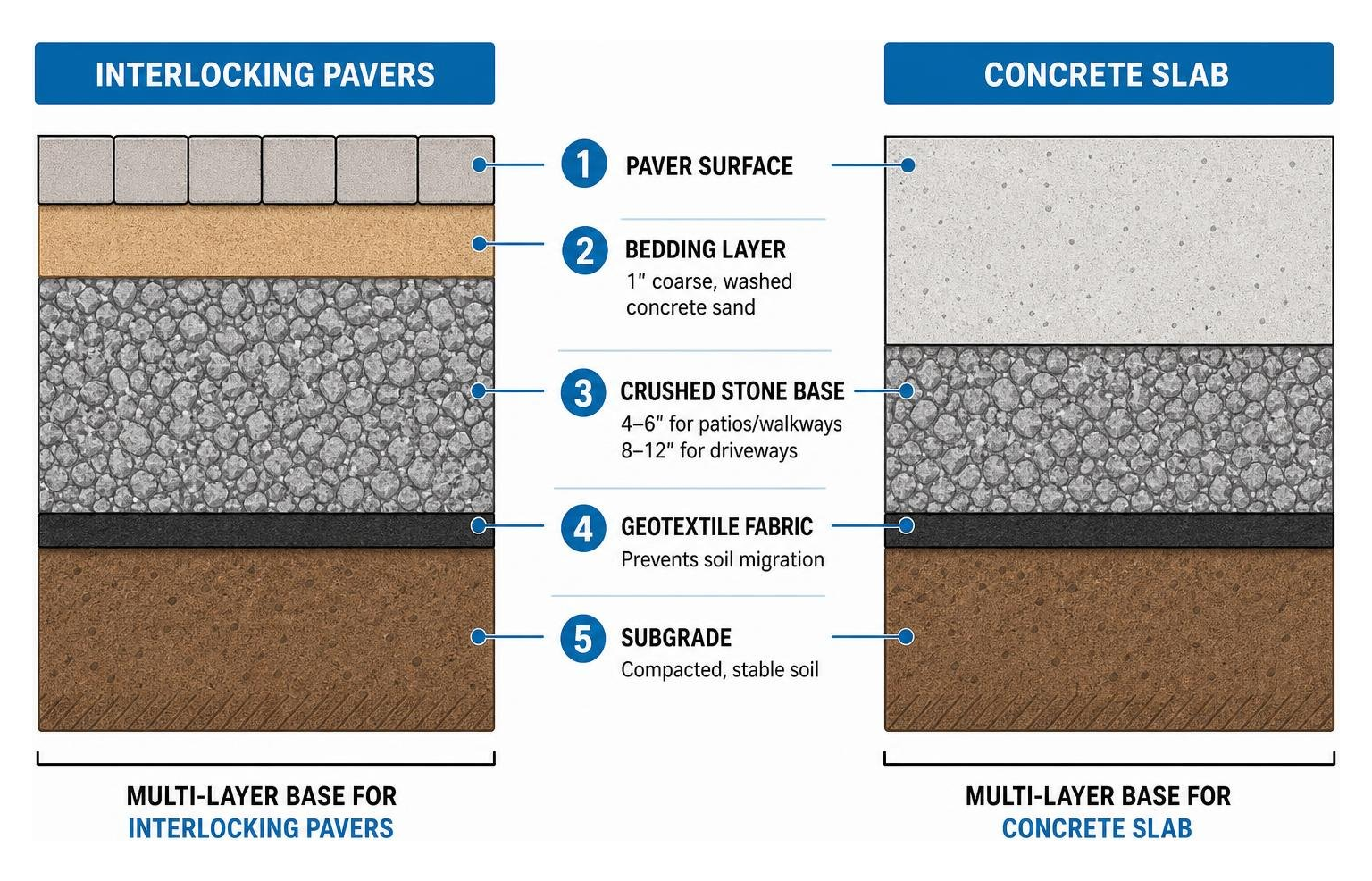
A professional hardscape foundation requires:
- Excavation & Subgrade Compaction: Removing topsoil to reach stable, unyielding subsoil.
- Geotextile Fabric: Preventing underlying clay or silt from migrating upward into the clean aggregate foundation.
- Crushed Stone Base: Installing 4 to 6 inches of compacted aggregate for patios and walkways, or 8 to 12 inches for driveways.
- Bedding Layer: Screeding a uniform 1-inch layer of coarse, washed concrete sand.
- Edge Restraints: Securing perimeter borders with heavy-duty concrete toe-ins or spiked industrial plastic edging to prevent horizontal creep.
To protect your investment against premature failure, avoid the critical errors outlined in our guide on 5 Paver Installation Mistakes to Avoid for a Perfect Finish.
Installation Steps and Surface Usability
The installation timeline and how quickly you can use the surface differ substantially between materials:
- Concrete Slabs: Pouring concrete takes only 1 to 2 days for most residential patios, but the curing process requires strict patience. Foot traffic must wait at least 24 to 48 hours, and vehicles must stay off the slab for a minimum of 7 full days to allow the concrete to reach sufficient structural strength.
- Paver Systems: Paver installation takes longer—typically 3 to 5 days for a patio or driveway—due to the meticulous hand placement of each block and border cut. However, once the pavers are compacted and polymeric sand is swept and activated in the joints, the surface is 100% ready for immediate use. There is zero curing downtime.
For an in-depth, step-by-step installation overview, see our walkthrough on How to Install Pavers.
Routine Upkeep: Sealing, Weed Prevention, and Joint Care
Keeping your hardscape looking new requires basic seasonal upkeep:
- Concrete & Stamped Concrete: Must be pressure-washed and resealed every 2 to 3 years to maintain color and keep water from penetrating microscopic surface pores.
- Paver Stones: Modern paver installations use polymeric sand—a blend of graded sand and polymer binding agents that hardens upon water activation. Polymeric sand locks the joints, stays flexible under minor movement, prevents sand washout during heavy rains, and stops weed germination and insect burrowing. Sealing pavers is optional, though it enhances color vibrancy and protects against oil or wine stains.
Learn best practices for application and timing in our guide on How to Seal Pavers.
Frequently Asked Questions About Pavers and Concrete
Will paver stones shift or become uneven over time?
Pavers only shift or settle if the underlying base was improperly installed. When the sub-base is excavated to the proper depth, compacted in thin lifts with commercial plate compactors, and contained by rigid edge restraints, pavers will not shift.
Minor natural settling over 10 to 15 years can be corrected in less than an hour: simply remove the affected pavers, add a handful of bedding sand to relevel the subgrade, set the pavers back in place, and re-compact.
Can you pour concrete over an existing paver patio or vice versa?
Pouring concrete over an existing paver patio is not recommended. The individual paver blocks will shift underneath the rigid concrete slab as moisture changes, causing the new concrete to crack rapidly.
Conversely, installing thin overlay pavers over a structurally sound, uncracked concrete slab is possible if there is sufficient elevation clearance around door thresholds and proper perimeter drainage slopes. However, if the underlying concrete slab has deep structural cracks, those cracks will telegraph through to the surface overlay.
How soon can you walk or drive on concrete versus paver stones after installation?
You can walk and drive on paver stones immediately after the final joint sand compaction is complete. Poured concrete requires a 24- to 48-hour cure window for light foot traffic and at least 7 days before parking any vehicle on the slab.
Conclusion
Both materials have a place in residential hardscaping, but they serve different goals. Standard poured concrete remains the go-to solution for budget-driven projects, simple utility pads, or homeowners seeking the lowest initial cost.
However, when you weigh design flexibility, freeze-thaw durability, long-term repairability, and higher resale value, interlocking paver stones deliver superior lifetime value. Instead of worrying about permanent slab cracks or expensive demolition down the road, pavers provide a flexible, modular system that handles shifting soils and heavy loads with timeless elegance.
For a deeper dive into decorative concrete alternatives, explore our Pavers vs Stamped Concrete Definitive Comparison.
Ready to transform your Bay Area property with custom outdoor living spaces built to last? BBP Pavers brings over 20 years of local hardscape expertise, premium materials, safety-first installation standards, and a 100% satisfaction guarantee. Contact our team today for a free design consultation and quote!