Pool Deck Pavers: Best Materials, Costs and What to Avoid

Are you planning a pool upgrade but feeling overwhelmed by all the material options? When evaluating pool deck pavers best materials cost, most homeowners face the same challenge: too many choices, unclear pricing, and no easy way to compare quality versus budget. Choosing the wrong material can cost you thousands in repairs within just a few years.
This guide covers everything you need to know about pool deck pavers best materials cost — from travertine and concrete to porcelain and bluestone — including real price ranges, installation steps, and the most common mistakes to avoid. At BBP Pavers, based in Concord, CA, we have helped hundreds of Bay Area homeowners make this decision with confidence.
Ready to upgrade your pool deck? Request a free quote from BBP Pavers today.
What Are Pool Deck Pavers and Why Do They Matter?
Pool deck pavers are individual units — made from concrete, natural stone, brick, travertine, or porcelain — that are installed around a swimming pool to create a safe, attractive, and weather-resistant surface.
Unlike poured concrete, pavers are modular. That means they can be replaced individually if one cracks or stains, which dramatically reduces long-term maintenance costs. They also offer superior drainage, better slip resistance, and a much wider range of design options.
When evaluating pool deck pavers best materials cost, it helps to understand that your choice of material affects not just the upfront price but also the maintenance schedule, surface temperature, longevity, and how the space feels underfoot on a hot summer day.
For homeowners in Concord, Walnut Creek, Lafayette, and surrounding areas, the local climate plays a significant role in material performance. Mild Bay Area winters and warm, dry summers make certain materials perform better here than in harsher climates.
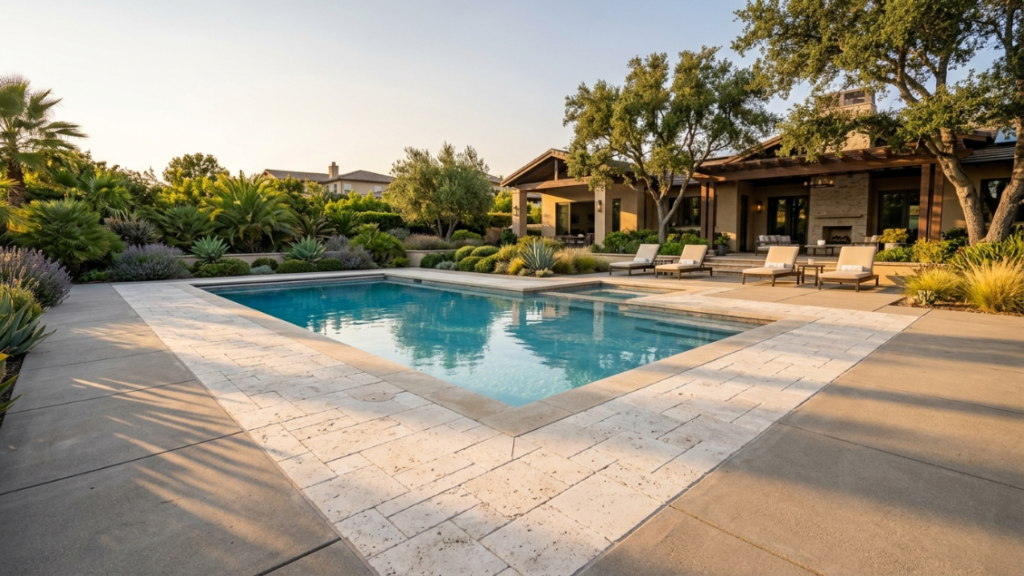
The 6 Best Materials for Pool Deck Pavers
When homeowners research pool deck pavers best materials cost, these six options consistently rise to the top. Each has a distinct profile of pros, cons, and typical price ranges.
1. Travertine Pavers
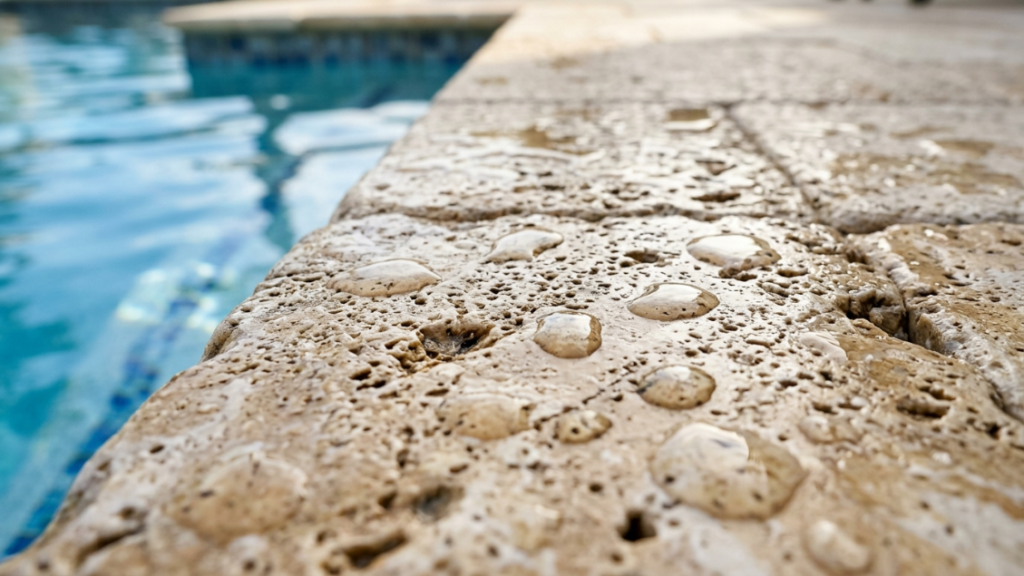
Travertine is one of the most popular natural stone options for pool decks, and for good reason. Its naturally porous surface stays cooler underfoot than concrete, even in direct sunlight — a major advantage in warm climates.
Key advantages:
- Stays cool even on hot days
- Naturally slip-resistant texture
- Elegant, timeless appearance
- Durable with proper sealing
Average cost: $15–$30 per square foot installed
Travertine is a top-tier choice when analyzing pool deck pavers best materials cost because its durability and low surface temperature make it one of the most comfortable options available. BBP Pavers installs travertine pool decks throughout the Concord and Walnut Creek areas with excellent client feedback.
2. Concrete Pavers
Concrete pavers offer the most flexibility in shape, size, color, and texture. They are manufactured to precise dimensions and are generally more affordable than natural stone, making them a go-to option for budget-conscious homeowners who still want a clean, professional finish.
Key advantages:
- Wide variety of styles and colors
- Consistent sizing for easier installation
- Moderate cost
- Can mimic natural stone appearance
Average cost: $8–$18 per square foot installed
When researching pool deck pavers best materials cost, concrete pavers regularly appear as the most cost-effective starting point. Explore BBP Pavers’ pool deck services for concrete paver options available in your area.
3. Natural Bluestone
Bluestone delivers a sophisticated, upscale look that works especially well in modern or transitional landscape designs. It is dense, durable, and has a naturally textured surface that provides grip when wet.
Average cost: $18–$35 per square foot installed
4. Porcelain Pavers
Porcelain is a newer entrant to the pool deck market and has gained significant traction due to its near-zero water absorption and resistance to staining, fading, and mold. It is one of the most low-maintenance options available.
Key advantages:
- Extremely low maintenance
- Resistant to staining and fading
- Available in large-format tiles for a contemporary look
- Frost-resistant
Average cost: $20–$40 per square foot installed
5. Brick Pavers
Classic and durable, brick pavers bring a warm, traditional aesthetic to pool decks. They are slip-resistant and perform well in moderate climates. However, they can absorb heat more than travertine or porcelain.
Average cost: $10–$20 per square foot installed
6. Flagstone
Flagstone refers to irregularly shaped slabs of natural stone — sandstone, limestone, or slate. It creates a natural, organic look that blends well with garden-style landscaping.
Average cost: $15–$30 per square foot installed
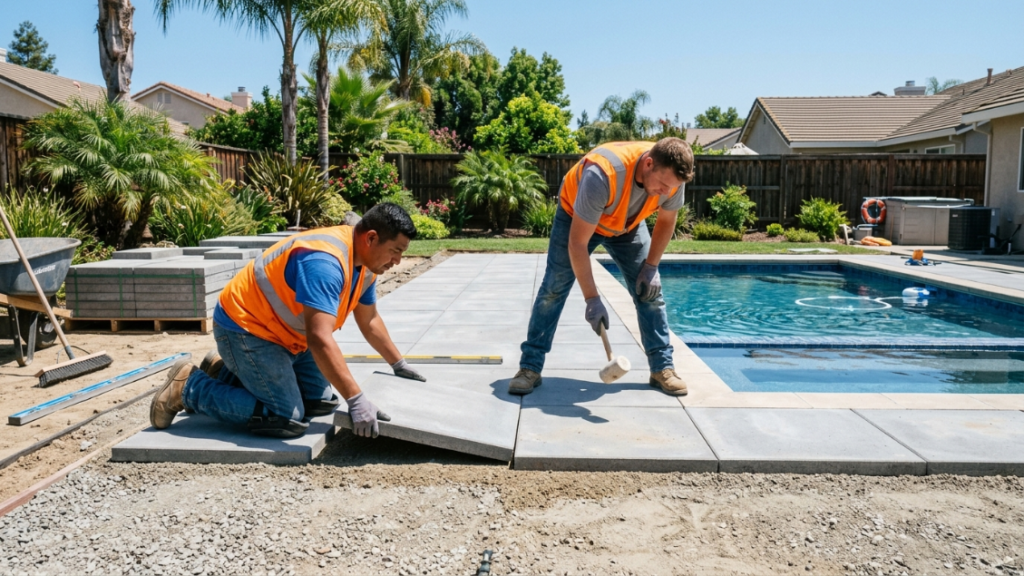
How to Choose the Right Pool Deck Paver Material
Choosing the right material for your project goes beyond aesthetics. Here are the key criteria to evaluate when comparing pool deck pavers best materials cost options.
Heat Resistance
Surface temperature matters enormously around a pool. Materials like travertine and lighter-colored concrete stay significantly cooler than dark natural stone or standard brick. If children or barefoot adults will be using the deck frequently, this factor deserves serious weight.
Slip Resistance
All pool deck surfaces must meet basic safety standards for wet conditions. Look for a Coefficient of Friction (COF) of 0.6 or higher. Travertine, brushed concrete, and textured porcelain all perform well in this category.
Maintenance Requirements
When calculating pool deck pavers best materials cost over the long term, maintenance is a major variable. Porcelain requires almost no sealing. Travertine benefits from annual sealing. Concrete pavers need periodic resealing every two to three years.
Climate Compatibility
In the Bay Area, freeze-thaw cycles are rare, so frost resistance is less of a concern than in colder regions. What matters more here is UV resistance and the ability to handle occasional rain without becoming slippery. Most of the materials listed above perform well in the Concord, Fremont, and Palo Alto microclimates.
Design Cohesion
Your pool deck should complement your home’s exterior, patio, and landscaping. If you already have patio pavers or a walkway installed, matching or coordinating the materials creates a cohesive outdoor environment that adds to resale value.
What to Avoid When Installing Pool Deck Pavers
Knowing what not to do is just as important as knowing best practices. These are the most common mistakes homeowners make when managing pool deck pavers best materials cost projects.
- Choosing purely on price. The cheapest material up front often costs the most over time. Low-grade concrete pavers may fade, crack, or shift within a few years.
- Skipping proper base preparation. A poorly compacted or incorrectly graded base leads to uneven settling, pooling water, and tripping hazards.
- Ignoring drainage planning. Pool decks need a slope of at least 1/8 inch per foot away from the pool to prevent water from collecting under pavers.
- Using indoor tile outdoors. Many homeowners mistakenly use interior porcelain tile outside. Outdoor pavers must be rated for exterior, wet conditions.
- Neglecting sealing. Natural stone in particular is porous and will absorb pool chemicals and organic matter without proper sealing, leading to staining and deterioration.
- Hiring unlicensed contractors. Always verify licensing, insurance, and reviews before hiring. BBP Pavers is fully licensed and carries a warranty on all installations.
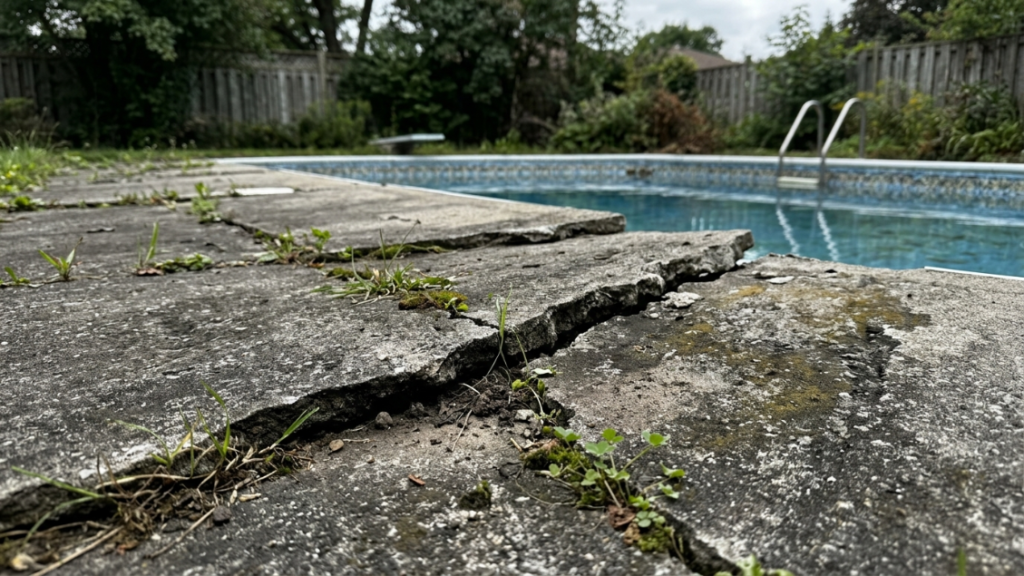
Real Client Stories: BBP Pavers in Action
Understanding pool deck pavers best materials cost is much easier when you see how real projects play out. Here are two examples from BBP Pavers clients in the East Bay.
Case Study 1 — Walnut Creek Travertine Pool Deck
A homeowner in Walnut Creek contacted BBP Pavers after their poured concrete pool deck developed large cracks and became dangerously slippery. They were considering replacing it with a similar concrete slab to save money.
After a consultation, the BBP Pavers team recommended travertine pavers. Yes, the upfront cost was higher, but the homeowner would eliminate the need for anti-slip coatings, reduce long-term maintenance costs, and dramatically improve the look of their backyard.
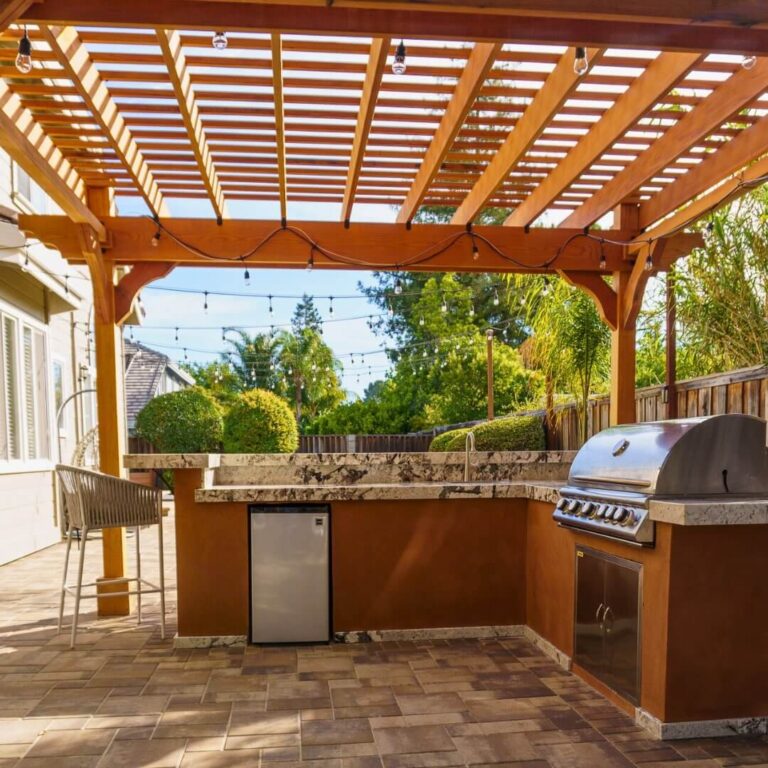
The project was completed in four days. The result was a 620 sq ft travertine pool deck that complemented an existing outdoor kitchen and BBQ island installed the prior year.
“BBP Pavers did an outstanding job. The travertine looks incredible and the deck is so much safer for our kids. Worth every penny.” — Maria T., Walnut Creek, CA (Google Review)
Case Study 2 — Concord Concrete Paver Renovation
A family in Concord wanted to upgrade their aging pool area with a budget-conscious approach. Their priorities were durability, a clean modern look, and staying under $12,000 for a 700 sq ft area.
BBP Pavers recommended a large-format brushed concrete paver in a light gray tone. The final project came in at $11,400, included retaining wall work along one side of the pool, and was completed in five days.
“Really impressed with how professional the team was. They explained everything clearly and the final result exceeded our expectations.” — James R., Concord, CA (Yelp Review)
You can find more reviews on Google Maps and Yelp.
Thinking about a pool deck upgrade? See all BBP Pavers pool deck services here or get in touch for a free estimate.
Pool Deck Pavers vs. Poured Concrete: Which Is Better?
This is one of the most frequently asked questions when evaluating pool deck pavers best materials cost, and the answer depends on priorities.
Pool deck pavers outperform poured concrete in most long-term scenarios. Pavers allow for individual unit replacement when damaged, provide better natural drainage between joints, offer superior design flexibility, and do not develop the large surface cracks typical of monolithic concrete slabs exposed to ground movement and temperature shifts.
| Feature | Poured Concrete | Pavers |
|---|---|---|
| Upfront Cost | Lower | Moderate to Higher |
| Repairability | Difficult | Easy (individual units) |
| Drainage | Poor | Excellent |
| Design Options | Limited | Extensive |
| Longevity | 15–25 years | 25–50+ years |
| Slip Resistance | Moderate | High (textured options) |
For homeowners comparing pool deck pavers best materials cost against plain concrete, the long-term math nearly always favors pavers when factoring in repair, reseal, and resurfacing costs.
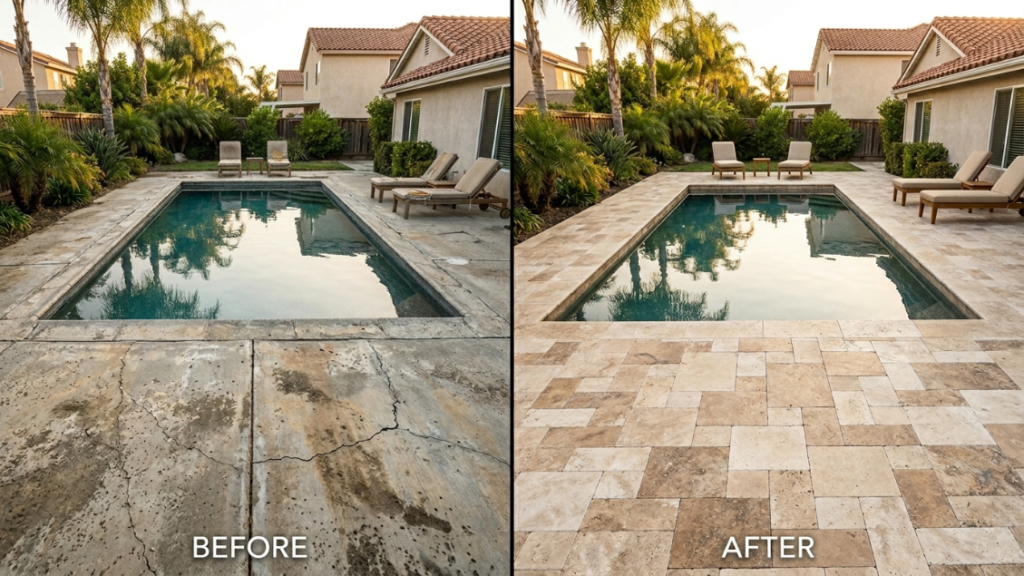
How Pool Deck Pavers Are Installed: Step-by-Step
Knowing what goes into a professional installation helps you evaluate quotes and understand what pool deck pavers best materials cost covers.
Step 1: Site Assessment and Planning
The contractor measures the area, evaluates drainage slope, checks for existing underground utilities, and selects the appropriate base depth. In most Bay Area projects, BBP Pavers starts with a site visit before providing any pricing.
Step 2: Excavation
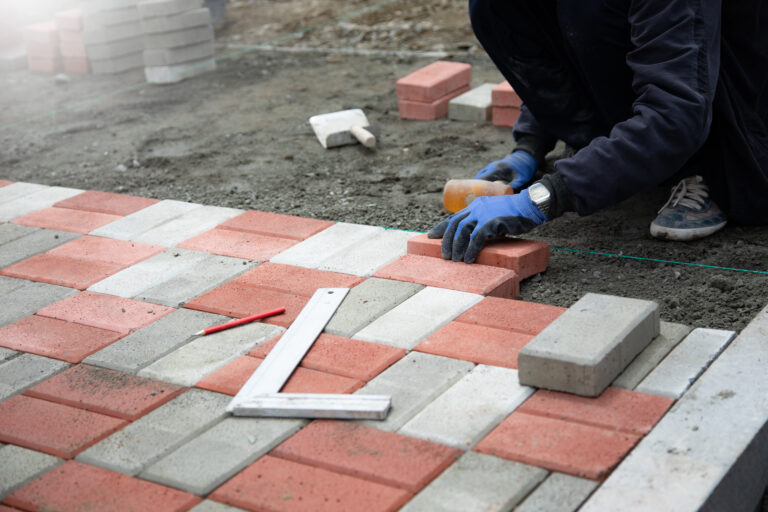
The existing surface is removed and soil is excavated to the required depth — typically 6 to 8 inches for pool deck applications to accommodate the base layers.
Step 3: Base Layer Installation
A compacted gravel base (crushed stone, typically Class II base) is laid and compacted in layers. This base provides structural support and ensures proper drainage.
Step 4: Sand Bedding
A 1-inch layer of coarse sand is screeded over the base to create a level surface for the pavers.
Step 5: Paver Laying
Pavers are laid according to the chosen pattern — herringbone, running bond, basketweave, or custom designs — with consistent joint spacing.
Step 6: Compaction and Joint Sand
After laying, a plate compactor is run over the pavers to seat them firmly. Polymeric sand is swept into the joints and compacted to lock pavers in place and resist weed growth.
Step 7: Sealing
Depending on the material, a penetrating or surface sealer is applied to protect against pool chemicals, staining, and UV fading.
Pool Deck Paver Maintenance Tips
Protecting your investment means staying on top of routine care. These are the key maintenance practices when managing pool deck pavers best materials cost over time.
- Rinse the deck weekly to remove pool chemicals, sunscreen residue, and organic debris.
- Reseal natural stone (travertine, bluestone, flagstone) every one to two years.
- Reseal concrete pavers every two to three years.
- Inspect joints annually and refill with polymeric sand where needed.
- Address any sunken or shifted pavers immediately to prevent tripping hazards and water intrusion.
- Avoid using harsh chemical cleaners that can break down sealers or stain natural stone.
BBP Pavers offers maintenance consultations for clients across Lafayette, Orinda, Moraga, and surrounding areas. Check out our FAQ page for answers to common maintenance questions.
People Also Ask: Pool Deck Pavers
How much does it cost to install pool deck pavers?
The cost to install pool deck pavers typically ranges from $8 to $40 per square foot depending on material, project size, and local labor rates. A standard 500 sq ft pool deck runs between $4,000 and $20,000. Understanding pool deck pavers best materials cost helps homeowners plan realistic budgets and avoid surprises during the quote process.
What is the best material for pool deck pavers?
Travertine is widely considered the best all-around material for pool decks due to its natural slip resistance, cool surface temperature, and durability. Porcelain is the best choice for homeowners prioritizing low maintenance. Concrete pavers offer the best value when pool deck pavers best materials cost is the primary concern.
How long do pool deck pavers last?
Most quality pool deck pavers last 25 to 50 years with proper installation and maintenance. Concrete pavers at the lower end of quality may need replacement or refacing after 15 to 20 years. Natural stone options like travertine and bluestone can last 50 years or more.
Can I install pool deck pavers myself?
While DIY installation is technically possible, pool deck paver projects involve complex drainage grading, base compaction, and pattern layout that require professional equipment and experience. Errors in base preparation are the leading cause of paver failure. For projects where pool deck pavers best materials cost represents a significant investment, professional installation protects that investment with a workmanship warranty.
Are pool deck pavers slippery when wet?
Not all pavers are equally slip-resistant. Textured surfaces — such as tumbled travertine, brushed concrete, or sandblasted porcelain — provide strong grip when wet. Polished or honed surfaces can be slippery and should be avoided around pools. Always ask your contractor about the Coefficient of Friction rating before selecting a material.
Conclusion: Make the Right Choice for Your Pool Deck
Choosing the right material for your pool deck is a long-term decision that affects safety, maintenance, curb appeal, and resale value. Whether you are drawn to the natural elegance of travertine, the versatility of concrete pavers, or the ultra-low maintenance of porcelain, the key is understanding how pool deck pavers best materials cost applies to your specific project, climate, and budget.
The right contractor makes all the difference. At BBP Pavers, we bring years of experience, a fully trained installation crew, and a commitment to quality that is backed by our workmanship warranty. We serve homeowners across Concord, Walnut Creek, Lafayette, Moraga, Orinda, Fremont, Los Altos, Palo Alto, Atherton, and the broader Bay Area.
You can also explore our full range of outdoor services — including fire pits, pergolas, outdoor lighting, and artificial turf — to complete your dream backyard transformation.
Follow us on Facebook, Instagram, and Pinterest for project inspiration and before-and-after photos.
Ready to start your pool deck project? Contact BBP Pavers today for a free, no-obligation estimate. Call us at +1 844-497-3321 or fill out our contact form here.
BBP Pavers | The Best Paver Services in Concord, CA 4918 Clayton Rd, Concord, CA 94521, United States Phone: +1 844-497-3321 Email: bbppavers@gmail.com Office Hours: Monday–Friday 9 AM–5 PM | Saturday 9 AM–2 PM