Concrete Edging for Driveways: Practical Styles to Boost Curb Appeal

Concrete Edging for Driveways: Practical Styles to Boost Curb Appeal
Concrete Edging for Driveways: A Simple Way to Add Structure and Curb Appeal
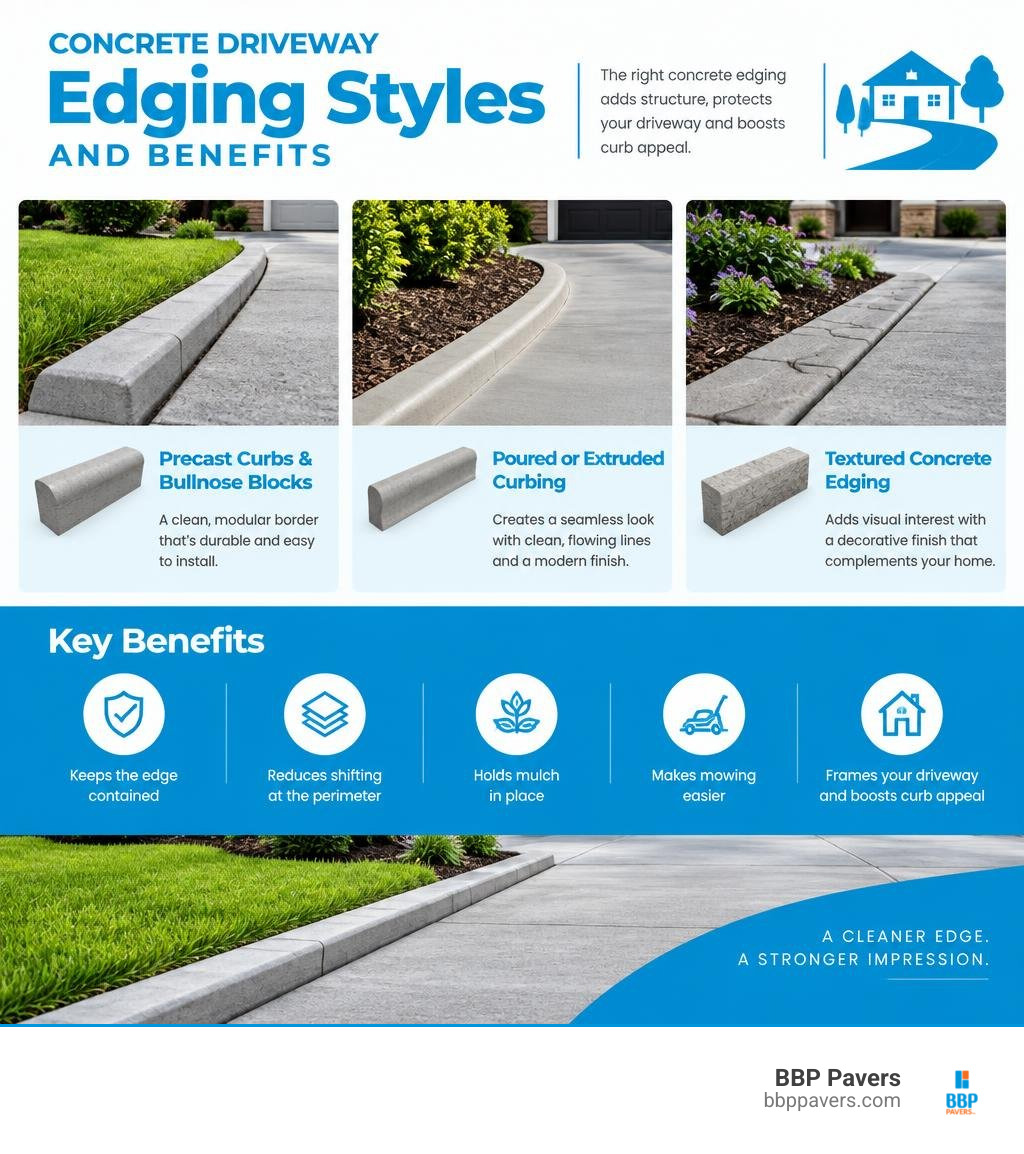
The best concrete edging for driveways matches your driveway style, handles expected vehicle traffic, and sits on a properly compacted, well-drained base. For most homes, choose precast bullnose edging for a neat modular border, continuous poured or extruded curbing for a seamless look, or textured concrete edging when you want a more decorative finish.
Concrete borders do more than create a clean line between pavers, lawn, and planting beds. They help contain the driveway edge, reduce shifting at the perimeter, hold mulch in place, and make mowing easier. They can also frame a paver driveway in a way that makes the entire front yard look more finished.
The important part is below the surface. Even durable concrete can tilt, crack, or settle when the soil is weak, drainage sends water beneath the border, or the gravel base was not compacted well. A professional installation should account for slope, water flow, soil conditions, and the height of the finished driveway.
This guide covers practical concrete driveway border styles, where each one works best, and what to look for before choosing an edge for your Bay Area home. Whether you are planning a new paver driveway or upgrading an existing asphalt or concrete slab, the right border profile can improve both long-term performance and everyday usability. A well-chosen edge also simplifies routine yard care by giving mower wheels a stable track and keeping turf roots from creeping into the driveway surface.
Popular Styles of Concrete Edging for Driveways
Choosing the right border profile balances visual framing with everyday utility. Vehicle tires occasionally clip border lines, garden hoses drag across beds, and lawn mowers ride along perimeter tracks. We recommend selecting a profile manufactured to withstand surface abrasion and subgrade pressure while complementing your home’s exterior palette.
Precast Concrete Curbs and Bullnose Blocks
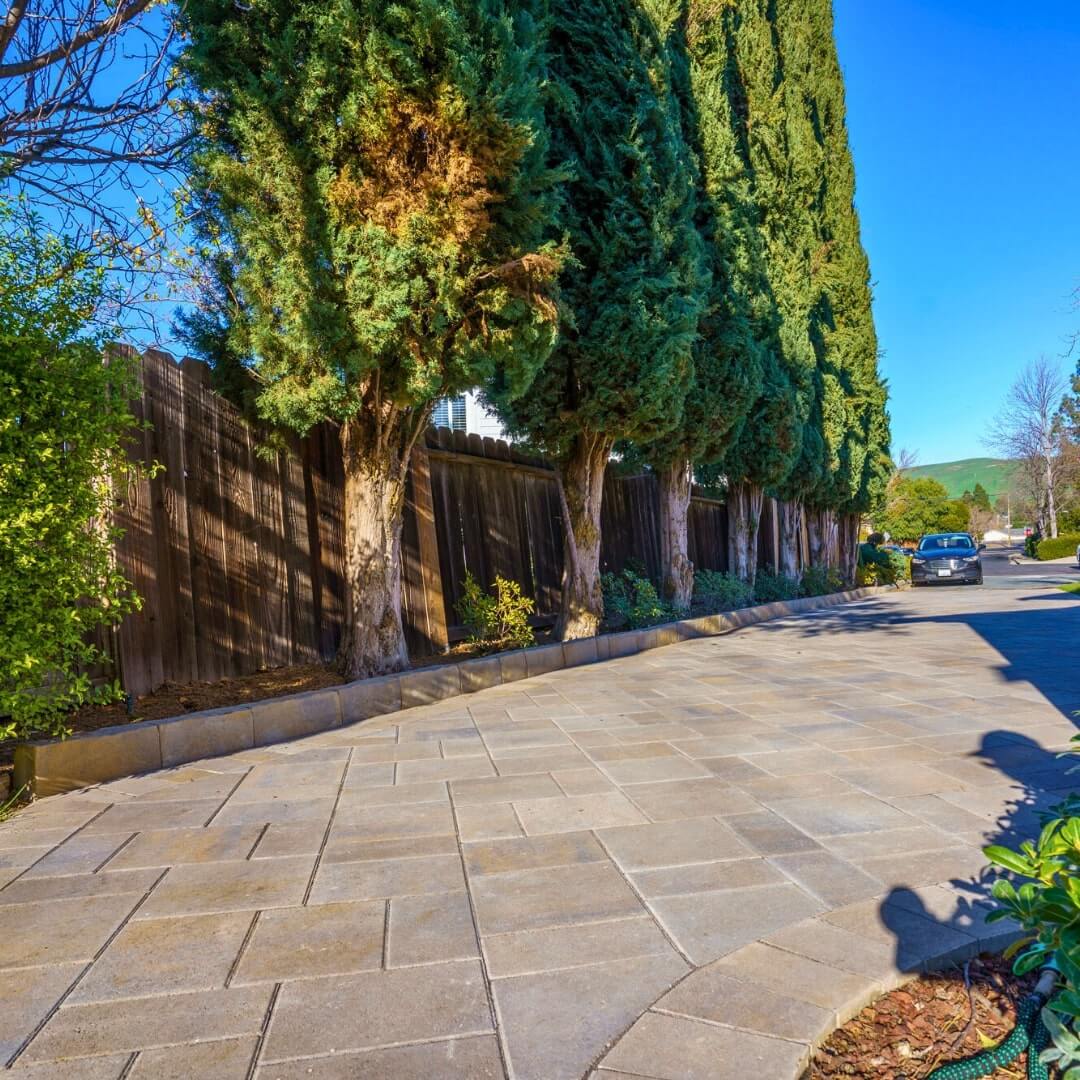
Precast modular concrete units offer high dimensional uniformity and rapid setup. Factory-cured under tightly managed conditions, wet-cast modular units yield exceptional compressive strength. Many precast edging products feature integrated through-body color. This means any accidental surface nick or chip from heavy maintenance gear retains the same hue rather than exposing a pale aggregate core.
A standard profile in residential hardscaping is the bullnose path edging block. The rounded top surface eliminates sharp corners that can gouge low-profile tires or chip during routine yard care. Because the profile is smooth and consistent, it also creates a clean visual boundary without drawing attention away from the driveway surface itself.
Modular blocks excel on curved driveways. Installers can fan individual units along broad radius curves without requiring custom wet-saw slicing for every single unit. This makes precast curbs a practical choice for homes with circular drives, flared entries, or gently winding walkway transitions.
Poured-in-Place and Continuous Extruded Borders
For long, unbroken expanses where zero visible joints are preferred, continuous poured-in-place concrete or machine-extruded curbing provides a seamless perimeter.
Extruded curbing relies on specialized slip-form machines that feed a zero-slump concrete mixture directly onto a prepared trench line. As the machine travels, it packs and shapes an uninterrupted curb profile. This method works especially well on rolling terrain, where a continuous line can follow subtle grade changes without the visual interruptions of individual block joints.
Continuous curbs can incorporate internal steel rebar or structural synthetic fibers to reinforce tensile integrity across long spans. This continuous perimeter acts as a sturdy structural retaining rib against adjoining turf or garden soil. It also gives the driveway a crisp, architectural edge that reads as one deliberate design element rather than a series of separate pieces.
Textured and Chiseled Rock Form Liner Profiles
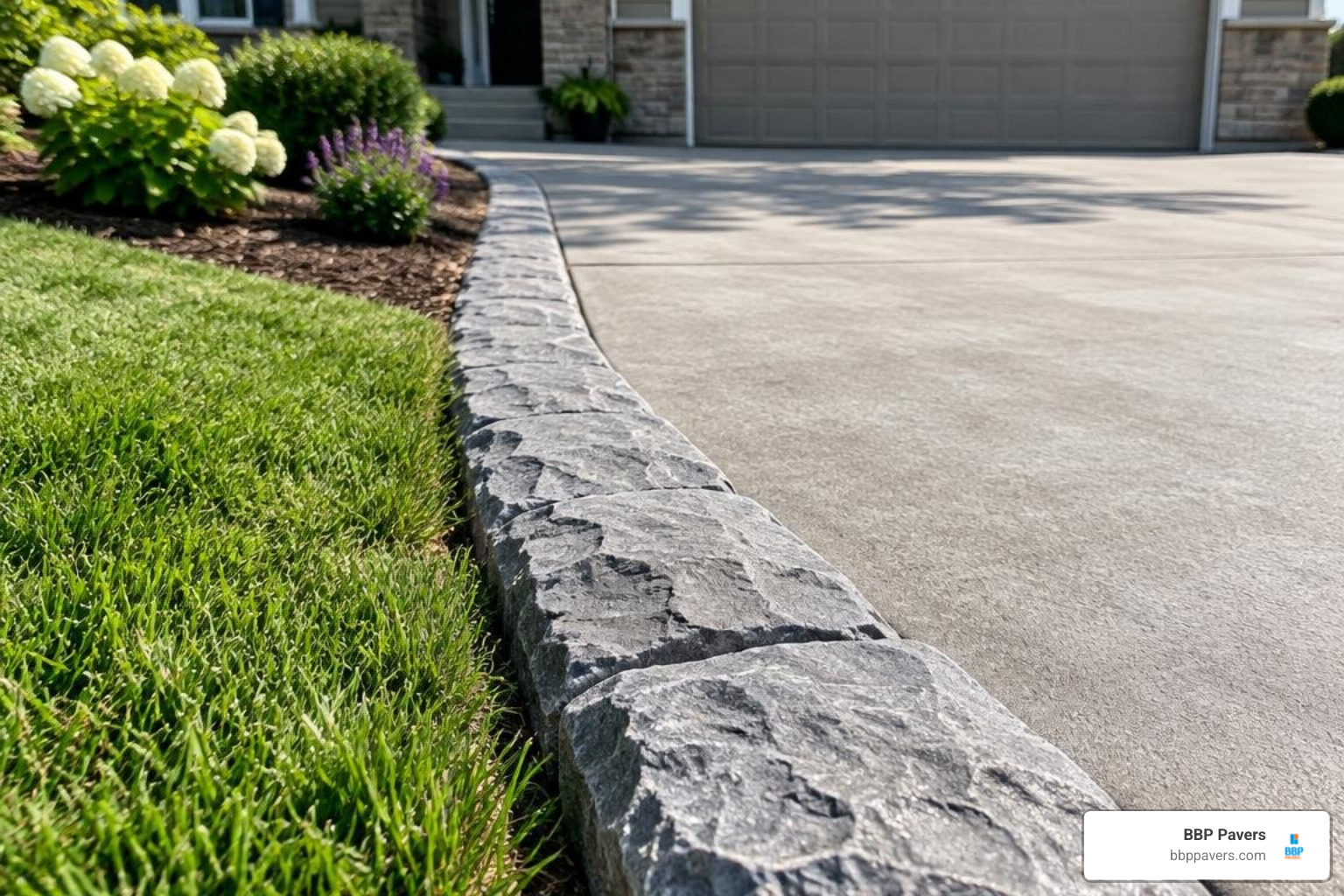
If your architecture calls for a rustic, natural-stone aesthetic rather than smooth industrial concrete, textured cast edging bridges the gap. By fitting a reusable chiseled rock edge form liner inside perimeter timber or polymer formwork, freshly poured concrete takes on the deep, fractured face of natural quarried granite. The result is a border that looks like cut stone but performs like solid concrete.
Alternatively, premium precast options integrate coarse granite aggregates into their exterior wear layers. These products combine the heavy-duty structural performance of factory-cast concrete with the sophisticated surface sparkle of genuine dressed stone. Textured profiles are especially effective for homes with natural stone veneers, Craftsman-style entries, or landscape beds filled with river rock and drought-tolerant plantings.
Key Benefits of Installing Concrete Borders on Driveway Edges
Beyond visual appeal, installing concrete borders along a driveway provides significant mechanical and practical advantages.
Structural Stability and Preventing Concrete Edging for Driveways from Settling
Uncontained driveway perimeters are vulnerable to lateral creep. When heavy SUVs and delivery trucks turn onto a driveway, lateral thrust forces push individual pavers or asphalt edges outward into adjacent soil beds. Without a solid retaining border, edges spread, joint sand washes away, and interlocking paver patterns loosen.
Subgrade settlement happens when water infiltrates perimeter joints, washes out bedding sand, and softens the native subgrade. A properly installed concrete curb acts as an impermeable barrier. It locks the aggregate base in place, carries rolling vehicle loads, and prevents edge collapse.
Weed Suppression, Mulch Retention, and Visual Framing
A solid concrete border solves regular landscape headaches:
- Turf Containment: Grass roots hit the buried concrete barrier, preventing invasive runner roots from creeping into paver joints.
- Mulch Containment: A raised curb prevents bark chips and decorative rock from spilling across driveway paths during heavy rain or wind.
- Mower Strip Utility: Concrete edging provides a level rolling track for lawnmower wheels, allowing crisp edge cuts without string-trimmer scalping.
- Runoff Management: Concrete borders channel seasonal sheet runoff toward catch basins, rain gardens, or swales rather than letting water puddle along driveway seams.
Why Concrete Is a Trusted Choice for Driveway Borders
Concrete offers a rare combination of long-term durability, structural stiffness, and lifecycle value that makes it a dependable choice for driveway borders. Unlike lighter-duty edging materials, a properly installed concrete curb is built to handle real driveway conditions, including vehicle loads, soil movement, and daily exposure to weather and yard equipment.
Precast and poured concrete borders typically last 25 to 50 years or more when installed on a well-compacted base. Because the material is rigid, it resists deflection under the weight of parked or turning vehicles, holding its shape and alignment season after season. Concrete also stands up well to frost-heave cycles, especially when installed with proper joints or segmental units that allow for slight ground movement without cracking the entire run.
Maintenance needs are minimal. Aside from an occasional wash to remove surface grime and a periodic sealer application every few years, concrete borders require very little upkeep to stay structurally sound and visually sharp. For Bay Area driveways, this blend of rigidity, longevity, and manageable maintenance is why concrete remains one of the most reliable ways to frame and protect a driveway edge over the long run.
Step-by-Step Installation and Soil Base Preparation
A durable concrete border relies on the quality of its foundation. Skipping base compaction or trench drainage leads to shifting curbs over time. The steps below outline the professional sequence we use for driveway edging projects, from initial excavation through final haunching and cleanup.
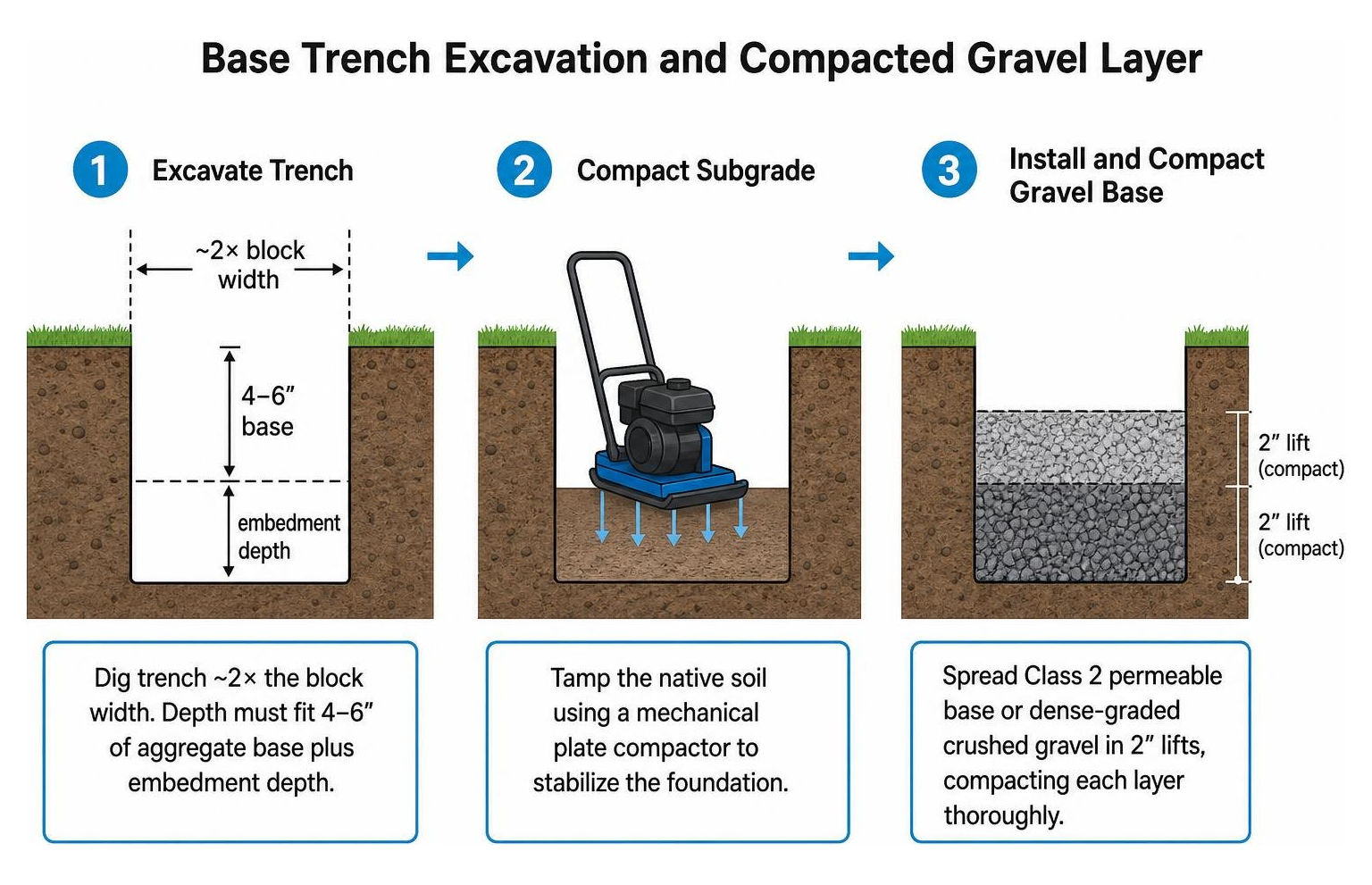
Essential Base Prep to Install Concrete Edging for Driveways
- Excavation and Depth Alignment: Dig a trench roughly twice the width of the concrete edging block. The depth must accommodate 4 to 6 inches of crushed aggregate base plus the embedment depth of the block (typically one-third to one-half the unit’s height).
- Subgrade Soil Compaction: Tamp the native soil using a mechanical plate compactor to achieve proper soil compaction, eliminating air pockets and stabilizing the foundation.
- Aggregate Base Installation: Spread Class 2 permeable base or dense-graded crushed gravel into the trench in 2-inch lifts, compacting each layer thoroughly.
- Setting Bed and Bedding Concrete: For modular blocks, set a 1-inch bedding layer of coarse sand or lean concrete mix. Tap units into alignment using a rubber mallet along a taut mason line.
- Concrete Haunching (Backing): Apply a sloped concrete shoulder behind modular units. This structural concrete wedge stabilizes blocks laterally against lateral vehicle tire loads.
Each of these steps matters. A trench that is too shallow leaves the border vulnerable to frost movement and vehicle pressure. A base that is not compacted in lifts can settle unevenly, creating visible dips along the driveway edge. Taking time on the foundation is what allows the finished border to stay straight and level for decades.
Drainage, Compaction, and Freeze-Thaw Protection
Water buildup behind concrete borders causes soil expansion and frost heaving. Ensure your subbase pitches water away from driveway slabs. In areas with high clay soils or freeze-thaw cycles, install clean crushed aggregate backfill behind the curb to let subsurface moisture escape toward designated drainage channels.
Proper drainage also protects the bedding sand and aggregate base from washing out. When water is allowed to pool along the back of the curb, it can soften the subgrade and create voids beneath the edging. Over time, those voids lead to settlement, tilting, and cracks. A well-drained installation keeps the entire edge assembly stable through wet winters and dry summers alike.
Frequently Asked Questions About Driveway Concrete Borders
How long does concrete driveway edging typically last?
When set on a compacted aggregate subbase with proper haunching, high-density precast and poured concrete edging regularly lasts 30 to 50 years. Periodic surface washing and applying a silane-siloxane penetrating sealer every 3 to 5 years protects against surface staining and moisture intrusion. The exact lifespan depends on soil conditions, drainage, and how often the border is struck by vehicle tires, but a professionally installed concrete edge is one of the longest-lasting perimeter treatments available for residential driveways.
Can concrete borders prevent driveway cracking and shifting?
Yes. Concrete borders lock the edges of paver fields, asphalt, and concrete slabs in place. By keeping the subbase compacted and stopping lateral movement, concrete curbs prevent perimeter spreading, joint sand loss, and edge unraveling. This is especially important at driveway entrances and along the outer edges of paver fields, where turning vehicles create the most lateral pressure. A rigid border transfers those forces into the compacted base rather than allowing the edge to push outward.
Is continuous curbing better than modular precast edging?
Neither is universally better; each fits different needs. Continuous extruded curbing creates a smooth, unbroken line on rolling terrain. Modular precast blocks offer superior compressive strength, handle freeze-thaw movement through flexible joints, and allow individual unit replacement if damaged. For most residential projects, the choice comes down to aesthetics, site conditions, and budget. A continuous curb can look more seamless, while modular blocks are often easier to repair and adjust over time.
Conclusion
Upgrading your driveway with concrete edging protects your hardscape investment, enhances landscape boundaries, and boosts overall curb appeal. At BBP Pavers, our team brings over 20 years of Bay Area hardscape experience, a safety-first construction process, and a 100% satisfaction guarantee to every project.
Explore our design guide on edging stone options for landscaping to review border textures, patterns, and curb styles, or contact us today for a free consultation and project estimate. Whether you are planning a full driveway replacement or simply want to add a clean border to an existing surface, we can help you choose a concrete edging style that fits your home and performs well for decades.