Paver Stone vs Stamped Concrete: A Realistic Look at Durability and Aesthetics

Paver Stone vs Stamped Concrete: A Realistic Look at Durability and Aesthetics
Paver Stone vs Stamped Concrete: Comprehensive Cost and Installation Breakdown
When comparing paver stones and stamped concrete, the primary differences center on upfront cost, durability, cracking resistance, and maintenance. Stamped concrete provides a lower initial installation cost ($13–$22 per sq. ft.) and seamless decorative patterns, but it is prone to surface cracking over time and requires acrylic resealing every 2–3 years. Interlocking paver stones require a higher upfront investment ($18–$35+ per sq. ft.) but deliver superior durability exceeding 8,000 PSI, seamless individual stone repairability, zero cracking from ground shifting, and immediate traffic readiness.
When we sit down with homeowners across the Bay Area and beyond, the first conversation almost always revolves around the budget. It is completely natural to look at the bottom-line estimate first. However, understanding how those numbers translate from raw materials and site labor into total 10-year ownership costs will give you a much clearer financial picture.
Stamped concrete and modular pavers take two completely different engineering approaches to covering ground. Stamped concrete relies on a single, continuous pour that is stamped with flexible polyurethane mats while the wet mix is curing. Pavers rely on an interlocking, segmented system placed on a precisely graded aggregate bed.
Here is how the numbers stack up side by side:
| Cost & Project Factor | Stamped Concrete | Interlocking Pavers |
|---|---|---|
| Average Installed Cost (per sq. ft.) | $13 – $22 (National: $8 – $18) | $18 – $35+ (National: $7 – $20) |
| Typical 300 sq. ft. Patio Cost | $4,500 – $5,500 | $6,000 – $9,000+ |
| Typical 400 sq. ft. Patio Cost | $4,800 – $10,000 | $6,000 – $14,000 |
| Excavation & Base Depth Required | 4–6 inches of compacted aggregate | 6–10+ inches (aggregate + bedding sand) |
| Subgrade Compaction Standard | 95% Standard Proctor density | 98% Modified Proctor density |
| Initial Usability / Cure Time | 24 hrs for foot / 7 days for cars | Immediate traffic readiness |
| Routine Maintenance Cycle | Reseal every 2–3 years ($1–$2/sq. ft.) | Re-sand joints every 2–3 yrs ($0.50–$1/sq. ft.) |
| 10-Year Estimated Total Cost (300 sq. ft.) | ~$6,000 – $7,500 | ~$7,500 – $11,000 |
| Expected Lifespan | 30+ years (prone to surface cracks) | 30+ to 50+ years (crack-proof units) |
Upfront Material and Labor Costs (2026 Price Guide)
In our experience, labor accounts for a significant portion of the initial price tag for both options. Pouring stamped concrete is labor-intensive in short, high-stress bursts: the crew must place, screed, float, add color hardeners, release agents, and imprint the texture before the slab hardens.
Pavers require higher manual labor spread out evenly across the project duration. Every single stone is set, aligned, cut to fit curved borders, and mechanically vibrated into place. According to industry cost analysis from Concrete Network, basic stamped concrete runs lower upfront because pouring a single slab over a standard grid requires fewer individual manual handling hours than placing hundreds of individual paving stones.
When evaluating your overall budget, local soil type, site grading, access limitations, and demo work directly affect your final paver patio installation cost. If you want authentic textures like bluestone, granite, or slate, natural stone pavers will command premium pricing compared to concrete pavers, whereas stamped concrete achieves those patterns using decorative stamps at a standard square-foot rate.
Installation Timeline and Curing Periods
How quickly do you want to start hosting backyard barbecues? The construction timeline differs significantly between both methods.
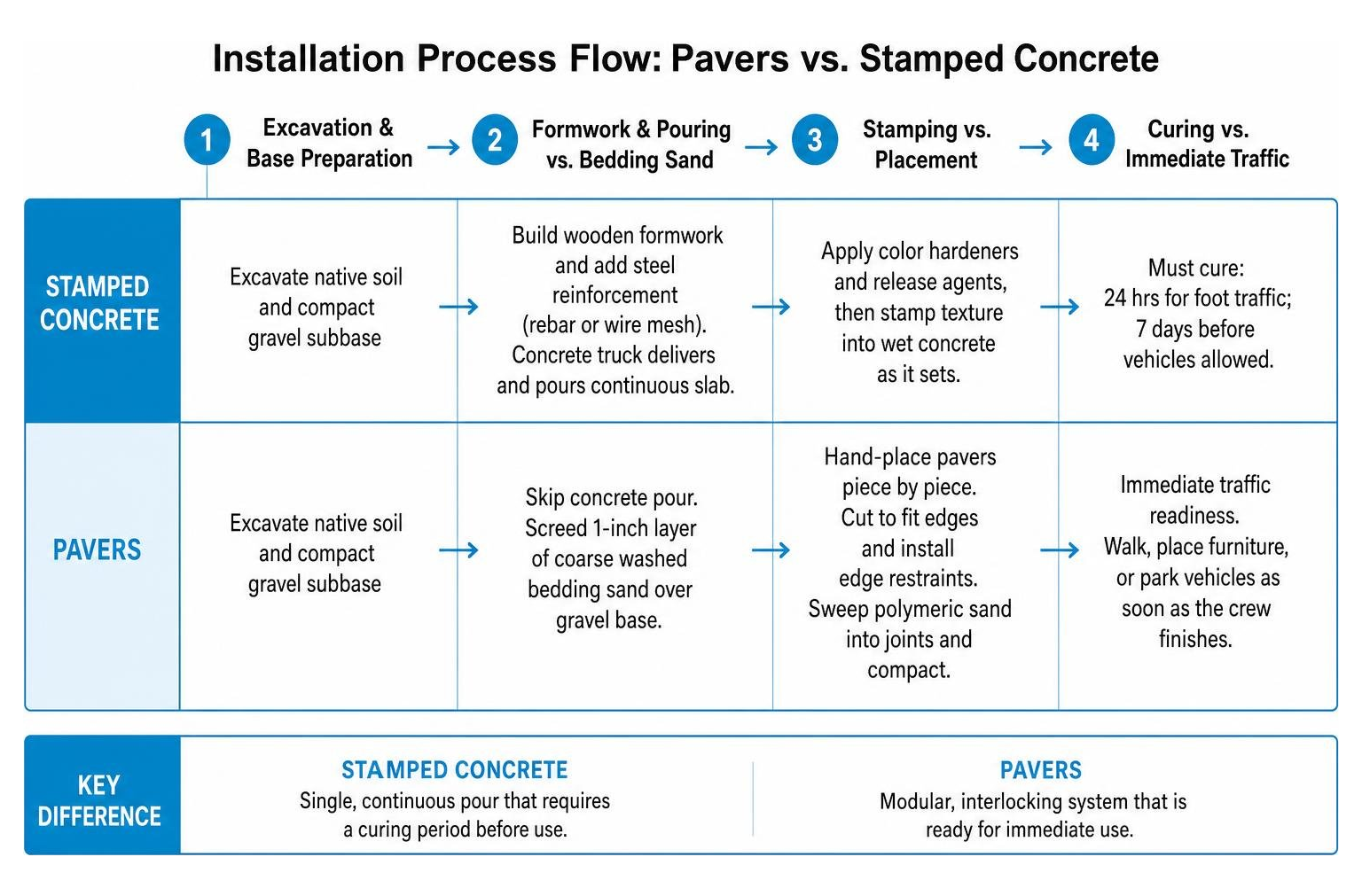
- Excavation & Base Preparation: Both systems require excavating the native soil and compacting a dense gravel subbase.
- Formwork & Pouring vs. Bedding Sand: Stamped concrete requires wooden formwork, steel reinforcement (rebar or wire mesh), and a continuous concrete pour. Paver systems skip the concrete truck, utilizing a 1-inch bedding layer of coarse washed sand screeded over the gravel base.
- Stamping vs. Placement: Stamped concrete is textured immediately as the wet mix sets. Pavers are hand-laid piece by piece, followed by edge restraints.
- Curing vs. Immediate Traffic: This is the game-changer. Stamped concrete must cure: you cannot walk on it for at least 24 hours, and you must keep vehicles off for a full 7 days. By contrast, pavers achieve structural interlock as soon as the polymeric sand is swept into the joints and compacted. You can literally walk, place outdoor furniture, or park a truck on pavers the moment the crew finishes.
10-Year Lifecycle and Maintenance Expenses
Many homeowners assume concrete is maintenance-free. In reality, stamped concrete demands regular maintenance to preserve its sheen and color. The glossy topical sealers that make stamped concrete look vibrant break down under ultraviolet light and weather, requiring professional acrylic resealing every 2 to 3 years at roughly $1 to $2 per square foot. Neglecting this leads to color fading, surface flaking (spalling), and moisture intrusion.
Pavers require simple maintenance: an occasional rinse, sweeping, and topping off the joint sand every 2 to 3 years at roughly $0.50 to $1.00 per square foot. While knowing how to seal pavers can enhance their color and protect against oil stains, it is completely optional from a structural standpoint. When you factor in long-term maintenance supplies and resealing contractor visits, the total 10-year cost difference between the two materials narrows noticeably.
Durability and Weather Performance in Changing Climates
Outdoor hardscapes must withstand punishing elements: scorching summer heat, intense downpours, ground shifting, and cold winter freezes.
How Ground Movement and Freeze-Thaw Cycles Affect Slabs
The fundamental structural difference between the two surfaces comes down to tensile strength and flexibility. Concrete is a rigid, monolithic slab. When soil underneath expands, settles, or goes through seasonal freeze-thaw cycles, that slab experiences intense tension.
There are two kinds of concrete: concrete that is cracked, and concrete that hasn’t cracked yet. Even with proper control joints cut into the slab and the use of air-entrained concrete mixes to absorb microscopic ice expansion, monolithic concrete will eventually develop hairline surface cracks as the earth moves beneath it.
Segmented interlocking pavers eliminate this issue entirely. Because the surface is made of thousands of individual high-density stones separated by flexible sand joints, the entire field can flex, shift, and settle with ground movement without cracking. Each paver typically boasts a compressive strength exceeding 8,000 PSI—nearly double that of standard poured concrete slabs (which usually sit around 3,500 to 4,500 PSI).
Long-Term Repairs: Paver Stone vs Stamped Concrete
When underground soil settles or tree roots heave your hardscape, the repair process highlights the main difference between these two materials:
- Stamped Concrete Repairs: If a poured slab cracks or settles, repairing it seamlessly is nearly impossible. Patching a crack leaves an obvious scar. Even if a contractor attempts polymer-modified resurfacing, matching the exact dye lot, weathering, and stamp texture of a 5-year-old slab is exceptionally difficult. The only permanent fix for severe settling is breaking up the entire section with a jackhammer and repouring.
- Paver Repairs: If an area settles or a stone gets stained with motor oil, the solution is simple and invisible. A contractor extracts only the affected pavers, relevels and compacts the gravel subbase beneath, adds fresh bedding sand, and reinstalls the original stones. The repair is 100% invisible, leaving zero scars and saving thousands in restoration costs.
Aesthetics, Customization, and Outdoor Design Flexibility
Your outdoor living space should feel like a natural extension of your home’s architecture. Both materials offer distinct visual strengths.
Visual Appeal and Texture Options
Stamped concrete excels at replicating continuous, grout-free textures. Using large polyurethane texture skins and release powders, installers can mimic seamless slate, wide flagstone, fractured rock, and even rustic wood planks without wood rot or termites.
However, stamped concrete remains an imitation. If you look closely at the stamped grout lines, you will notice they are impressions pressed into the surface rather than true distinct joints.
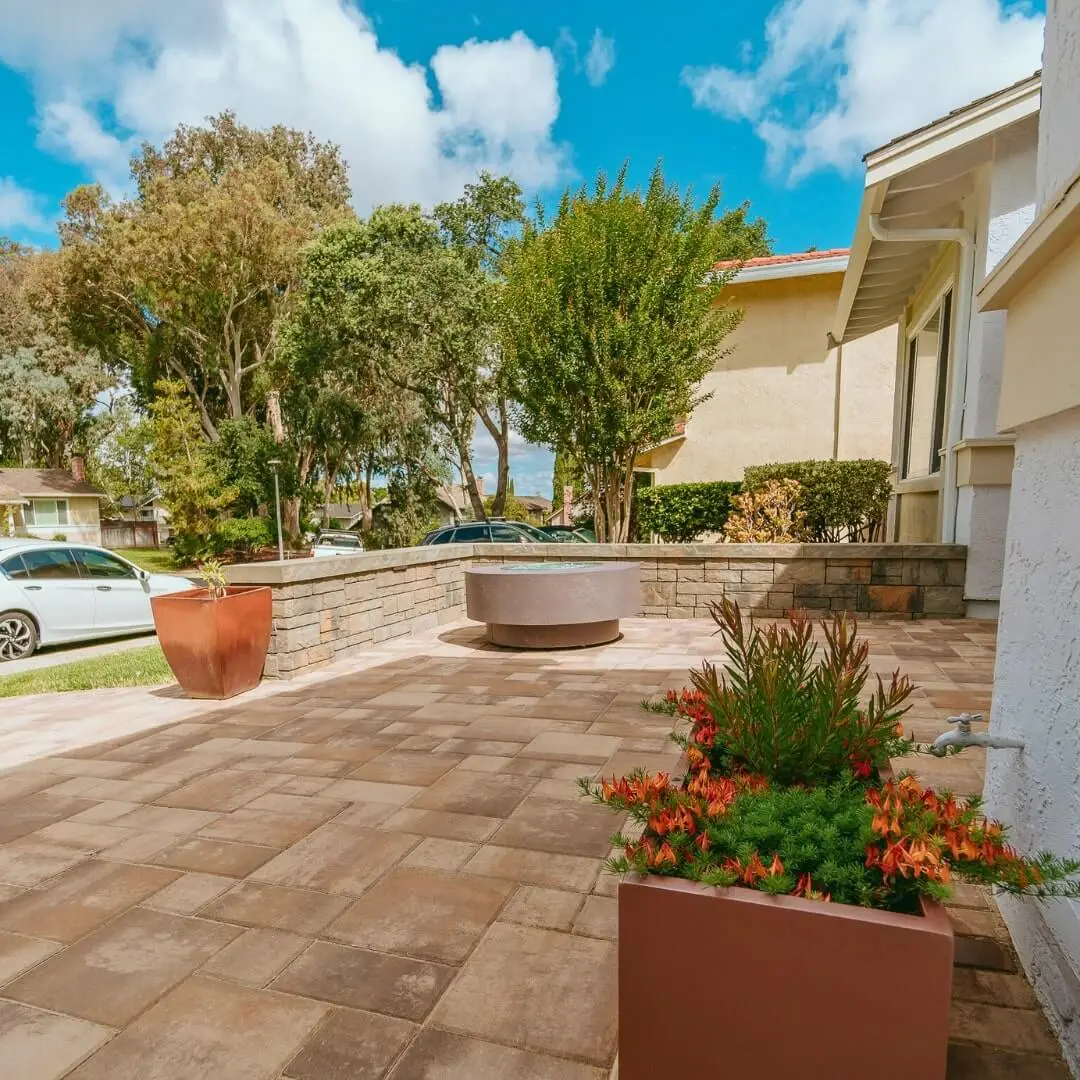
Pavers offer authentic, tactile depth. Whether you choose brick pavers vs concrete pavers, every unit provides authentic edges, distinct color blends, and rich surface textures ranging from smooth modern finishes to tumbled antiqued cobblestone. The physical joints between pavers create natural architectural shadow lines that stamped concrete simply cannot replicate.
Planning Future Expansions and Modifications
Life changes, and so do landscape plans. What happens if you decide to install an outdoor kitchen, upgrade plumbing lines, or add a fire pit paver patio three years down the road?
With stamped concrete, running new underground utility lines (gas, electric, or drainage) requires cutting through the slab with a diamond saw, trenching through the middle of your patio, and patching over it with mismatched concrete.
With pavers, a hardscape crew can lift a 2-foot-wide path of stones, dig the trench, install your gas or electrical conduit, backfill and re-compact the base, and lay the exact same pavers back down. Once swept with sand, nobody will ever know the ground was disturbed.
Combining Stamped Concrete and Pavers in One Landscape
You don’t always have to choose one over the other. One of our favorite design techniques is blending both materials to balance budget and luxury:
- Paver Soldier Course Borders: Pour a cost-effective stamped or brushed concrete field for the main patio surface, then frame the entire perimeter with a double row of rich, contrasting brick or stone pavers.
- Inlaid Paver Carpets: Create defined outdoor “rooms” by building a detailed paver seating area inside a larger stamped concrete deck.
- Stepping Transitions: Use large architectural pavers for main walkways and transitions leading into a stamped concrete pool surround.
Best Applications and Project Selection Guide
Every section of your property experiences different structural demands, pedestrian traffic, and environmental exposure.
Choosing Paver Stone vs Stamped Concrete for Driveways and Patios
- Driveways: For vehicle traffic, pavers are the gold standard. High-quality driveway pavers handle heavy wheel loads, turning friction, and tire marks effortlessly without structural cracking. Stamped concrete driveways can become slick when wet, show tire scuffing, and risk cracking under heavy delivery trucks.
- Patios and Entertaining Spaces: If you have an extensive backyard area and want an expansive, seamless surface on a budget, stamped concrete is a strong contender. If you want unmatched longevity, timeless style, and zero crack anxiety, installing premium patio pavers is an investment that consistently boosts long-term curb appeal.
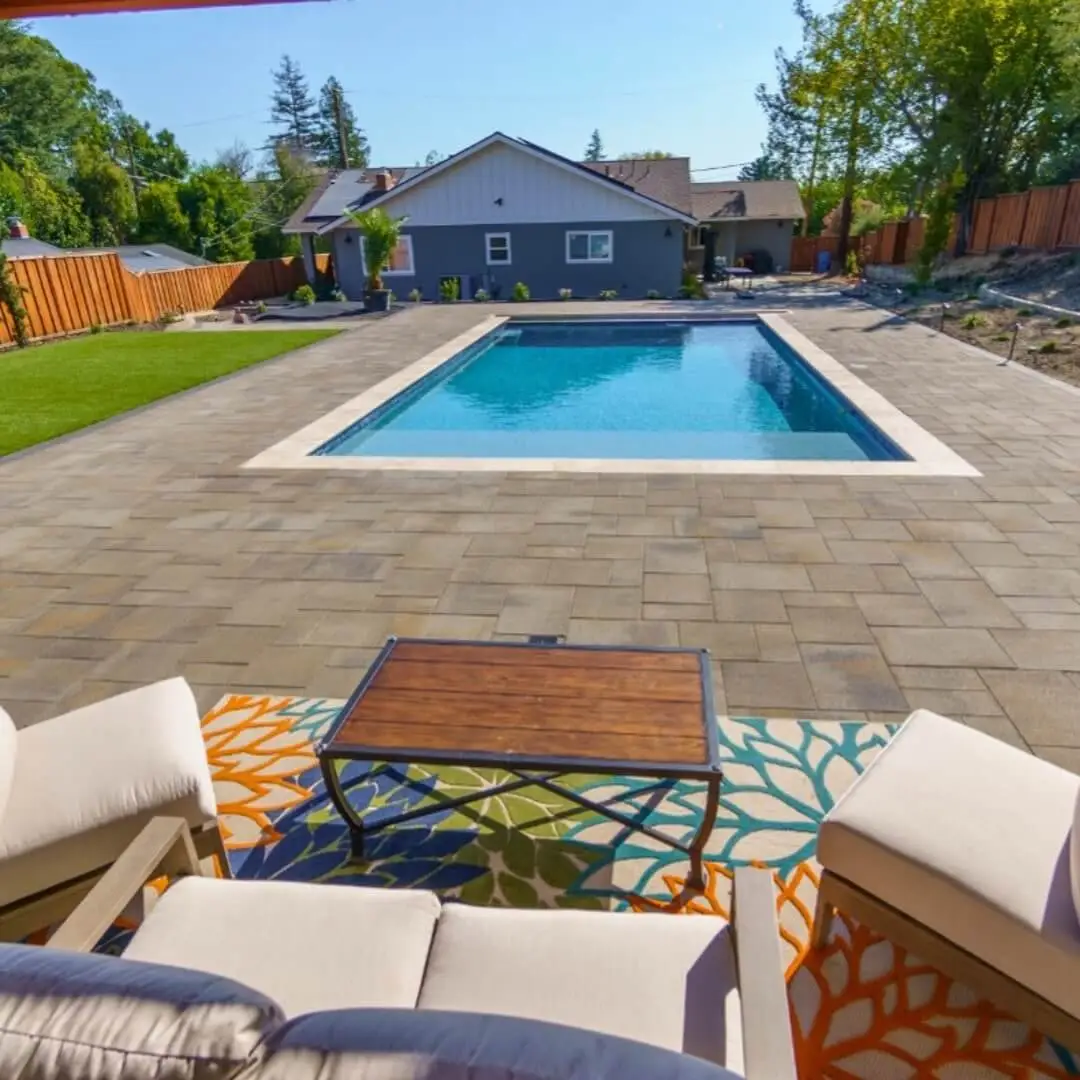
- Pool Decks: Safety is paramount around water. Sealed stamped concrete can become extremely slippery when wet unless an aggressive anti-slip aggregate (like micronized polymer beads) is mixed into the topcoat. Textured pavers provide built-in, slip-resistant grip and tend to stay cooler under bare feet during hot summer afternoons.
Critical Questions to Ask Your Hardscape Contractor
Before signing any hardscape contract, ensure you protect your investment by asking these essential questions:
- What is your exact excavation depth and base preparation standard? (Ensure they excavate at least 4–6″ for pedestrian patios and 8–12″ for driveways, using crushed aggregate compacted in 2-inch lifts).
- Do you include control joints and air-entrained concrete? (For concrete pours, control joints must be placed every 8 to 10 feet to manage cracking).
- What type of edge restraint and joint sand do you use? (For pavers, commercial-grade edge restraints and polymeric joint sand are mandatory to avoid the top paver installation mistakes to avoid).
- Can you provide proof of state contractor licensing, liability insurance, and local references?
- What specific warranty do you offer on labor, settling, and structural cracking?
Frequently Asked Questions About Pavers and Concrete
Can stamped concrete be repaired without visible patches?
No. Because concrete fades naturally from UV rays, atmospheric exposure, and weathering, it is practically impossible to color-match new concrete mix to an older slab. Patches and crack fillings will almost always look like visible blemishes.
How soon can you walk or drive on pavers compared to poured concrete?
Pavers are ready for full pedestrian and vehicular traffic immediately upon installation and compaction. Stamped concrete requires a mandatory 24-hour waiting period for light foot traffic and at least 7 full days of chemical curing before driving or parking vehicles on the slab.
Do interlocking pavers prevent weed growth permanently?
Weeds do not grow up from the dirt through properly compacted aggregate and bedding sand. Instead, windblown seeds settle down into the joint spaces from above. By using premium polymeric sand (which hardens into an elastomeric barrier when activated with water) and sweeping away organic debris, weed growth is effectively prevented for years.
Conclusion
Choosing between stamped concrete and paver stones comes down to how you balance initial investment against long-term maintenance and durability. Stamped concrete delivers an attractive, budget-friendly surface with a continuous aesthetic, but requires consistent resealing and carries the risk of visible cracking over time. Paver stones demand a higher initial investment but reward you with lifetime structural durability, seamless repairability, zero cracking, and outstanding design flexibility.
At BBP Pavers, we bring over 20 years of local Bay Area hardscape expertise to every project. Whether you are envisioning a custom driveway, an elegant backyard patio, or a complete outdoor remodel, our safety-first process and 100% satisfaction guarantee ensure your project is built to last for decades.
To explore every detail of hardscape performance before building, read our pavers vs stamped concrete definitive comparison and contact our team today to claim your free on-site design consultation and quote!