Paver Cost 101: How to Estimate Installation Expenses

Paver Cost 101: How to Estimate Installation Expenses
Estimate Your Paver Cost Before You Start
For most residential projects, installed paver cost runs about $10 to $35 per square foot. Standard concrete pavers usually sit near the lower end, while natural stone, detailed patterns, demolition, drainage work, and difficult access push the price higher.
To make a practical first estimate:
- Measure the project length and width, then multiply them for square footage.
- Multiply that area by a realistic installed price range for your paver type.
- Add a 10% to 15% buffer for cuts, waste, or unexpected site work.
For example, a 400-square-foot patio may cost roughly $4,000 to $14,000 installed. In the Bay Area, local labor, delivery, access, and permit requirements can move the final number above national averages.
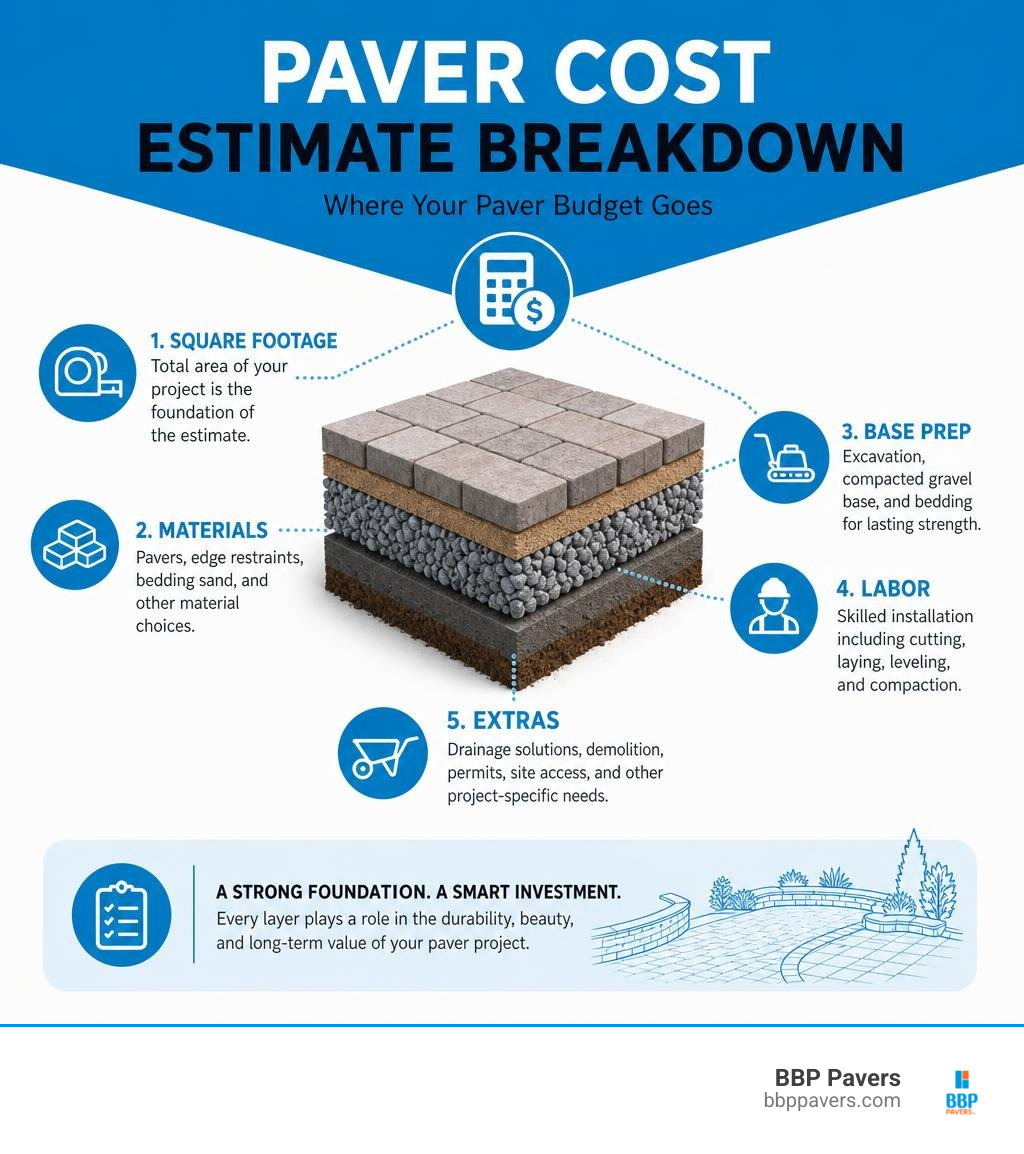
The pavers themselves are only one part of the budget. A durable installation also needs excavation, a compacted gravel base, bedding sand, edge restraints, drainage planning, and skilled labor. Saving money by cutting base preparation can create a much bigger repair bill later if the surface settles or shifts.
Average Paver Cost Per Square Foot by Material and Project Type
When you begin estimating hardscape expenses, material selection represents your initial major baseline decision. Material choices alter both raw product costs and the labor required to cut, level, and place each unit. According to the Paver Types and Price Guide: Cost, Per-Sq-Ft Ranges, and Budget Tips 2026, material-only prices span widely from $2.50 to $15.00+ per square foot before excavation, base aggregate, and skilled labor enter the calculation.
| Paver Material | Raw Material Cost (per sq. ft.) | Total Installed Cost (per sq. ft.) | Expected Lifespan | Best Applications |
|---|---|---|---|---|
| Standard Concrete | $2.50 – $6.50 | $10.00 – $18.00 | 25–40 years | Patios, Driveways, Walkways |
| Tumbled Concrete | $4.00 – $8.00 | $12.00 – $22.00 | 30–45 years | Rustic Patios, Garden Paths |
| Clay Brick | $3.50 – $9.00 | $11.00 – $22.00 | 40–50+ years | Driveways, Classic Walkways |
| Natural Bluestone / Flagstone | $6.00 – $15.00 | $18.00 – $35.00 | 40–50+ years | Premium Patios, Pool Surrounds |
| Travertine | $7.00 – $16.00 | $20.00 – $36.00 | 40–50+ years | Pool Decks, Courtyards |
| Outdoor Porcelain | $8.00 – $16.00 | $22.00 – $38.00 | 30–50 years | Modern Patios, Rooftops |
Concrete, Brick, and Natural Stone Pricing
Standard concrete pavers deliver the most economical starting point for residential properties. Produced in uniform molds, they allow rapid laying and simple cutting. This consistency keeps manufacturing overhead low while offering multiple textures, shapes, and color tones.
Traditional brick pavers are formed from fired clay, imparting rich natural colors that resist UV fading. Because clay units exhibit subtle size variances and higher density, they demand careful alignment and specialized saw blades, raising labor and material costs slightly above concrete.
When evaluating natural stone vs porcelain pavers, prices climb toward the luxury tier. Natural stones—such as travertine, granite, and bluestone—require quarrying, sizing, and sorting for thickness. Outdoor porcelain delivers unmatched stain and slip resistance with zero water absorption, but it demands precise handling, specialized wet diamond blades, and meticulous base leveling.
Project-Specific Estimates: Patios, Driveways, and Walkways
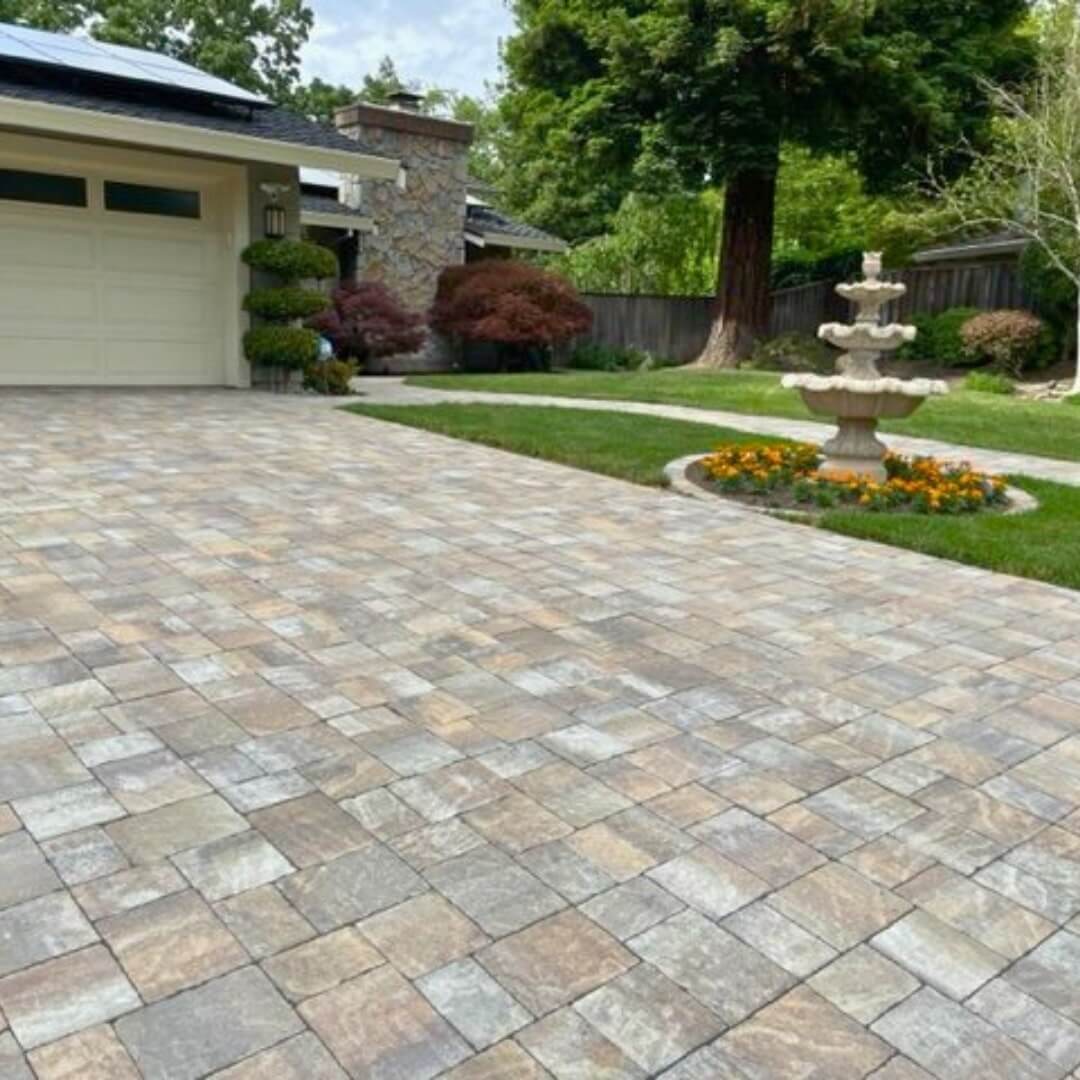
A project’s functional role directly impacts its cost per square foot due to engineering and excavation depths.
- Patios (Light Pedestrian Load): A typical backyard patio requires an excavation depth of 6 to 8 inches to accommodate 4 to 6 inches of compacted class-2 base rock and 1 inch of bedding sand. Installed costs generally settle between $10 and $30 per square foot depending on materials.
- Driveways (Heavy Vehicular Load): Installing a custom paver driveway demands deeper excavation (10 to 12 inches) and a compacted aggregate base of 8 to 10 inches to prevent tire rutting. Pavers must measure at least 60mm to 80mm in thickness. With heavier site preparation, driveways range from $12 to $35 per square foot.
- Walkways: Dedicated walkway pavers often involve narrower pathways, curves, and step transitions. While small in total square footage, their perimeter-to-area ratio is high, requiring more edge restraints and precision cuts that push per-square-foot labor rates slightly higher.
- Pool Decks: Selecting specialized pool deck pavers demands slip-resistant, heat-reflective materials such as light travertine or textured porcelain, alongside custom coping along the water’s edge.
Economies of scale also play a major role: a 200-square-foot walkway involves higher mobilization and delivery overhead per square foot than an 800-square-foot driveway.
Major Cost Drivers: From Base Preparation to Labor Rates
Understanding what drives project pricing ensures your quotes remain transparent and predictable.
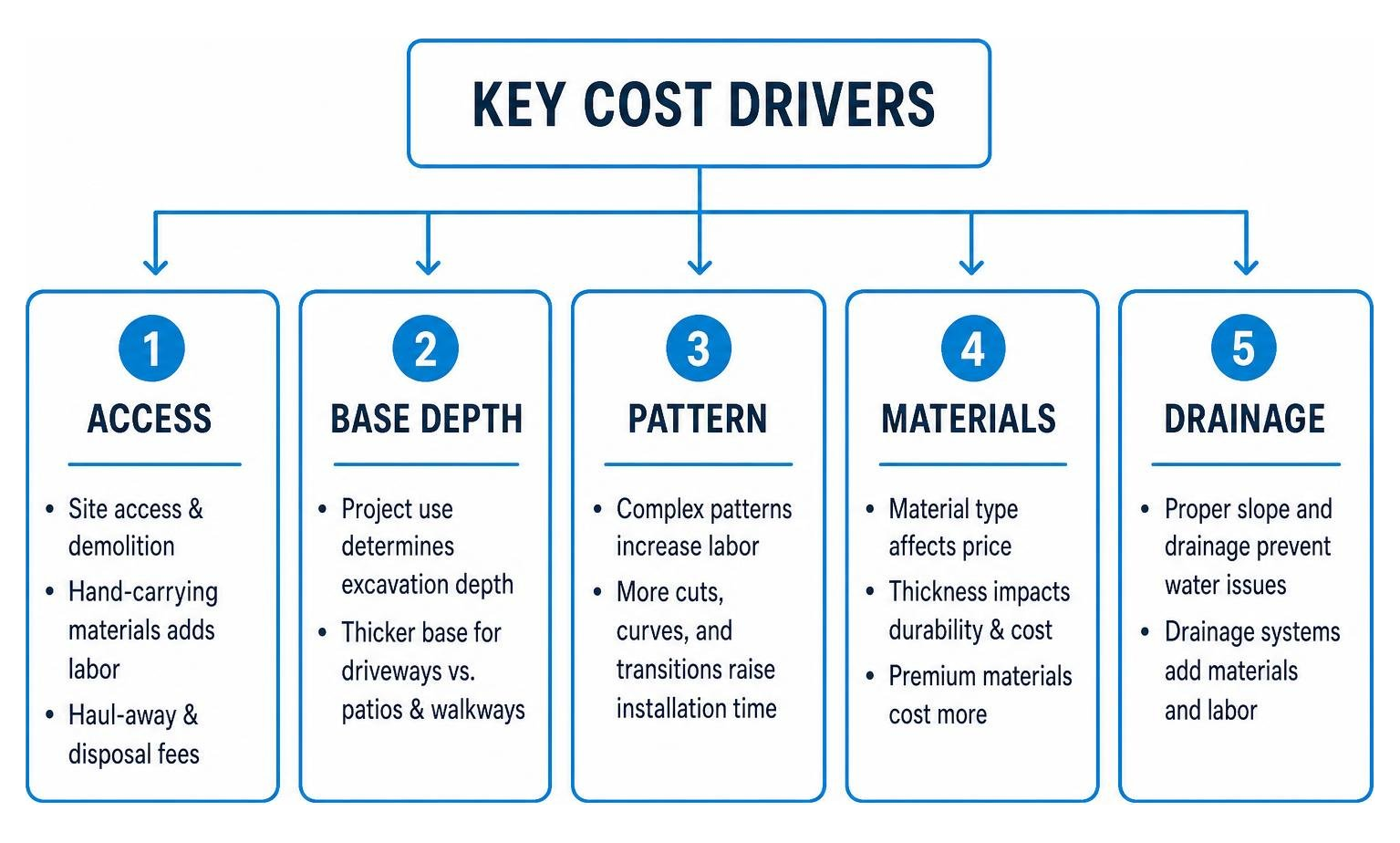
The primary variables affecting final quotes include:
- Site Access & Demolition: Hand-carting tons of crushed aggregate through a narrow 36-inch side gate adds significant labor hours compared to skid-steer backyard access. Breaking out existing reinforced concrete slabs also adds haul-away and disposal fees ($2 to $6 per square foot).
- Subgrade Conditions: Expansive clay soil requires deeper excavation, subgrade stabilization, and woven geotextile fabric to prevent ground movement from ruining the surface.
- Perimeter Edge Restraints & Sand: Heavy-duty snap edge or concrete border restraints lock units into place. Polymeric sand filled between joints prevents washouts, ant infestations, and weed germination.
- Municipal Permits: Depending on local zoning, driveway curb-cuts or extensive grading work may require building permits ranging from $150 to $600.
Labor vs Material Paver Cost Breakdown
For most projects, total expenses split into approximately 30% to 40% for physical materials (pavers, gravel base, bedding sand, edge restraints, and polymeric sand) and 60% to 70% for skilled installation labor and mechanical equipment.
According to data on Labor Cost to Install Pavers: Realistic Price Ranges for Buyers 2026, labor-only rates typically run between $4.50 and $12.00 per square foot nationwide, with metropolitan West Coast markets like the San Francisco Bay Area reflecting higher labor rates due to specialized crew costs and strict regional regulations.
Pattern choice directly dictates installation speed. Simple linear running bond or stacked bond patterns install rapidly, whereas intricate 45-degree herringbone designs, concentric circular kits, or multi-size modular patterns can increase labor time and cutting requirements by 15% to 30%.
Excavation, Base Compaction, and Drainage Needs

Never compromise on the foundation beneath your pavers. Thorough paver installation preparation dictates how your hardscape holds up after years of rain and traffic.
A reliable foundation uses heavy commercial plate compactors (delivering over 1,400 to 4,000 lbs of centrifugal force) to consolidate the subgrade and aggregate base in 2- to 3-inch lifts. Skipping compaction or skimping on aggregate base depth causes uneven settling, sunken tire tracks, and standing puddles after winter storms. Proper grading must establish a minimum 1% to 2% slope (a 1/8″ to 1/4″ drop per linear foot) away from home foundations, occasionally integrating channel drains, catch basins, or French drain systems where natural runoff paths are constrained.
Long-Term Value and ROI of Paver Installations
While poured concrete carries a lower initial installation price ($6 to $12 per square foot), sectional pavers offer distinct long-term structural and financial advantages.
Initial Investment vs. Lifetime Maintenance
Concrete slabs expand and contract with temperature fluctuations and subgrade settling, inevitably forming visible surface cracks that are difficult to patch invisibly. In contrast, interlocking paver fields feature hundreds of flexible joints that absorb ground movement and seismic shifts without cracking.
If an underground utility pipe bursts or an oil spill occurs, individual pavers can be removed, cleaned, or replaced seamlessly without demolishing the entire hardscape. Learning how to seal pavers every 3 to 5 years protects against surface staining, locks polymeric joint sand in place, and enhances natural color tones. Over a 25- to 50-year lifecycle, the repairability of paver systems consistently offsets their initial cost premium.
Resale Value and Curb Appeal Impact
Investing in quality hardscaping yields strong financial returns when selling your property. When evaluating how pavers increase home value, real estate data demonstrates that cohesive outdoor living environments—including paved patios, sitting walls, and integrated pathways—frequently return 65% to 80% of their construction cost at resale. Modern home buyers place high value on low-maintenance, drought-tolerant landscaping that expands functional living square footage into the backyard.
Smart Budgeting and Cost-Saving Strategies
You do not have to compromise on structural durability to keep your hardscape project within budget.
How to Reduce Paver Cost Without Sacrificing Durability
- Choose Standard Rectangular Dimensions: High-volume standard pavers (such as 4×8 or 6×9 inch units) minimize manufacturer lead times and freight costs.
- Simplify the Pattern Layout: Using a classic running bond or basketweave pattern rather than intricate curves or diagonal herringbone reduces cutting waste from 15% down to 5%, saving substantial material and labor fees.
- Choose Durable Interlocking Concrete: Premium interlocking pavers provide superior structural load capacity for driveways without the higher price tag of quarried stone slabs.
- Plan in Structured Phases: If building a full backyard master plan that includes retaining walls, pergolas, and outdoor kitchens, establish the main patio area first and install conduit sleeves underneath for future utility lines.
DIY vs. Professional Installation Considerations
Handling a paver installation as a DIY project can eliminate contractor labor fees, but it introduces significant equipment rental expenses and physical demands. A typical 400-square-foot installation requires excavating and hauling roughly 8 to 12 tons of soil, followed by wheelbarrowing and compacting 10 to 14 tons of crushed gravel and bedding sand.
Renting commercial diamond-blade wet masonry saws, heavy reversible plate compactors, and haul-away dumpsters quickly tallies between $800 and $2,000. Common paver installation mistakes to avoid—such as using uncompacted round fill sand, neglecting geotextile fabric over clay soil, or setting improper drainage pitch—often result in sunken sections and costly full rebuilds within two seasons. Professional hardscape contractors bring specialized machinery, experienced multi-person crews, and comprehensive installation warranties that protect your investment over the long haul.
Frequently Asked Questions About Paver Cost
How much do pavers cost per square foot installed?
Most residential paver installations cost between $10 and $35 per square foot for materials, site preparation, base aggregate, and skilled labor. Basic concrete pavers on level ground sit at $10 to $18 per square foot, mid-tier decorative concrete and clay brick range from $12 to $24 per square foot, and premium natural stone or porcelain systems range between $20 and $38 per square foot.
Is a paver patio a good long-term investment?
Yes. Although standard poured concrete carries a lower initial cost, paver patios do not crack like rigid slabs, offer 30- to 50-year service lifespans, allow simple individual stone replacement, and return up to 70% to 80% of their investment value by elevating curb appeal and outdoor usability.
What is the most affordable paver material?
Standard machine-pressed concrete interlocking pavers represent the most cost-effective option, with raw material costs running $2.50 to $6.50 per square foot. Their dimensional uniformity speeds up installation times, keeping overall labor rates lower than irregular natural flagstone or specialty porcelain.
Conclusion
Accurately calculating your hardscape budget requires looking beyond the price tag of raw paving stones to account for essential excavation, aggregate base stabilization, precision edge restraints, and expert installation. By selecting durable materials that match your property’s engineering demands and simplifying layout patterns, you can achieve an attractive outdoor space built to last decades.
At BBP Pavers, our team brings over 20 years of dedicated Northern California hardscape expertise to every driveway, walkway, and backyard living area we build. We back every project with premium materials, an unwavering safety-first process, and a 100% satisfaction guarantee. Contact us today to request your free on-site design consultation and receive an accurate, transparent estimate for your paver patio installation cost.