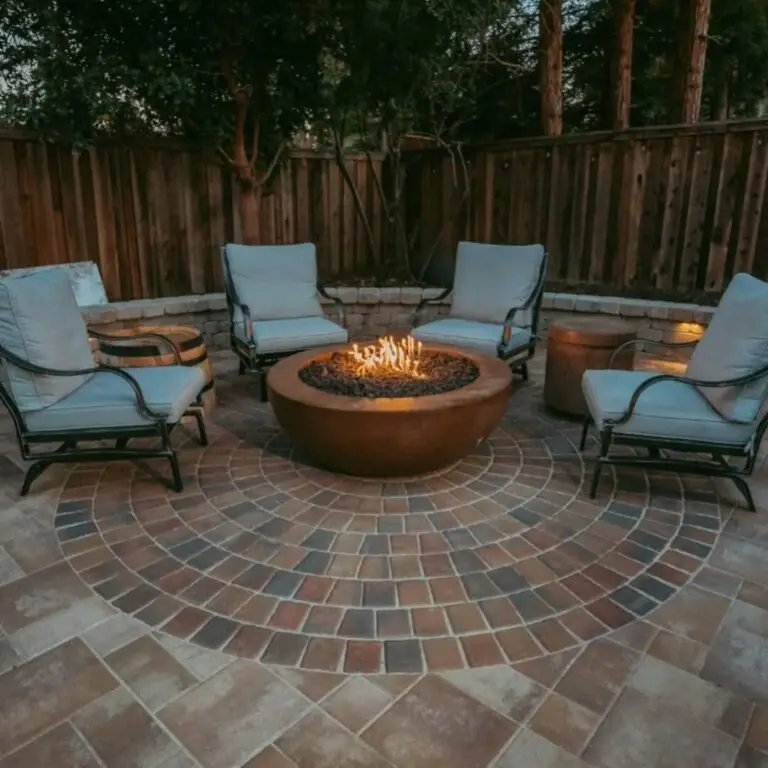
Fire Pit Paver Patio: Cost, Design & Installation Guide 2026

Did you know that adding a paved fire pit area can increase your home’s perceived value by up to 12% — and make your backyard usable 365 days a year? If you’ve been thinking about transforming a dull, empty yard into a warm, inviting outdoor living space, a fire pit paver patio is one of the smartest investments you can make in 2026. Whether you want a cozy spot for family evenings or an impressive entertaining area for guests, this guide covers everything: real costs, the best materials, a step-by-step installation process, common mistakes, and expert tips from the team at BBP Pavers.
Continue reading to discover exactly how to plan, budget, and build the outdoor living space of your dreams — or find out how a professional crew can do it for you.
Ready to get started? Request your free quote from BBP Pavers today — serving Concord, Walnut Creek, Lafayette, and the entire Bay Area.
What Is a Fire Pit Paver Patio?
A fire pit paver patio is an outdoor hardscape that combines a durable paved surface — built from interlocking concrete, brick, or natural stone pavers — with a centrally positioned fire pit, either wood-burning or gas-fueled. Unlike a plain concrete slab, this type of paved outdoor space uses individual pavers that interlock or are set in sand, giving you design flexibility, better drainage, and long-term durability.
The paver surface surrounds the fire pit and extends outward to create a functional seating area. Homeowners in areas like Concord, Walnut Creek, and Palo Alto frequently combine their fire pit paver patio with retaining walls, outdoor kitchens, and pergolas to create full outdoor living rooms.
Why Is a Fire Pit Paver Patio Different from a Regular Patio?
A standard patio is purely a flat surface. A paver patio with a fire pit adds a focal point — the fire — that transforms the space into a gathering destination. The paver material around the fire pit must be heat-resistant, properly spaced, and laid over a compacted gravel base to prevent shifting, cracking, or pop-ups caused by heat exposure.
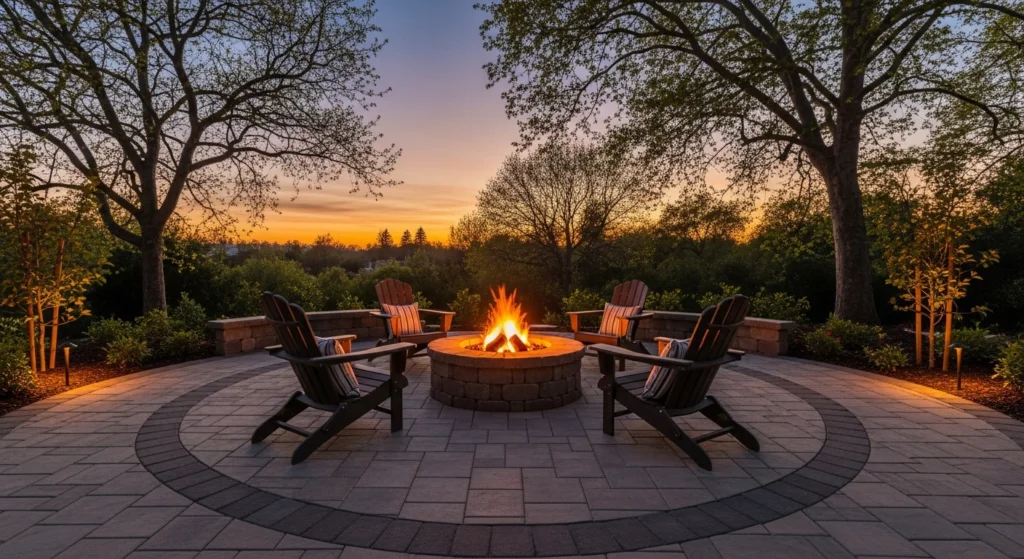
How Much Does a Fire Pit Paver Patio Cost in 2026?
This is the question every homeowner asks first — and the answer depends on size, materials, and whether you hire a professional or go DIY. Here is a realistic breakdown for 2026.
Cost Breakdown by Component
- Paver materials: $10–$17 per sq. ft. for concrete or brick pavers
- Fire pit unit (prefab): $75–$500 for prefab; $325–$2,000 for custom-built
- Labor — patio installation: $6–$15 per sq. ft. depending on region and complexity
- Fire pit labor: $500–$2,500+ depending on type (wood vs. gas)
- Excavation and grading: $500–$2,500
- Drainage systems: $500–$2,500
- Demolition (if replacing old surface): $500–$1,500
What Factors Affect the Total Cost?
The final price of your paver patio and fire pit project depends on several variables:
- Type of pavers: Concrete is the most affordable; natural stone (travertine, bluestone) costs more but adds premium aesthetic value
- Fire pit fuel type: Gas fire pits require gas line installation, adding $500–$2,000 to the project
- Patio shape: Round or custom shapes require more cuts, increasing labor time
- Site conditions: Slopes, tree roots, or poor drainage can add significant excavation costs
- Permits: Some California municipalities require permits for gas lines or fire pits
For homeowners in the Bay Area, BBP Pavers provides transparent, itemized quotes with no hidden fees — making it easy to plan your budget before breaking ground.
Best Paver Materials for a Fire Pit Patio
Choosing the right paver material is critical. Not all pavers handle heat the same way, and the wrong choice can result in cracking, discoloration, or a safety hazard.
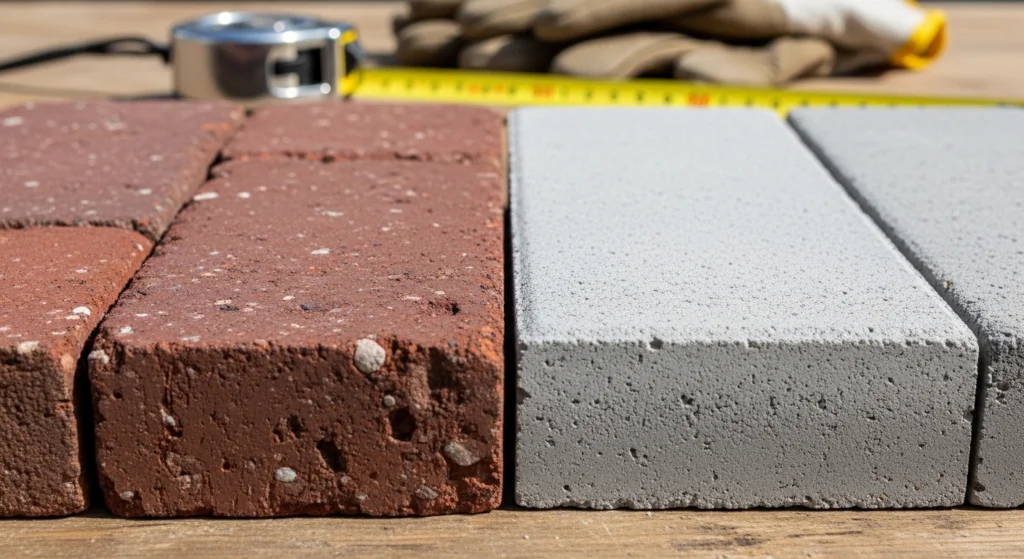
Top 4 Paver Types for Fire Pit Areas
1. Brick Pavers
Classic, fire-resistant, and highly durable. Brick pavers have been used around fire pits for centuries for good reason — they absorb and dissipate heat well without cracking. Their rustic appearance pairs beautifully with traditional and cottage-style homes.
2. Concrete Pavers
The most popular and affordable option for a fire pit paver patio. Modern concrete pavers come in dozens of shapes, textures, and colors. While not quite as heat-tolerant as brick, they perform excellently when laid with a 3–4 foot safety buffer between the paver surface and the fire pit’s edge.
3. Natural Stone Pavers (Bluestone, Travertine, Flagstone)
Premium option with unmatched visual appeal. Natural stone stays cooler underfoot than concrete, handles heat well, and creates a high-end look. Best for larger budgets and upscale outdoor spaces.
4. Refractory Pavers
Specifically engineered to withstand extreme heat, refractory pavers are ideal for the interior ring of the fire pit itself — the pavers that are in direct or near-direct contact with flames.
Explore BBP Pavers’ full patio paver options to see which material matches your style and budget.
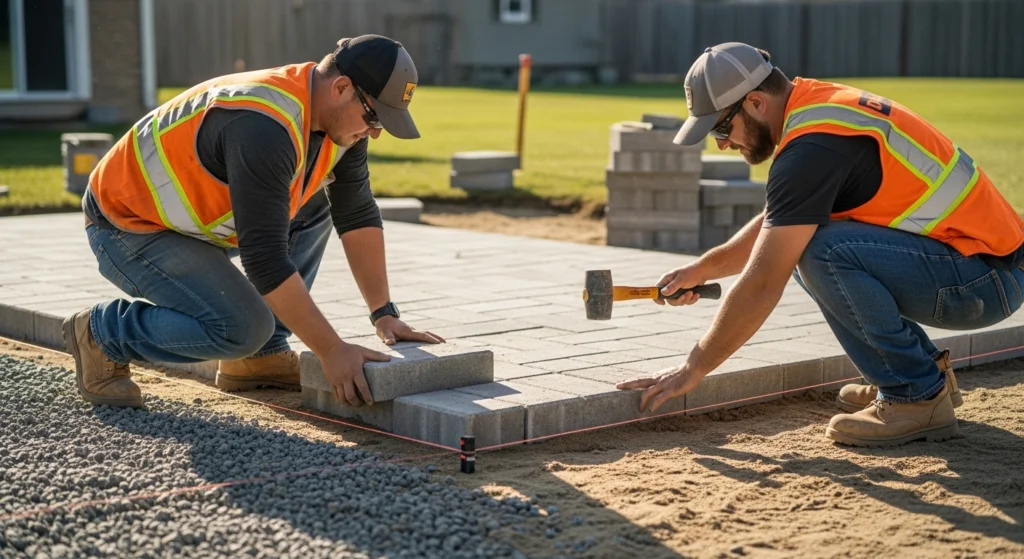
How to Build a Fire Pit Paver Patio: Step-by-Step
Building a paver patio with fire pit follows a precise sequence. Skipping steps — especially base preparation — is the #1 cause of paver failure.
Step 1: Plan and Design Your Layout
Start by measuring your yard and deciding on the patio’s shape and size. Mark the layout with spray paint or stakes and string. Keep at least 6–7 feet of clearance on all sides of the fire pit for safety and comfortable seating. Check local regulations and pull any required permits before starting — this is especially important in California jurisdictions like Concord and Walnut Creek.
Step 2: Excavate the Area
Dig down 6–8 inches to remove grass, soil, and organic material. The depth accommodates the base layers plus the paver thickness. If your site has a slope, you may need additional grading work — this is where working with a professional like BBP Pavers makes a significant difference.
Step 3: Install the Gravel Base
Pour and compact a 4–6 inch layer of crushed gravel (not pea gravel or river rock). This is the drainage foundation. Use a plate compactor to compress the gravel in 2-inch lifts. A solid, compacted base prevents the paved surface from shifting or sinking over time.
Step 4: Add the Sand Bedding Layer
Apply a 1-inch layer of coarse bedding sand on top of the compacted gravel. Screed it flat with a long board to create a perfectly level surface. Avoid playground sand — it’s too fine and washes away during rain.
Step 5: Lay the Pavers
Start from the center or a straight reference edge and work outward. Set each paver firmly into the sand with a rubber mallet. For a circular design, use a center stake and a radius guide to achieve a perfect arc. Cut border pavers with a wet saw or angle grinder for clean edges.
Step 6: Build or Place the Fire Pit
Position the fire pit at the center of the paver area. For a custom stone fire pit, stack heat-resistant bricks or fire blocks in a circle, using refractory mortar for the interior layers. For a gas fire pit, a licensed plumber or gas technician must connect the gas line before any paving work is completed.
Step 7: Add Polymeric Sand and Seal
Sweep polymeric joint sand into all the gaps between pavers and compact again. The polymeric sand hardens when wet, locking pavers in place and preventing weed growth. Once cured, apply a paver sealant for added stain resistance and color enhancement.
Fire Pit Patio Design Ideas and Inspiration
A fire pit paver patio doesn’t have to be a simple circle surrounded by chairs. In 2026, the trend is toward fully integrated outdoor rooms. Here are the most popular design concepts homeowners in the Bay Area are requesting:
Circular Paver Layout with Built-In Seating Wall
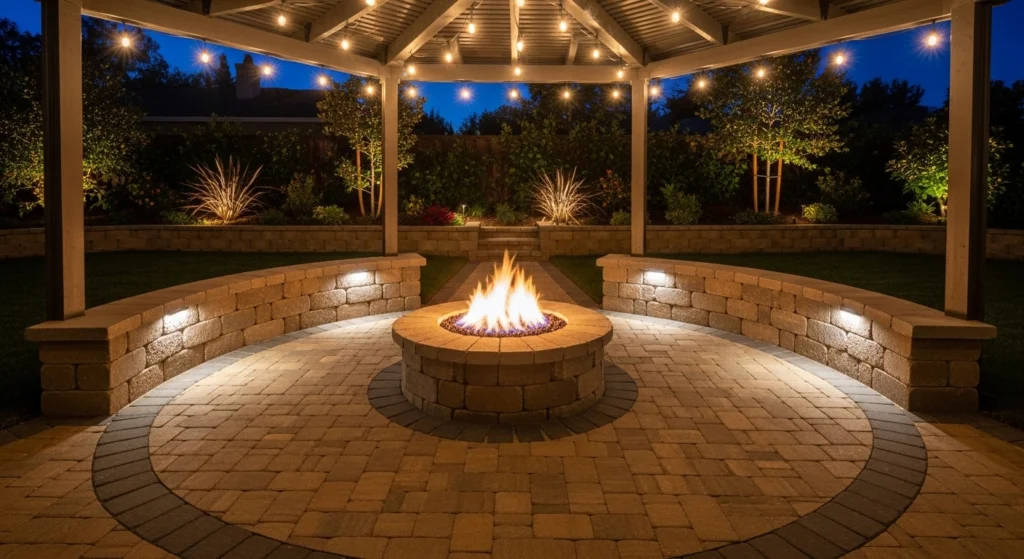
A circular paver design with a low retaining wall or seating wall built around the perimeter creates a cozy, enclosed atmosphere. Natural stone coping on the wall top adds both comfort and style.
Paver Patio and Outdoor Kitchen Combination
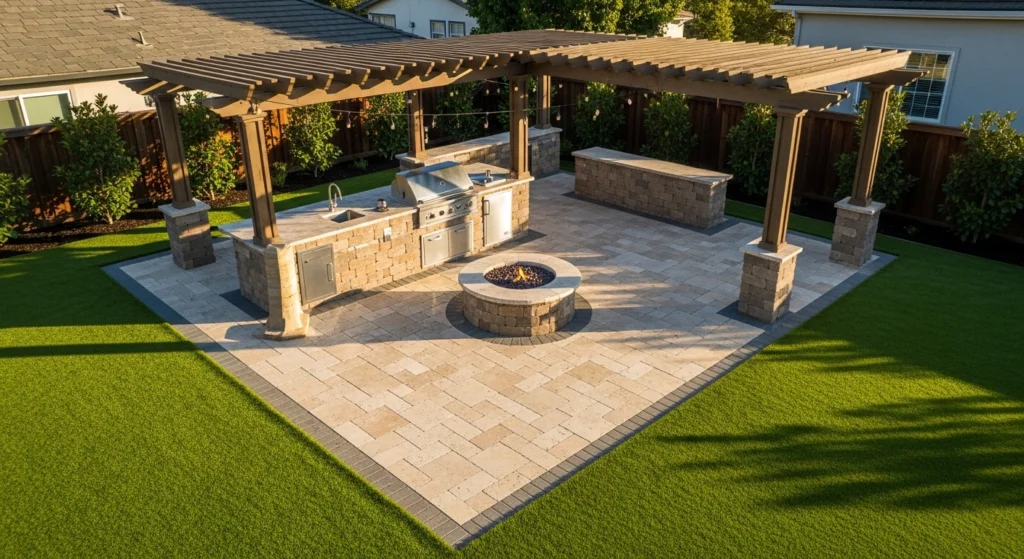
Pair your fire pit paver patio with a BBQ island or outdoor kitchen nearby. This setup is perfect for entertainers who want a full evening flow — from cooking at the grill to relaxing by the fire.
Paver Patio and Pergola Combination
Adding a pergola over part of the outdoor area — not directly over the fire pit — provides shade and extends usability into hot summer afternoons. Homeowners in Lafayette and Orinda frequently request this combination.
Fire Pit Patio with Artificial Turf Border
Surround the paver area with premium artificial turf for a lush, low-maintenance contrast. The green turf frames the stone patio beautifully and eliminates the need to mow around the hardscape.
Lighting Integration
Outdoor lighting built into the paver risers, retaining walls, or along the walkway edges transforms the space at night and adds a layer of safety around the fire pit area.
Love what you’re seeing? Explore BBP Pavers’ full outdoor living services and let us design the perfect fire pit paver patio for your home. Call us at +1 844-497-3321 or contact us online.
Real Customer Stories: What Bay Area Homeowners Say
BBP Pavers has built dozens of paver patios with fire pits across Contra Costa and Alameda counties. Here’s what some clients have shared:
Maria T., Concord, CA (Google Review):
“BBP Pavers completely transformed our backyard. The patio with fire pit came out even better than we imagined. The crew was professional, clean, and finished ahead of schedule. We’ve used it every weekend since it was completed.”
James R., Walnut Creek, CA (Yelp):
“From design to final cleanup, the entire process was smooth. They explained every step, gave us material options at different price points, and delivered a stunning fire pit paver patio with a gas burner. Absolutely worth every penny.”
Linda K., Lafayette, CA (Google Review):
“We got three bids and BBP Pavers wasn’t the cheapest — but they were clearly the most knowledgeable. Our paver patio with fire pit has been standing strong for two seasons now and looks brand new.”
See more reviews and photos on Google Maps and Yelp.
Common Mistakes to Avoid When Building a Paver Patio with Fire Pit
Even experienced DIYers make these errors. Avoid them to save time, money, and frustration.
Using the Wrong Base Material
Using pea gravel or regular sand as a base instead of crushed gravel causes drainage failure and paver movement. Always use 3/4-inch clean crushed stone, properly compacted.
Placing the Fire Pit Too Close to the Pavers
Many homeowners underestimate how much heat radiates outward from an open fire. The pavers immediately adjacent to the fire pit can crack or discolor over time. Always maintain at least 3–4 feet between the fire pit edge and seating areas, and use a refractory inner ring.
Skipping the Permit Process
In many California cities, gas fire pits and structural patio work require permits. Skipping this step can result in fines, forced removal, or problems when selling your home. BBP Pavers handles all permit coordination on behalf of clients in Concord, Fremont, and surrounding areas.
Using Regular Mortar for the Fire Pit Interior
Standard mortar cracks under high heat. Always use refractory mortar (also called high-temperature mortar) for any masonry directly inside the fire pit.
Not Planning for Drainage
Water pooling under pavers causes heaving and cracking over winter. Ensure the patio is graded at least 1/8 inch per foot away from the home’s foundation, and verify subsurface drainage before laying the base.
Fire Pit Paver Patio vs. DIY: Is It Worth Hiring a Pro?
| Factor | DIY | Professional Install |
|---|---|---|
| Upfront Cost | Lower ($2,000–$5,000) | Higher ($6,000–$25,000) |
| Time Required | 2–4 weekends | 2–5 days |
| Quality & Longevity | Variable | High — with warranty |
| Permit Handling | Your responsibility | Handled by contractor |
| Risk of Errors | High | Low |
| Resale Value Impact | Moderate | Maximum |
For most homeowners, the return on investment of a professionally installed outdoor hardscape far exceeds the DIY savings — especially when you factor in the cost of correcting mistakes. BBP Pavers offers flexible financing options to make professional installation accessible regardless of budget.
Frequently Asked Questions
How much does a fire pit paver patio cost on average in 2026?
Most homeowners spend between $6,000 and $22,000 for a professionally installed paver patio with fire pit. Small, simple builds start around $3,500, while large custom designs with gas lines, seating walls, and lighting can exceed $25,000.
What is the best paver for a fire pit patio?
Brick pavers and refractory pavers are the best options for areas directly adjacent to or inside a fire pit. They are naturally heat-resistant and durable under thermal stress. For the broader patio surface, concrete pavers offer the best combination of affordability, durability, and design flexibility.
Do I need a permit to build a fire pit patio in California?
In most California cities, you will need a permit for a gas fire pit or for structural patio work exceeding a certain square footage. Requirements vary by municipality — Concord, Walnut Creek, and Lafayette each have their own codes. A professional contractor like BBP Pavers handles this process as part of the project.
How long does it take to install a fire pit paver patio?
A professional crew typically completes this type of outdoor hardscape project in 2–5 days, depending on size and complexity. DIY projects can take 2–4 weekends. Gas line work requires a licensed plumber and may add scheduling time.
Can I add a fire pit to an existing paver patio?
Yes — in many cases, a fire pit can be added to an existing paved patio by removing the central pavers, building a gravel base, and constructing or placing the fire pit. A professional assessment is recommended to ensure the existing base can support the new feature without shifting.
Conclusion
A fire pit paver patio is one of the most rewarding outdoor upgrades a homeowner can make — it adds beauty, function, and genuine value to your property. From choosing the right heat-resistant pavers to understanding installation costs in 2026, the key is working with a team that has both the technical expertise and the local knowledge to get it right the first time.
At BBP Pavers, we’ve helped hundreds of homeowners across Concord, Walnut Creek, Lafayette, Moraga, Orinda, Fremont, Los Altos, Palo Alto, and Atherton build outdoor spaces they’re proud of. From your first design consultation to the final sweep of polymeric sand, we handle every detail so you don’t have to.
Ready to build your dream fire pit paver patio? Contact BBP Pavers today for your free, no-obligation quote. Visit us at bbppavers.com/contact-us, call +1 844-497-3321, or email us at bbppavers@gmail.com. Office hours: Monday–Friday 9 AM–5 PM, Saturday 9 AM–2 PM.
Find us on Facebook, Instagram, and Pinterest.
BBP Pavers
4918 Clayton Rd, Concord, CA 94521, United States
Phone: +1 844-497-3321
Email: bbppavers@gmail.com
Hours: Mon–Fri 9 AM–5 PM | Sat 9 AM–2 PM
View on Google Maps