Is Brick Paver Installation Worth the Higher Price Tag?

Is Brick Paver Installation Worth the Higher Price Tag?
Is the Higher Brick Paver Cost Per Sq Ft Worth It?
For most homeowners, brick paver cost per sq ft runs about $14 to $24 installed for a standard patio, including materials and professional labor. Broader 2026 estimates range from roughly $10 to $30 per square foot, depending on the brick, pattern, site conditions, and local labor rates.
That means a straightforward 400-square-foot patio may cost about $5,600 to $9,600 at the common average range, with premium designs or difficult excavation pushing the total higher.
Brick costs more upfront than many concrete paver options. But it can be worth the added price when you value a classic look, long service life, and the ability to replace individual pavers instead of rebuilding an entire cracked surface. Properly installed and maintained brick patios can last 25 to 50 years.
For Bay Area homes, the key is not choosing the lowest price. It is comparing quotes that clearly separate pavers, base preparation, drainage, labor, edge restraints, and any extras such as steps or fire features.
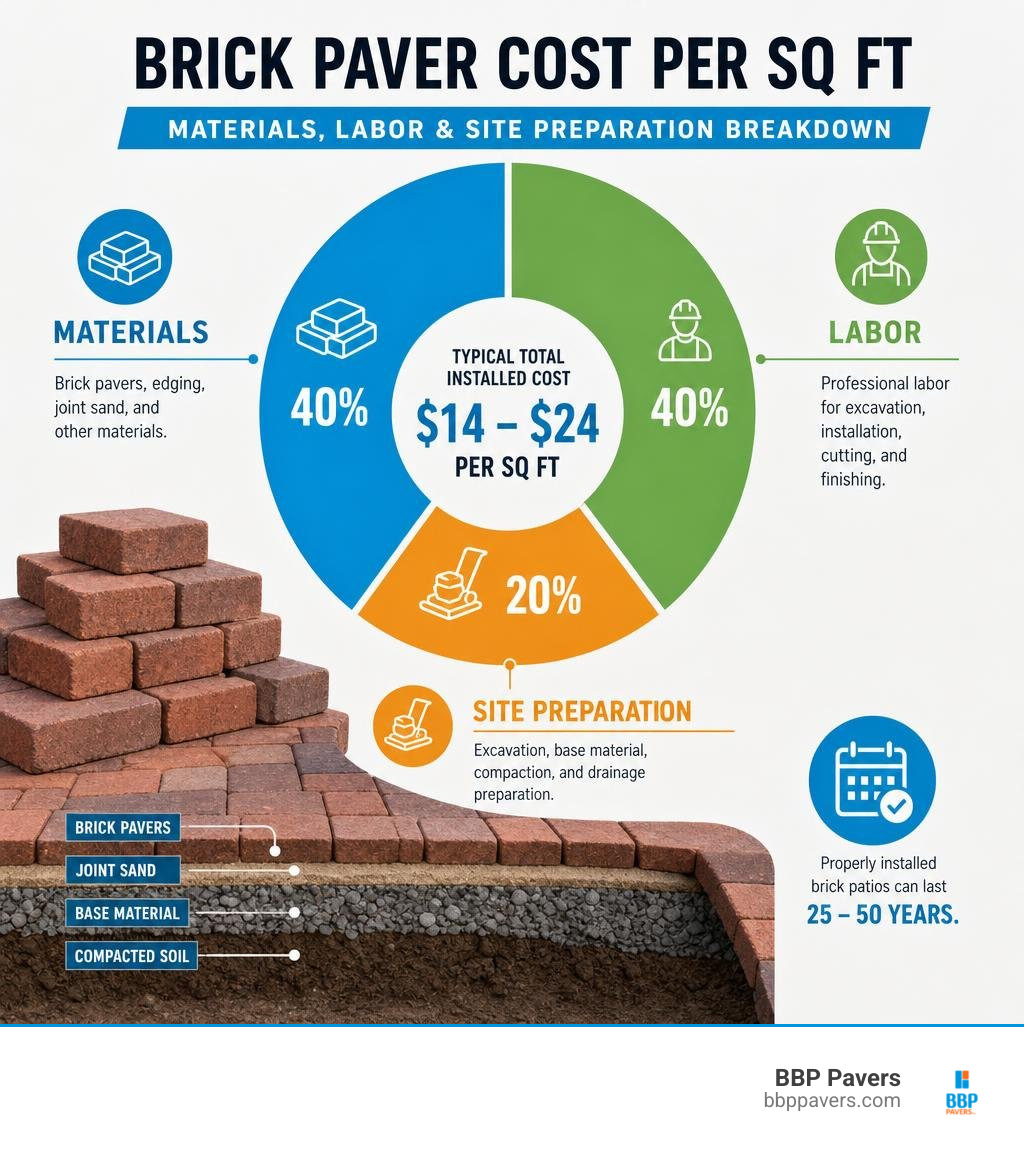
Understanding Average Brick Paver Cost Per Sq Ft in 2026
When planning an outdoor living space, understanding the overall pricing landscape helps avoid surprises. Nationally, installed brick paver pricing sits between $14 and $28 per square foot for typical residential projects, with total costs spanning anywhere from $10 to $48 per square foot when factoring in extreme site grading, luxury finishes, or tight urban logistics.
Data shows that while the baseline national average for a fully finished installation hovers around $20.03 to $25.95 per square foot, your exact total depends heavily on square footage, layout geometry, and the depth of base work required.
| Project Size (sq ft) | Average Total Installed Cost ($14 – $24/sq ft) | Premium/Complex Installed Cost ($25 – $35+/sq ft) | Typical Use Case |
|---|---|---|---|
| 144 (12×12) | $2,016 – $3,456 | $3,600 – $5,040 | Small bistro patio or garden seating nook |
| 200 (10×20) | $2,800 – $4,800 | $5,000 – $7,000 | Mid-sized dining space or side walkway |
| 400 (20×20) | $5,600 – $9,600 | $10,000 – $14,000 | Full outdoor living and dining patio |
| 600 (20×30) | $8,400 – $14,400 | $15,000 – $21,000 | Multi-zone entertainment hub with fire lounge |
| 800 (Driveway) | $11,200 – $19,200 | $20,000 – $28,000 | Standard two-car residential driveway |
As the table shows, project costs scale with square footage, but unit economics shift significantly once you reach larger footprints.
Breakdown of Labor and Material Brick Paver Cost Per Sq Ft
Every hardscape estimate is made up of distinct line items. Genuine clay Brick Pavers typically cost between $2.50 and $9.00 per square foot for materials alone, depending on clay type, firing methods, and finish (such as wire-cut or tumbled). Specialty or custom glazed bricks can exceed this range, reaching up to $14.00 per square foot.
Beyond the brick units, several other structural elements comprise the material and ancillary budget:
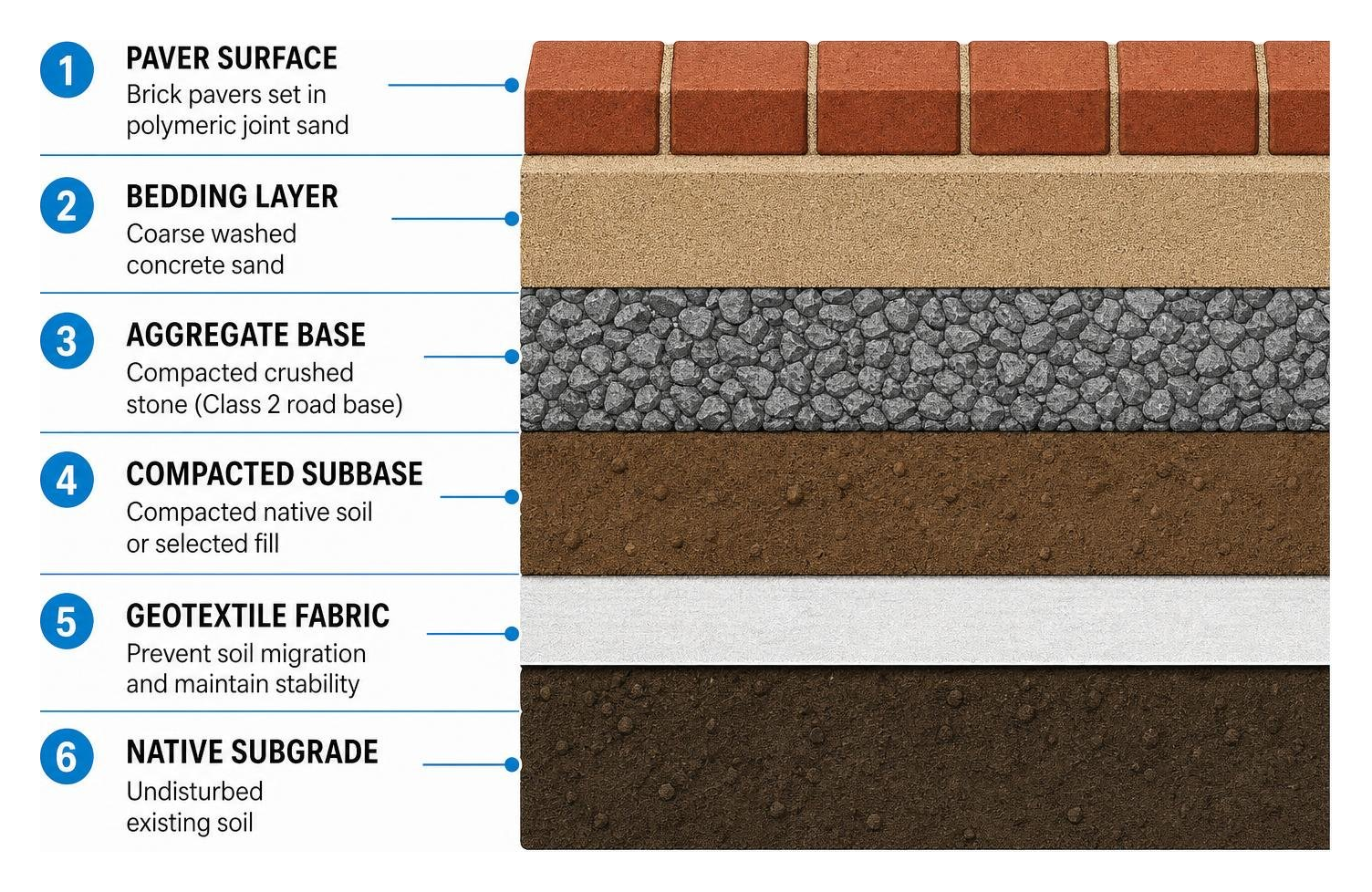
- Crushed aggregate base rock: $1.50 to $3.50 per sq ft (4 to 8 inches of compacted Class 2 road base or crushed stone).
- Bedding sand and jointing sand: $0.50 to $1.20 per sq ft (coarse washed concrete sand and high-performance polymeric joint sand).
- Edge restraints and heavy-duty steel spikes: $0.50 to $1.00 per linear foot.
Professional masonry and hardscape labor accounts for $5.00 to $13.00 per square foot on standard builds, rising to $15.00 to $25.00 per square foot for intricate custom layouts or challenging hillside slopes. This labor charge covers excavation, soil compaction, laser-level grading, aggregate placement, screeding, cutting, and final compaction. Specialized equipment allowances—such as wet masonry table saws, vibrating plate compactors, and mini-excavators—typically add another $0.50 to $2.00 per square foot. According to recent 2026 paver cost data across states, state and local trade wage variations directly drive these labor parameters.
How Project Size Affects Brick Paver Cost Per Sq Ft
Smaller projects often carry a higher cost per square foot due to fixed mobilization expenses. Delivering a mini-excavator, dump trailer, commercial plate compactor, and crew incurs baseline transport and setup costs regardless of whether the patio is 100 or 1,000 square feet.
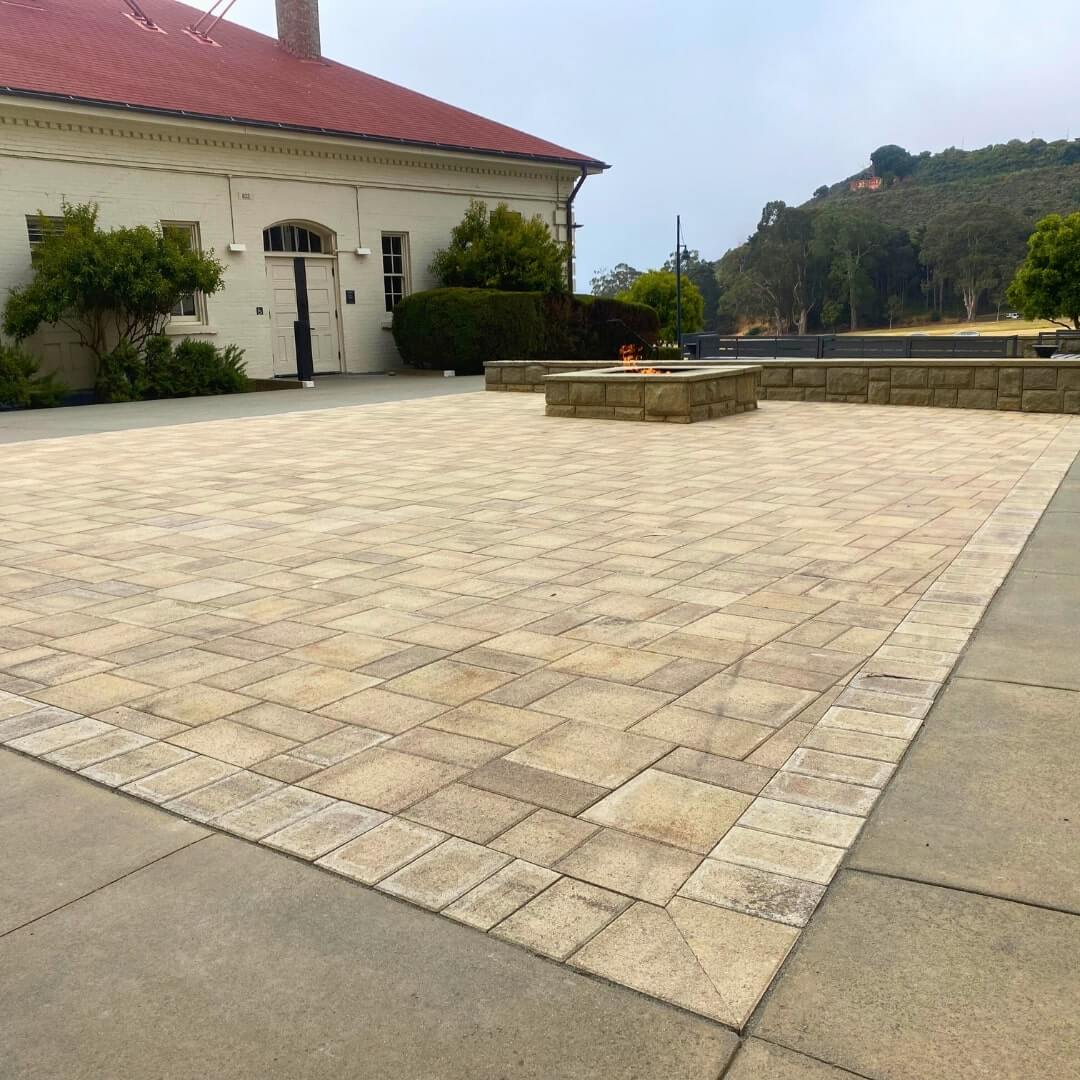
As square footage expands, contractors realize economies of scale. Pavers are shipped in bulk pallets covering roughly 50 to 60 square feet each. Ordering in bulk quantities lowers freight rates and unit pricing, while labor crews work more efficiently on expansive, uninterrupted runs.
How Brick Paver Pricing Compares to Other Outdoor Materials
Homeowners evaluating patio surfaces often compare genuine clay brick against concrete pavers, natural stone, and porcelain tiles. While brick represents a mid-to-high initial investment, its structural resilience and timeless visual warmth make it a balanced, long-term upgrade.
Brick Pavers vs. Concrete Pavers
The choice between clay and concrete often comes down to upfront costs versus long-term finish. In our Brick Pavers vs Concrete Pavers Full Comparison, we note that concrete pavers carry a lower initial price tag, averaging $10 to $17 per square foot installed.
However, standard concrete pavers rely on added chemical pigments that can gradually fade under UV exposure over 10 to 15 years. Clay brick pavers are kiln-fired at over 2,000°F, locking in natural earthy hues derived from the clay itself. Because the color permeates throughout the entire body of the brick, they never fade, wash out, or lose their character. For deeper insight into pricing dynamics, explore concrete and brick paver pricing dynamics to see how raw material manufacturing influences final quotes.
Brick vs. Natural Stone and Porcelain Pavers
Natural stone (such as bluestone, flagstone, limestone, or granite) and outdoor porcelain tiles represent luxury outdoor surfaces. Natural stone installations range from $18 to $45+ per square foot installed, while porcelain averages $20 to $50 per square foot due to the specialized wet-diamond blades, modified mortar, or specialized pedestals required.
For homeowners weighing modern aesthetics against classic charm, reading Natural Stone vs Porcelain Pavers Which Is Better highlights the maintenance differences between non-porous vitrified porcelain and textured natural rock. Brick provides comparable organic authenticity and compressive strength (often exceeding 8,000 to 10,000 PSI) at a lower overall price point than exotic imported flagstones or high-end slate.
Key Factors and Add-Ons That Influence Total Installation Expenses
Why do two identical 300-square-foot patios sometimes receive vastly different quotes? If you have ever wondered Why Do Pavers Cost So Much?, the answer lies below the visible surface.
Site Preparation, Base Excavation, and Laying Patterns
The visible brick is only as dependable as the foundation beneath it. Proper site prep requires excavating 7 to 9 inches of native soil for a patio or 10 to 12 inches for a vehicular driveway. If your yard has expansive clay soil—common in Northern California—additional excavation and a geotextile stabilization fabric are essential to prevent rutting and seasonal settling.

The laying pattern also directly influences labor costs:
- Running Bond & Stack Bond: Simple, fast layouts with minimal cuts, keeping labor at baseline rates ($5 to $8/sq ft).
- Basketweave: Traditional look requiring standard alignment with low-to-moderate cutting waste.
- Herringbone (45° or 90°): Offers maximum interlock and load distribution, ideal for driveways and main patios. However, cutting perimeter edge pieces requires precision masonry cuts on every border brick, increasing labor hours and material scrap by 10% to 20%.
Enhancements: Fire Pits, Retaining Walls, and Outdoor Kitchens
A paver patio often serves as the centerpiece for wider backyard amenities. Integrating vertical hardscaping elements elevates outdoor living while expanding the overall project scope:
- Custom Paver Fire Pits: Built-in wood-burning or natural gas fire features range from $1,500 to $5,000 depending on stone veneer and burner insert configurations.
- Structural Retaining Walls: Essential for terracing sloped properties, managing soil pressure, or creating seat walls. Costs range from $40 to $90 per square face foot.
- Custom Outdoor Kitchens BBQ Islands: Complete culinary hubs with concrete foundations, appliances, counters, and utility hookups range from $5,000 to over $25,000.
Professional Installation vs. DIY: Calculating Long-Term Value and ROI
Homeowners with DIY experience often consider tackling brick paving independently. However, understanding the trade-offs between self-installation and professional craftsmanship is critical before breaking ground.
Upfront Labor Rates vs. DIY Tool and Material Expenses
A DIY approach eliminates professional labor fees ($5 to $13 per sq ft), reducing initial out-of-pocket expenses to roughly $9 to $11 per square foot for raw materials (pavers, gravel base, bedding sand, edge restraints, and sand).
However, DIY budgeting must account for essential equipment rentals and hidden tooling expenses:
- Commercial reversible plate compactor rental: $80 – $150 per day
- Wet masonry tile/brick table saw with diamond blade: $70 – $120 per day
- Skid steer / mini-excavator rental (for large jobs): $250 – $450 per day
- Soil disposal / debris dumpster fees: $400 – $800 per haul
- Hand tools: screed rails, 6-foot levels, masonry chisels, dead-blow mallets, safety gear: $150 – $300
Beyond hard costs, the physical toll is substantial. Installing a 400-square-foot patio requires moving roughly 10 to 14 tons of soil, crushed stone, sand, and brick by hand. Inadequate compaction or improper slope grading (which must drop at least 1 inch every 8 to 10 feet away from the home foundation) can lead to standing water, sunken pavers, and expensive structural tear-outs later on.
Maintenance, Lifespan, and Resale Value Over Decades
When installed over a properly compacted subbase, brick paver hardscapes can last 25 to 50 years or more. Maintenance is straightforward and cost-effective:
- Routine Sweeping and Rinsing: Removes organic debris and prevents organic staining.
- Joint Sand Replenishment: Adding fresh polymeric sand into joints every 3 to 5 years prevents weed growth and ant intrusion ($0.50 to $1.00 per sq ft).
- Protective Breathable Sealer: Applying a penetrating hardscape sealer every 2 to 4 years repels barbecue grease, prevents oil absorption, and locks in sand joints ($1.00 to $2.00 per sq ft).
From a financial perspective, high-end hardscapes deliver strong returns. When exploring Do Pavers Increase Home Value?, data consistently shows that custom paver patios and driveways offer an ROI of 60% to 80% in recovered equity upon sale, boosting overall curb appeal and creating functional, desirable outdoor square footage.
Frequently Asked Questions About Brick Paver Costs
What is the national average cost to install a 20×20 brick paver patio?
A standard 20×20 patio covers 400 square feet. Nationally, installing a 20×20 brick paver patio costs between $5,600 and $9,600 ($14 to $24 per square foot) for standard, level ground projects. More complex designs featuring high-grade tumbled clay pavers, herringbone patterns, steps, or difficult access can range between $10,000 and $14,000. Municipal building permits, if required for site grading or drainage adjustments, typically add $150 to $500 depending on local city regulations.
How often do brick pavers require sealing and maintenance?
Brick pavers perform best when cleaned and sealed every 2 to 4 years. Unlike concrete, clay brick does not require sealing to maintain its inherent color, but applying a quality penetrating sealer stabilizes the polymeric joint sand and prevents moss, weed germination, and oil stains. Setting aside a maintenance reserve of roughly $0.50 to $1.50 per square foot over a five-year cycle will cover all periodic washing, minor re-sanding, and resealing.
How do regional labor differences impact installed pricing?
Geographic location affects hardscape costs due to prevailing wage rates, regional raw material availability, and frost-depth engineering requirements. High-cost metro markets, coastal areas, and mountainous regions often see installed prices ranging from $22 to $38+ per square foot, driven by higher labor wages and logistical constraints. Conversely, Midwestern and Southern regions with lower labor overhead often see installed prices averaging $12 to $22 per square foot.
Conclusion
Is brick paver installation worth the higher initial price tag? For homeowners looking for enduring character, unmatched structural strength, and authentic kiln-fired beauty that never fades under the sun, genuine brick pavers are one of the most rewarding investments you can make for your property.
At BBP Pavers, we bring more than 20 years of Bay Area hardscape expertise to every project. Whether you are envisioning an inviting garden patio, a custom driveway, or a complete outdoor entertainment suite with retaining walls and fire features, our team delivers precision craftsmanship backed by a safety-first process and a 100% satisfaction guarantee.
Ready to transform your outdoor living space? Review our comprehensive paver patio installation cost breakdown for detailed planning, and contact us today to schedule your free, on-site consultation and customized estimate.