Everything You Need to Know About Paver Driveway Costs

Everything You Need to Know About Paver Driveway Costs
What a Paver Driveway Costs and Why It Can Be Worth It
A professionally installed paver driveway typically costs between $18 and $35+ per square foot, with total project prices generally ranging from $9,000 to $25,000+ depending on driveway dimensions, material choices, and site preparation needs. While this is a higher upfront investment than asphalt or plain concrete, a paver driveway can last 30 to 50 years when the base, drainage, and edge restraints are built correctly. Unlike a poured slab, individual pavers can be lifted and replaced if one becomes stained, cracked, or settles.
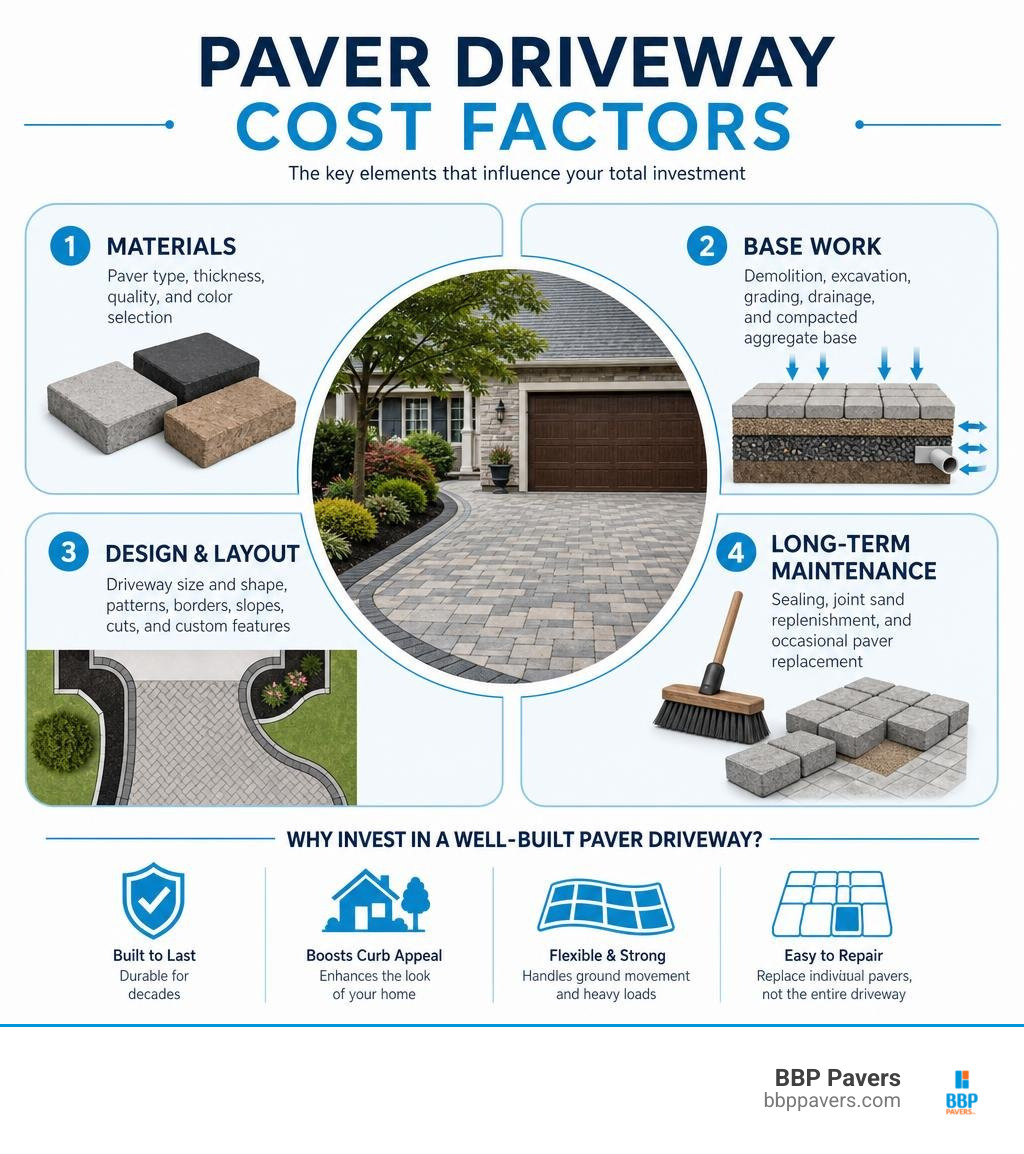
Your final price depends most on:
- The paver material, thickness, and quality
- Demolition, excavation, grading, and drainage needs
- The compacted aggregate base required for Bay Area soil and vehicle loads
- Driveway size, shape, slopes, borders, cuts, and pattern complexity
- Whether you choose permeable pavers, custom inlays, or other upgrades
For homeowners comparing options, the key is to look beyond the price per square foot. A well-built paver surface offers strong curb appeal, flexible performance as the ground moves, and targeted repairs rather than full driveway replacement. The detailed sections below explain what drives costs, what a durable installation requires, and how to plan for long-term value.
Primary Factors Influencing Total Paver Driveway Cost
When calculating the budget for a driveway makeover, homeowners often assume material prices dictate the entire bottom line. In reality, material selection is just one piece of an intricate puzzle. Site engineering, base prep, ground conditions, and labor complexity contribute significantly to the total cost.
Paver Material Selection and Quality Grades
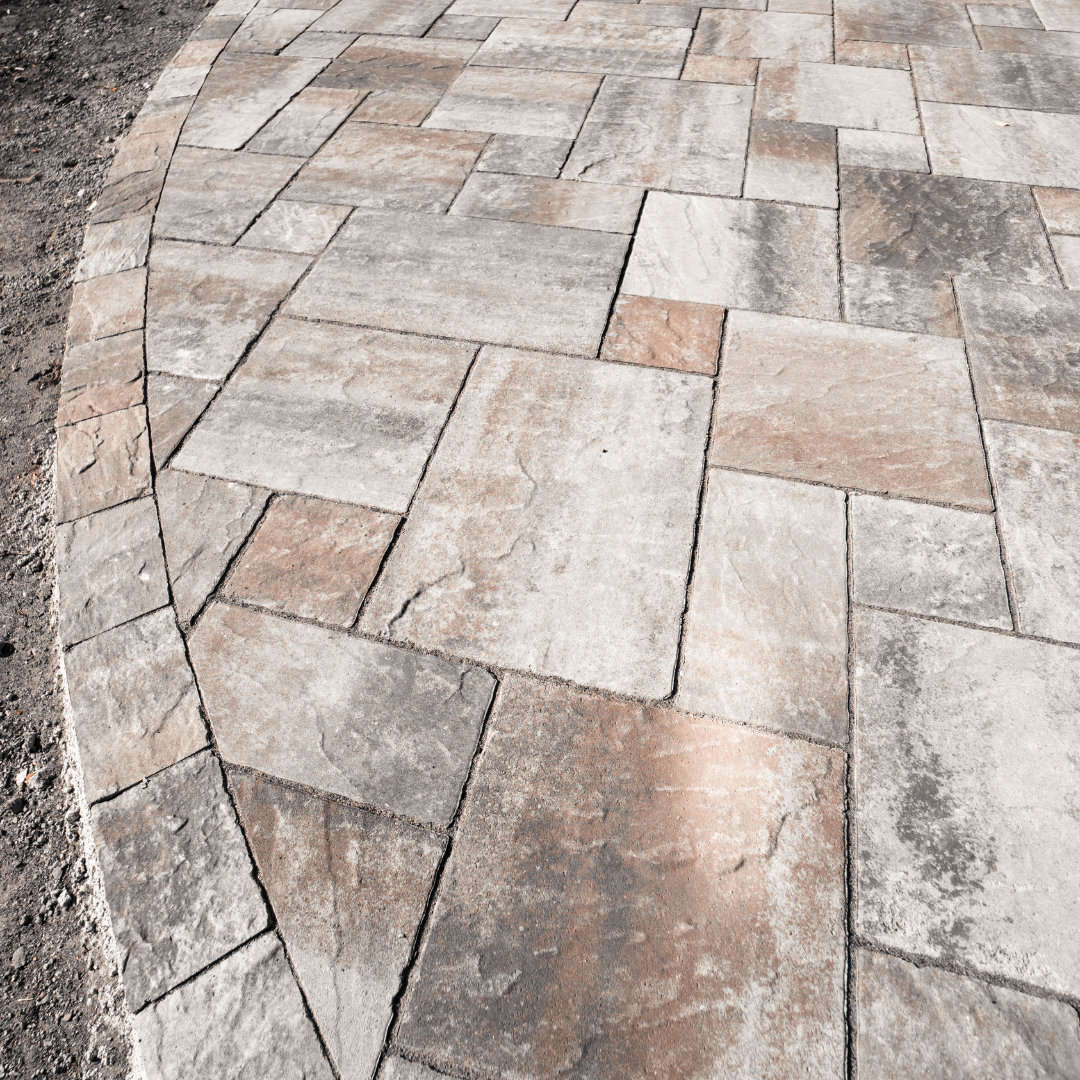
The material you select creates both the structural foundation for your vehicle traffic and the aesthetic frame for your home exterior.
- Standard Concrete Pavers: Manufactured from high-density aggregate and cement mixes, these are engineered to withstand rigorous compressive force (often exceeding 8,000 PSI). They offer the widest selection of shapes, shades, and textures at an accessible entry price.
- Clay Brick Pavers: Fired in kilns at extreme temperatures, authentic brick pavers feature deep, rich color tones that will never fade from UV exposure. Their classic look elevates traditional architectural styles.
- Natural Stone: Materials like granite, basalt, or porphyry provide an ultra-luxurious finish with unmatched natural variation. However, stone requires precise quarrying and specialized diamond-blade cutting tools, which increases labor time.
When exploring why pavers cost what they do, you are paying for manufacturing density, abrasion resistance, and dimensional consistency. Cheaply manufactured concrete units can absorb excess moisture, making them prone to surface spalling and premature wear under heavy vehicle tires.
Ground Excavation and Sub-Base Thickness
What lies beneath your driveway dictates whether it lasts five decades or starts failing in year two. Skimping on ground preparation is the quickest way to ruin an investment.
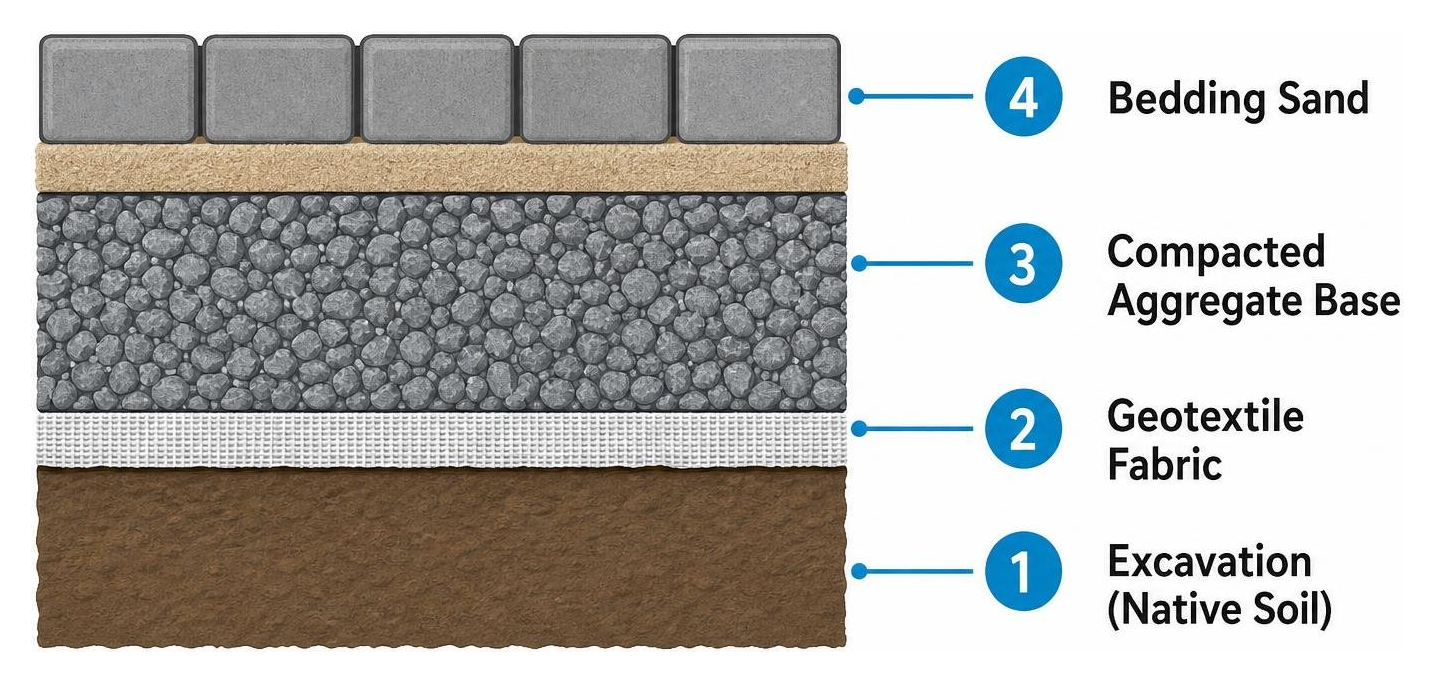
A high-performance installation requires careful excavation that accounts for vehicle weights and native soil conditions. In our 20+ years of local Bay Area experience, we frequently encounter expansive clay soils that shrink and swell across seasonal wet and dry spells.
- Demolition and Native Soil Excavation: The existing surface is broken up and excavated to an engineered depth (typically 10 to 16 inches for vehicular applications).
- Geotextile Separation Fabric: A heavy-duty woven geotextile fabric is laid over the native subgrade. This prevents soft soil from migrating upward into the clean crushed rock base while distributing wheel loads evenly.
- Compacted Road Base: Clean, crushed aggregate (such as Class 2 aggregate base) is installed in 2- to 3-inch lifts, with each lift compacted using high-force reversible plate compactors.
- Bedding Sand Layer: Exactly 1 inch of sharp, concrete bedding sand is screeded smoothly over the compacted stone base to set the pavers.
Following rigorous paver installation preparation protocols and consulting professional driveway paver installation guides ensures your driveway will not develop sunken wheel ruts over time.
Pattern Complexity and Custom Border Styles
Laying patterns are not just cosmetic; they provide vital mechanical interlock under the directional forces of vehicle braking, accelerating, and turning.
- Herringbone Pattern (45° or 90°): The undisputed industry standard for driveways. The interlocked zigzag geometry disperses rotational tire torque across adjacent stones, minimizing lateral shifting.
- Running Bond and Basketweave: Visually charming designs best suited for straight vehicular approaches or pedestrian walkways.
Selecting from popular driveway paver patterns influences the total number of cuts required along the driveway perimeter. A 45-degree herringbone requires precision cuts along every outer edge, increasing masonry labor hours.

Furthermore, securing the layout with reinforced concrete curbing, heavy-duty commercial restraints, and attractive driveway edging keeps the entire system rigid. Adding contrasting soldier course borders, sailor courses, or custom decorative inlays increases craftsmanship hours but delivers a distinct luxury look while blending walkways and entry landings seamlessly with your driveway.
Long-Term Value and Lifecycle Cost of Paver Driveways
To evaluate the true economic value of a driveway material, compare the complete lifecycle costs over 30 years rather than focusing solely on the initial installation quote.
| Driveway Surface Material | Initial Investment Level | Expected Lifespan | Typical Maintenance Tasks | Resistance to Cracking | Ease of Spot Repairs |
|---|---|---|---|---|---|
| Interlocking Pavers | Moderate to High | 30–50+ Years | Periodic sweeping, occasional joint sand refresh, optional sealing every 3–5 yrs | High (System flexes naturally with earth movement) | Excellent (Individual stones lift and reinstall easily) |
| Poured Concrete Slab | Moderate | 20–30 Years | Sealing every 2–3 yrs, expansion joint caulking | Low (Monolithic slab inevitably cracks with ground shifting) | Poor (Patches are obvious; full slab replacement required) |
| Asphalt Pavement | Low to Moderate | 12–20 Years | Sealcoating every 2–3 yrs, crack filling, resurfacing | Moderate (Softens in high heat, oxidizes and cracks with age) | Moderate (Cut-and-patch creates unsightly black seams) |
Upfront Investment vs Lifetime Maintenance Costs
While poured concrete or asphalt carries a lower initial receipt, their lifecycle expenses add up quickly. A solid concrete slab functions as a rigid sheet. When subgrade soils settle or expand, concrete cannot bend—it simply cracks. Once cracked, concrete cannot be invisibly repaired; you are left with permanent gray scars or the cost of breaking up the entire slab.
When reviewing a paver cost comparison against poured slabs, the durability of modular units becomes clear. Because an interlocking surface consists of thousands of independent joints, it flexes with seasonal ground movement rather than snapping under structural tension.
The maintenance cycle for pavers is simple and affordable:
- Occasional pressure washing to clear airborne grime.
- Applying joint stabilizing polymeric sand every few years to keep joints tight.
- Lifting individual pavers to repair isolated underground utility issues and simply placing the original stones back in place without leaving a visual trace.
For a deeper dive into these practical differences, review our guide on paver durability and aesthetics.
Curb Appeal and Return on Investment
Your driveway typically occupies up to a third of your property’s front visual plane. An aging, oil-stained asphalt pad or spalling concrete surface drags down the visual appeal of an otherwise gorgeous home.
Upgrading to an architectural paver design instantly boosts the exterior character of your property. Reviewing recent industry data on paver ROI and home value indicates that quality hardscaping often recovers 70% to 80%+ of its cost upon resale, while adding between $3,000 and $10,000 in immediate perceived buyer value.
If you are currently assessing when to redo an aging driveway, a cracked surface lowers buyer confidence regarding your home’s overall maintenance status.
Engineering and Installation Standards for Lasting Performance
A paver driveway is only as reliable as the civil engineering principles applied during installation. Proper execution balances weight distribution, stone thickness, and water management.
Structural Requirements for a Heavy-Duty Paver Driveway
Standard pedestrian patio pavers measure 40mm to 50mm thick. For vehicular traffic, that thickness is inadequate:
- 60mm (2.36 inches): The minimum standard for standard passenger vehicles, SUVs, and light pickup trucks.
- 80mm (3.15 inches): The mandatory commercial-grade thickness for properties that park heavy recreational vehicles (RVs), commercial delivery vans, or horse trailers.
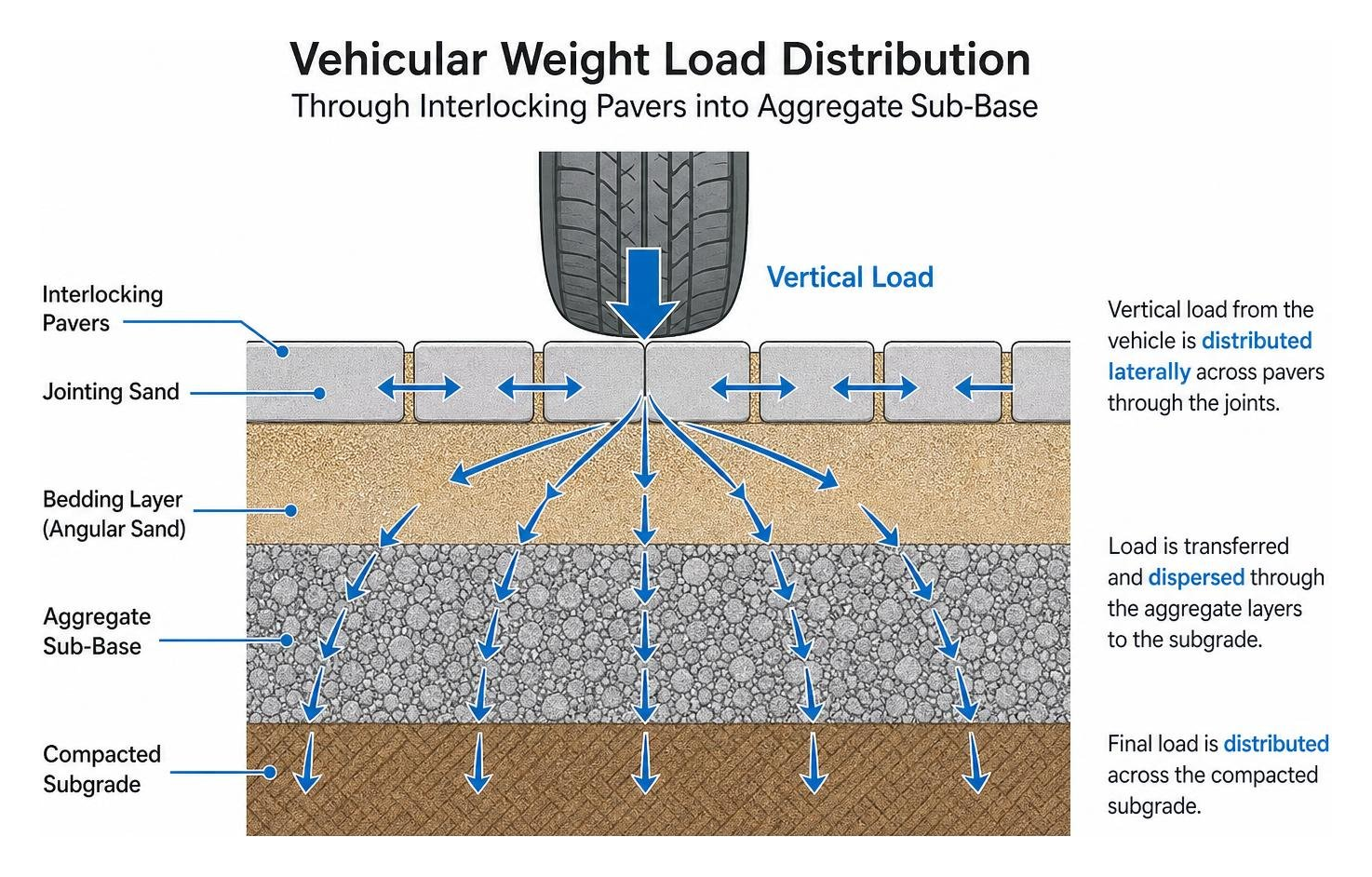
The load-bearing secret lies in friction-based interlock. When a heavy wheel drives over a paver, vertical force is converted into horizontal arching action across the surrounding stones via the sand joints. Avoiding common paver installation mistakes—such as using round playground sand instead of angular jointing sand or failing to run a 10,000-lb plate compactor over the surface—ensures the load transfers properly to the subgrade without rutting. Adhering strictly to professional engineering standards guarantees that the entire surface remains stable over decades of daily vehicle traffic.
Managing Runoff with a Permeable Paver Driveway
Municipal regulations across Northern California increasingly restrict impervious surface areas to reduce stormwater overload. Standard hard surfaces force dirty rainwater directly into street gutters and storm sewers.
A permeable interlocking pavers system solves this issue. Instead of fine sand, permeable installations use specialized open-graded aggregate joints (such as ASTM No. 8 or No. 89 stone) resting over an open-graded crushed rock reservoir (ASTM No. 57 and No. 2 stone). Rainwater drains instantly through the surface gaps, filtering directly into the ground beneath.
Key benefits of permeable installations include:
- Elimination of Standing Water: No standing ponds or slippery puddles around parked vehicles.
- Natural Groundwater Recharge: Returns clean, filtered moisture back into native water tables.
- Code Compliance: Helps homeowners meet local impervious-cover zoning limitations without sacrificing parking width.
- Durability in Wet Climates: Ideal for rainy seasons, heavy downpours, and regions with high annual precipitation.
Frequently Asked Questions About Paver Driveways
How much do pavers cost per square foot installed?
In 2026, a professionally installed residential paver driveway generally ranges from $18 to $35+ per square foot, depending on site-specific factors.
Major cost variables include:
- The volume of existing concrete or asphalt demolition required.
- Grading adjustments to correct surface runoff.
- The selection of standard concrete versus premium imported stone units.
- Access constraints (e.g., whether mini-excavators can easily reach the site).
For a complete regional breakdown of costs and pricing variables, review our localized guide on 2026 driveway pavers cost factors.
How long do interlocking paver driveways last?
A properly engineered paver driveway typically lasts 30 to 50 years or longer. In historical European city centers, interlocking stone paths have carried carriage and automotive traffic for centuries!
Because the interlocking layout is a flexible pavement system, it adjusts smoothly to natural freeze-thaw expansion and dry-season ground contraction. Unlike poured concrete slabs, it will not develop structural fracture lines across the middle of your driving lanes.
Does an interlocking driveway require routine sealing and joint sand?
While high-density concrete and clay pavers do not structurally require sealers to retain their strength, understanding how to seal pavers properly helps protect against oil spills, tire rubber marking, and UV fading. Sealing is generally recommended every 3 to 5 years.
Polymeric joint sand should be checked annually. Polymeric sand contains active binding polymers that harden when wetted, locking out weed seeds and preventing ants from tunneling through the joints. If oil or grease spots appear from parked cars, standard detergent washes or specialized hardscape cleaners using effective stain removal methods will lift the marks without damaging the stone.
Conclusion
Upgrading your home with a paver driveway transforms your curb appeal while adding decades of durable, low-maintenance performance. By distributing heavy vehicle weight across interlocking units and eliminating the ugly cracking of rigid concrete slabs, pavers deliver long-term value that outlasts alternative paving methods.
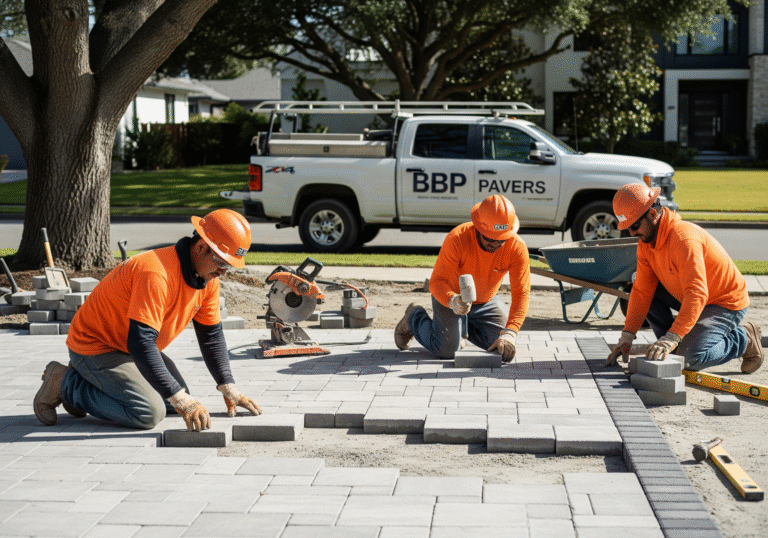
At BBP Pavers, we bring over 20 years of Bay Area hardscape expertise to every project. From soil evaluation and multi-layer base compaction to precision diamond cuts and perimeter restraints, our safety-first process and 100% satisfaction guarantee ensure your new driveway looks stunning and performs reliably for decades to come.
Ready to elevate your home exterior? Connect with us at BBP Pavers today to schedule your design consultation and get a free, detailed project quote.