Why Travertine Pavers Cost More to Install Than Standard Concrete

Why Travertine Pavers Cost More to Install Than Standard Concrete
Why Travertine Pavers Cost More Than Standard Concrete
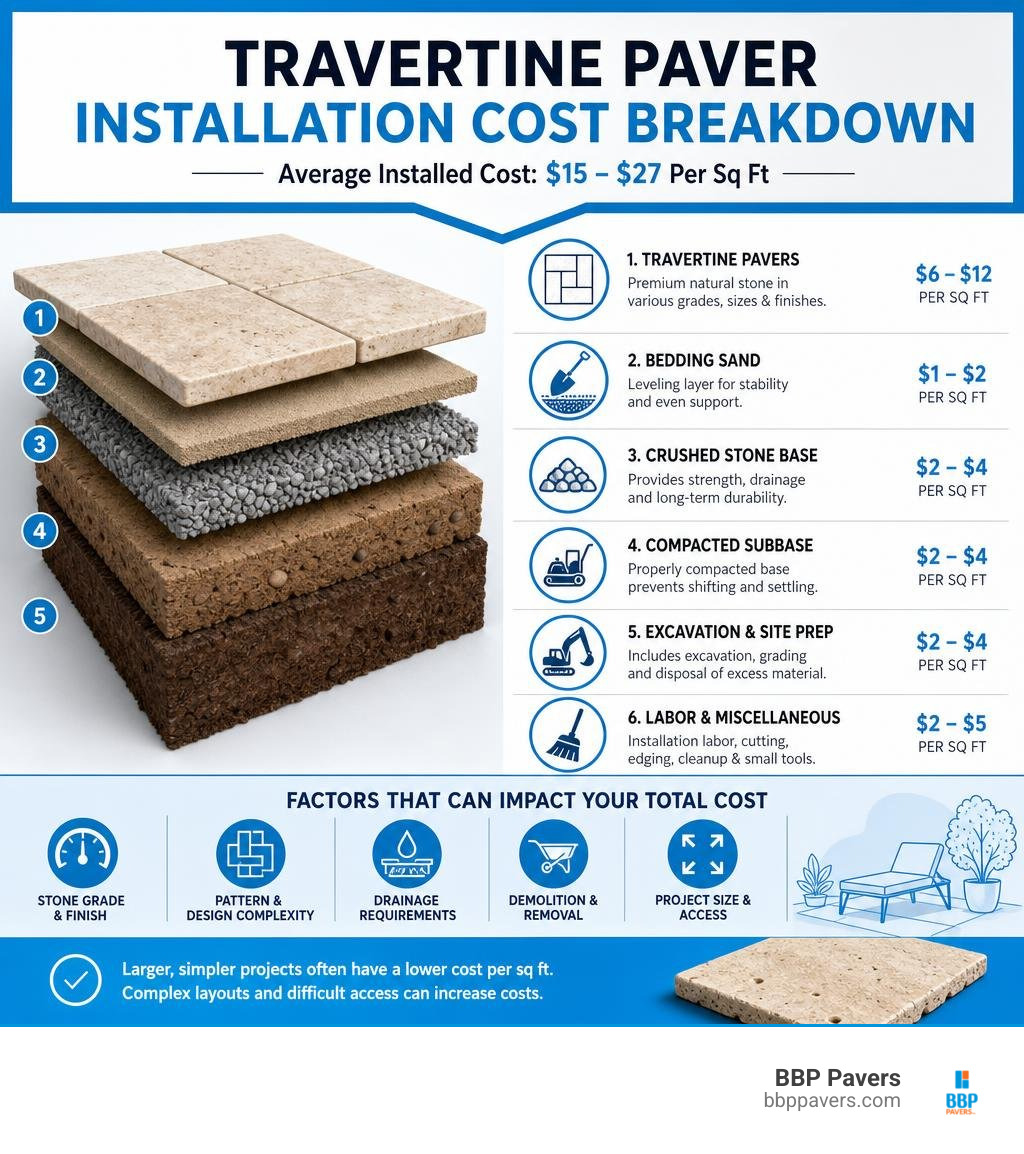
In 2026, the average cost to install travertine pavers per sq ft is typically $15 to $27, while detailed national estimates place a standard installation closer to $20.37 to $26.24 per square foot. In the Bay Area, higher labor and delivery costs can push a quote toward the upper end of that range.
Travertine costs more than standard concrete because it is thick natural limestone that requires careful handling, cutting, base preparation, and installation. The final price also depends on the stone grade, pattern, excavation needs, drainage, demolition, and project size.
For a useful starting budget, multiply your square footage by $20 to $27, then set aside extra funds for site work and optional sealing. A small 100-square-foot walkway may carry a higher per-square-foot price because crews, delivery, and equipment still have minimum costs. Larger patios and pool decks can benefit from better unit pricing, but complex layouts can erase those savings.
Travertine can be a major visual upgrade over concrete, especially for patios, pool decks, and entry walkways. But the best quote is not simply the lowest one. It should clearly show the pavers, base depth, drainage plan, labor, waste allowance, and removal work included.
Average Cost to Install Travertine Pavers Per Sq Ft in 2026
When evaluating your outdoor remodeling budget, determining accurate figures is essential. Nationally, homeowners investing in natural stone hardscaping pay between $15 and $27 per square foot for a complete travertine installation. For a standard residential footprint—such as a 300-square-foot patio—the total investment typically averages $6,380, with most completed projects falling between $4,200 and $8,550.
According to benchmark data from the Cost to Install Travertine Pavers – 2026 Cost Calculator (Customizable), baseline turnkey costs for mid-range travertine installations range from $20.37 to $26.24 per square foot. This comprehensive calculation accounts for excavation, granular subbase compaction, bedding sand, edge restraints, masonry cutting, and polymer-modified joint sand.
In contrast, manufactured concrete pavers generally average $10 to $18 per square foot fully installed. To see how project size influences the total investment between these two materials, consider the following cost comparison:
| Project Area (Sq Ft) | Standard Concrete Pavers ($10–$18/sq ft) | Travertine Pavers ($15–$27/sq ft) | Typical Application |
|---|---|---|---|
| 100 sq ft | $1,000 – $1,800 | $1,500 – $2,700 | Garden Walkway, Front Entry |
| 300 sq ft | $3,000 – $5,400 | $4,500 – $8,100 | Standard Backyard Patio |
| 600 sq ft | $6,000 – $10,800 | $9,000 – $16,200 | Surrounding Pool Deck |
| 1,000 sq ft | $10,000 – $18,000 | $15,000 – $27,000 | Full Driveway & Motor Court |
As the table shows, natural stone commands an upfront premium over manufactured products. However, travertine delivers unique natural aesthetics, lasting durability, and naturally cool surface temperatures in direct sunlight.
Understanding the Average Cost to Install Travertine Pavers Per Sq Ft: Material vs Labor
To see where your budget goes, it helps to divide the total cost into materials, professional labor, and general contractor overhead. If you have ever wondered why pavers cost so much, a close look at the material and labor breakdown provides clarity:
- Materials ($4 to $11 per sq ft for standard pavers; $8 to $30 for premium grades): This line item includes the quarried travertine stones, crushed aggregate base rock, washed concrete bedding sand, and polymeric joint sand.
- Specialized Labor ($5 to $10 per sq ft, or $50 to $100 per hour): Skilled masons carefully level the subgrade, screed the bedding layer, hand-cut stone borders, and set each paver to ensure smooth transitions without trip hazards.
- Contractor Overhead and Supervision (13% to 22% markup): Professional hardscape companies include project management, site safety protocols, commercial equipment depreciation (such as plate compactors and wet masonry saws), and comprehensive warranty backing.
When comparing a contractor’s itemized proposal with DIY retail materials, keep in mind that raw stone accounts for only a portion of the project. Specialized machinery, site grading, and experienced masonry crews represent the rest of the investment.
Average Cost to Install Travertine Pavers Per Sq Ft by Project Type
Different outdoor features have unique structural and labor requirements that impact the overall price per square foot:
- Walkways (100 sq ft): $1,050 to $2,700. Because small spaces still require delivery fees, base mobilization, and intricate border cuts along landscape edges, walkways often sit at the higher end of unit pricing.
- Patios (300 sq ft): $4,500 to $8,100. Outdoor living spaces using patio pavers benefit from open layouts, making standard square and rectangular installations efficient to complete.
- Pool Decks (600 sq ft): $9,000 to $16,200. Designing with natural stone around pool decks requires specialized bullnose coping, custom radius cuts around pool curves, and strict drainage pitching away from the water edge.
- Driveways (1,000 sq ft): $21,000 to $27,000. Heavy vehicular traffic demands thicker stones (minimum 2 inches), deep structural aggregate excavation, and reinforced concrete edge curbing, bringing driveway pavers to the premium end of the pricing spectrum.
Travertine vs Standard Concrete Pavers: Key Installation Differences
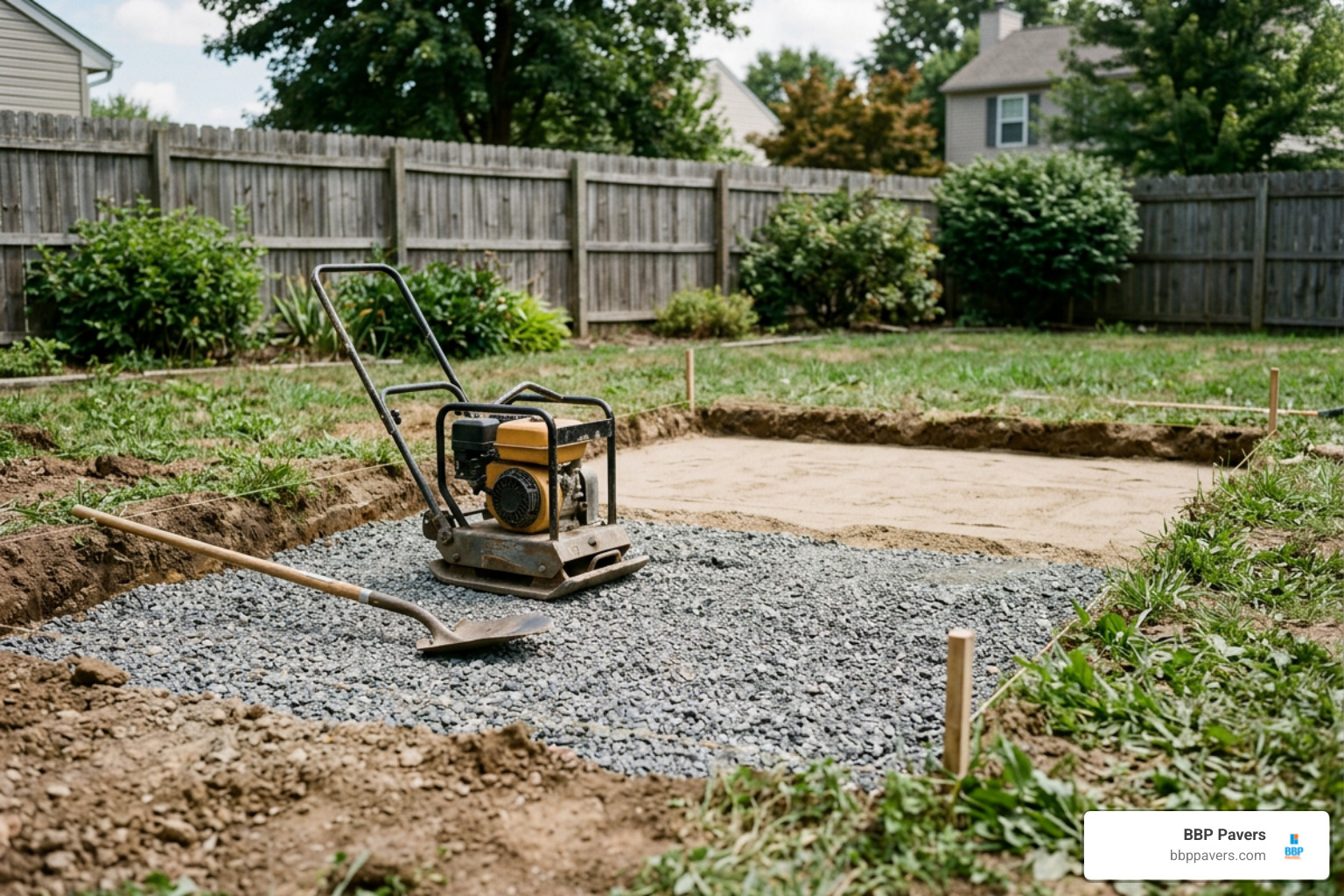
Why does installing natural travertine require a larger investment than laying interlocking concrete pavers? The answer lies in the structural differences between factory-cast concrete and quarried sedimentary stone.
Concrete pavers are manufactured in controlled factory environments with uniform dimensions, consistent thicknesses, and built-in spacer lugs. Masons can place them quickly across screeded sand bedding. Travertine, by contrast, is a natural limestone quarried from mineral spring deposits. Because every stone contains unique variations, density differences, and slight dimension variances, installation requires meticulous artisan craftsmanship.
Material Characteristics and Structural Base Depth
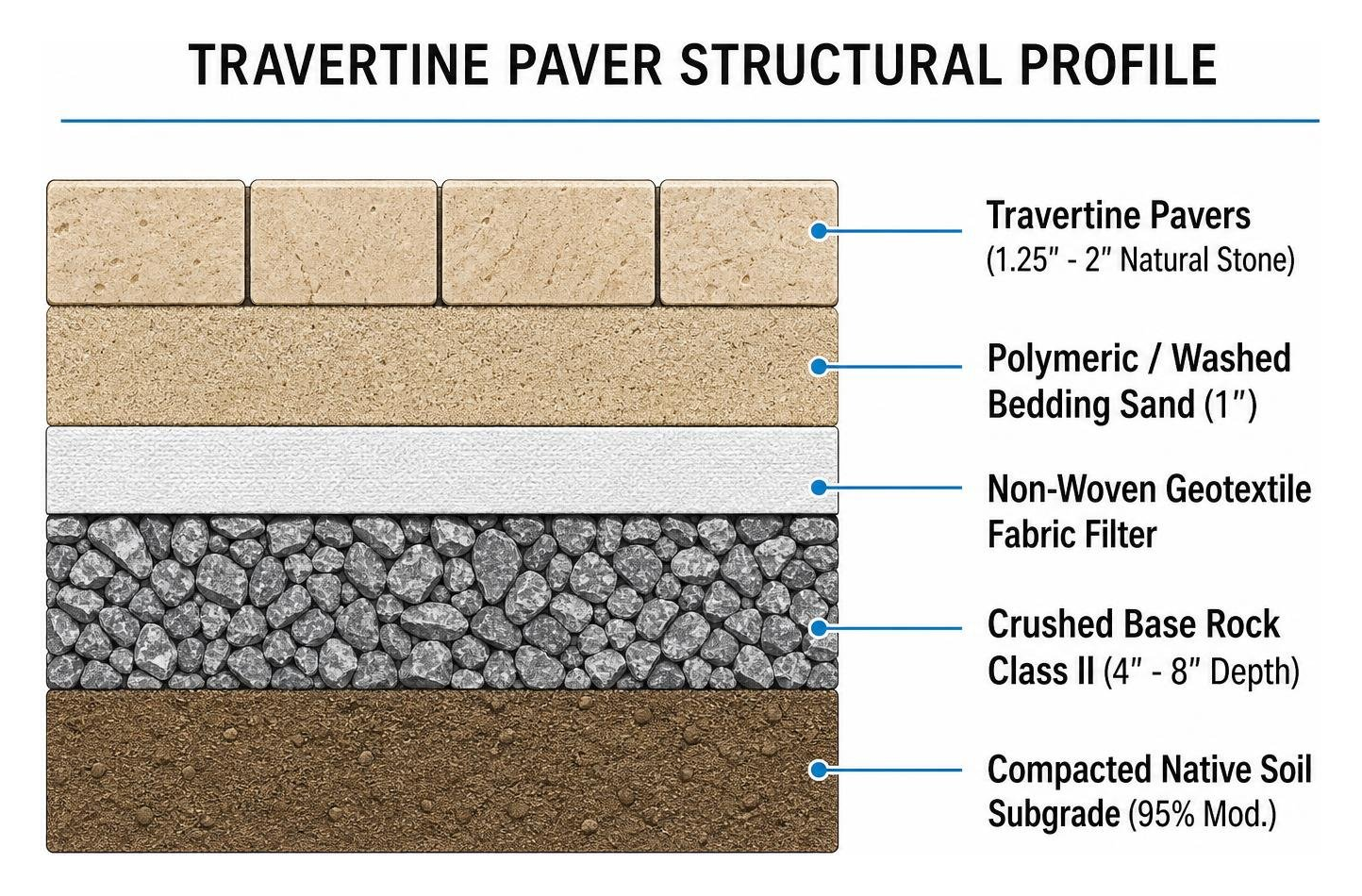
Travertine pavers for outdoor use are cut to thicknesses ranging from 1.25 to 2 inches. Because natural limestone lacks the internal flexibility of reinforced concrete, it relies entirely on its subbase for structural support.
Achieving a durable installation requires thorough paver installation preparation. Our installation process follows clear engineering standards:
- Excavating native soil down 6 to 10 inches depending on soil load-bearing capacity and freeze-thaw requirements.
- Laying high-tensile geotextile filter fabric to prevent soil migration into the aggregate.
- Installing a Class II crushed aggregate base compacted to 95% density in 2-inch lifts.
- Screeding an even 1-inch bedding layer of coarse sand.
- Setting the travertine pavers with uniform joint spacing before securing the perimeter with heavy-duty edge restraints.
Failing to build a solid aggregate foundation can cause natural stone to crack under load. Creating a stable, well-drained base requires extra excavation time, aggregate materials, and mechanical compaction, which is reflected in the initial labor quote.
Cutting, Pattern Complexity, and Masonry Labor Requirements
Unlike standard concrete units that can be split with a mechanical paver guillotine, natural travertine must be shaped using continuous-rim diamond blades mounted on water-cooled wet masonry saws. Wet cutting prevents chipping along the natural stone edges and controls airborne limestone dust.
Complex multi-piece layouts—such as the four-size French (Versailles) pattern—require master masons to balance interlocking joints, stone colors, and surface textures across the entire patio field. These intricate patterns take roughly 20% to 35% longer to install than standard straight layouts, which slightly increases the labor cost per square foot.
Primary Cost Factors Influencing Travertine Paver Installation
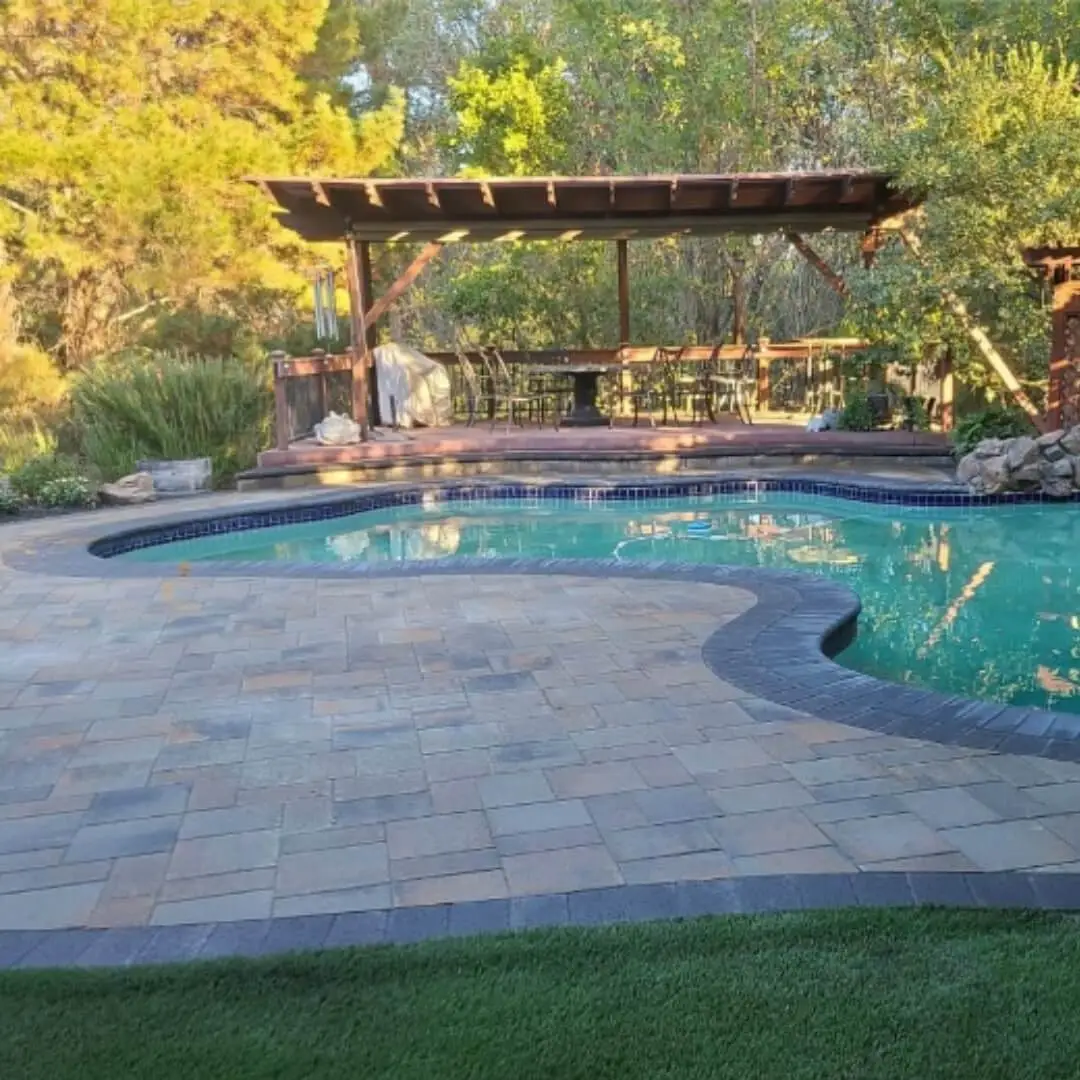
Beyond simple square footage, several project-specific variables influence your final quote. Understanding these factors will help you make informed decisions when planning your project.
Travertine Grade, Sizing, and Edge Details
Natural travertine is categorized into three commercial quality grades:
- Commercial Grade ($4 to $7 per sq ft material only): Features pronounced natural voids, wide color variations, and larger unfilled cavities. While suitable for basic walkways, it requires more joint sand and careful handling.
- Standard Grade ($5 to $15 per sq ft material only): The most popular choice for residential patios and courtyards, offering balanced color tones, small natural voids, and dependable structural density.
- Premium Architectural Grade ($8 to $30 per sq ft material only): Sourced from the densest limestone beds, these pavers feature consistent coloration, minimal surface voids, and square, diamond-sawn edges.
For pool surrounds, travertine pool coping adds a refined finishing touch. Standard 12″×24″ bullnose coping stones cost $5 to $12 per linear foot for materials alone, or $15 to $40 per linear foot fully installed with mortared bond beams.
Site Preparation, Excavation, and Demolition
Every long-lasting hardscape begins beneath the ground. If your backyard features sloped terrain, poor drainage, or old concrete, preparation work will be part of the initial budget:
- Standard Excavation & Soil Removal: Costs typically range from $300 to $2,000, depending on site accessibility and haul-away requirements.
- Yard Leveling and Grading: Complex hillside slopes or extensive regrading to establish a 1/8-inch-per-foot drainage pitch range from $1,450 to $3,700.
- Demolition of Existing Concrete: Breaking out and hauling away old 4-inch concrete slabs or brick work can add $1,200 to $3,700 in labor, equipment, and dump fees.
Sealing, Coping, and Long-Term Maintenance
Travertine is naturally porous, meaning its open cellular structure can absorb moisture, food oils, and pool chemicals if left unprotected.
Applying a high-performance, breathable penetrating sealer costs $1.50 to $3.25 per square foot. Sealing protects against outdoor stains, enhances the stone’s natural tones, stabilizes joint sand, and guards against surface erosion from pool salts or heavy UV exposure. Plan for a light resealing every 2 to 3 years to keep your outdoor stone looking its best.
Regional Labor Rates and Project Scope Economics
Where you live directly affects your overall project budget. Metropolitan areas with higher living costs, strict permitting rules, and regional logistics fees naturally sit at the higher end of the pricing scale.
According to national market data compiled in the Travertine Tile Outdoor Price: Typical Costs, Materials, and Regional Variations 2026 – Current Cost report, projects in West Coast and Northeast metropolitan areas run 15% to 25% higher than those in the Midwest or Southeast. This difference is driven primarily by certified trade labor rates, fuel costs, and freight shipping fees from port terminals.
Project size also creates economies of scale. Mobilizing heavy equipment, delivering bulk gravel, and setting up staging areas carry fixed base costs. Once project sizes exceed 500 square feet, the overall cost per square foot often drops because crews can work continuously across open spaces.
Frequently Asked Questions About Travertine Paver Costs
Can travertine pavers support vehicular traffic on driveways?
Yes, travertine can support passenger vehicle traffic when installed with proper structural specifications. Driveways require pavers that are at least 2 inches (50 mm) thick, set over a 6 to 8-inch compacted Class II aggregate base, and secured with reinforced concrete edge restraints. Avoid using thin 1.25-inch tiles or standard-grade stones with large unfilled voids for driveways, as these are designed only for pedestrian use.
How often do travertine pavers require professional sealing?
For standard outdoor patios and garden walkways, resealing every 2 to 3 years with a breathable, penetrating natural stone sealer is recommended. Patios with outdoor kitchens or pavers installed around saltwater pools benefit from sealing every 1 to 2 years to guard against oil stains and chemical weathering.
How does the ROI of travertine compare to standard concrete pavers?
According to national real estate remodeling studies, high-end stone hardscaping delivers an average return on investment (ROI) of roughly 70% at resale. Travertine appeals to homebuyers because it maintains a cool surface under direct summer sun, resists fading over decades, and adds upscale aesthetic value to outdoor living spaces.
Conclusion
While natural travertine pavers require a larger initial investment than standard concrete, their distinctive look, heat-dispersing properties, and long lifespan make them a rewarding upgrade for your home’s outdoor spaces.
At BBP Pavers, we bring over 20 years of local Bay Area hardscape expertise to every project. Our certified masons build each patio, driveway, and pool surround using a safety-first process, quality base preparation, and an ironclad 100% satisfaction guarantee.
Ready to transform your outdoor living space? Explore our detailed guide on paver patio installation cost or contact us today for a free on-site design consultation and personalized estimate.