A Comprehensive Guide to Brick Pavers: Types & Costs

A Comprehensive Guide to Brick Pavers: Types & Costs
Brick Pavers: A Durable, Timeless Choice for Bay Area Homes
Brick pavers are individual, full-depth clay bricks made for horizontal outdoor surfaces such as driveways, patios, walkways, and pool decks. Unlike poured concrete or asphalt, they are installed as separate units over a prepared base, so individual bricks can be lifted and replaced if repairs or utility work are needed.
Clay brick pavers bring a classic look, strong load capacity, and long-lasting color to outdoor spaces. Many clay pavers exceed 10,000 psi in compressive strength, while their kiln-fired color runs through the material rather than sitting on the surface. That makes them a practical choice for homeowners who want curb appeal without committing to a surface that can be difficult to patch.
For a Bay Area driveway or patio, the right result depends on more than the brick itself. Proper grading, drainage, base compaction, edge restraints, and pattern choice all matter. A 90-degree herringbone layout, for example, is often a smart fit for driveways because its interlocking design helps manage vehicle traffic.
This guide explains the main types of brick pavers, realistic cost factors, installation options, design patterns, maintenance needs, and when professional installation is worth it.
Understanding Brick Pavers: Types, Materials, and Key Benefits

When selecting hardscape materials, understanding the composition of clay pavers is essential. Authentic clay bricks are formed from natural clay and shale, molded into uniform or antiqued shapes, and vitrified in kilns at temperatures near 2,000°F. This extreme firing process fuses minerals at a molecular level, creating a non-porous, highly dense unit that resists heavy loads, moisture, and chemical exposure.
Several distinct varieties exist to meet structural and aesthetic goals:
- Standard Clay Brick Pavers: Full-depth units (typically 2¼ to 2⅝ inches thick) designed for sand-set or mortarless horizontal applications. They handle heavy vehicular weight and everyday pedestrian traffic with ease.
- Hand-Thrown and Artisanal Bricks: Molded individually using historic techniques, these feature soft edges, slight surface variations, and rich color mottling, offering old-world character for classic architecture.
- Reclaimed Historic Bricks: Salvaged from antique streets and centuries-old structures, these bricks deliver an authentic vintage patina. Some original colonial clay pavers remain functional after more than 200 years in service.
- Thin Brick Veneers: Measuring roughly ½ inch to 1 inch thick, these units are engineered for concrete overlay applications, interior flooring, or structural porches where height clearance and load-bearing weight limits prevent full-depth bricks.
Unlike surface-pigmented concrete, clay brick colors stem from natural iron oxides and mineral compositions fired through the entire body of each paver. This structural permanence means clay units fade as little as 2% over their first two years and merely 5% across two decades. With compressive strengths commonly spanning 10,000 to 12,000 psi, genuine clay outperforms standard concrete slabs under heavy stress.
To weigh your material options, compare how clay holds up against concrete, or explore a brick pavers vs concrete pavers full comparison alongside alternatives like natural stone vs porcelain pavers:
| Feature / Metric | Clay Brick Pavers | Standard Concrete Pavers | Poured Concrete Slab |
|---|---|---|---|
| Compressive Strength | 10,000 to 12,000+ psi | 8,000 psi | 3,000 to 4,000 psi |
| Expected Lifespan | 50 to 100+ years | 25 to 40 years | 15 to 25 years |
| Color Retention | Fired-in through-body pigment (≤5% fade in 20 yrs) | Surface dyes (fades over time with UV exposure) | Surface stains or integrated dye (prone to UV fade) |
| Maintenance & Repair | Lift-and-replace individual units | Lift-and-replace individual units | Requires destructive patching or complete repour |
| Initial Cost per Sq. Ft. | Moderate to Premium | Budget to Moderate | Budget |
Common Applications and Layout Designs for Hardscapes
Popular Patterns and Layouts for Brick Pavers
The geometric arrangement of pavers governs both the visual aesthetic and the structural integrity of your hardscape. Because rectangular bricks create friction along their adjoining faces, certain patterns lock together to disperse weight more efficiently.
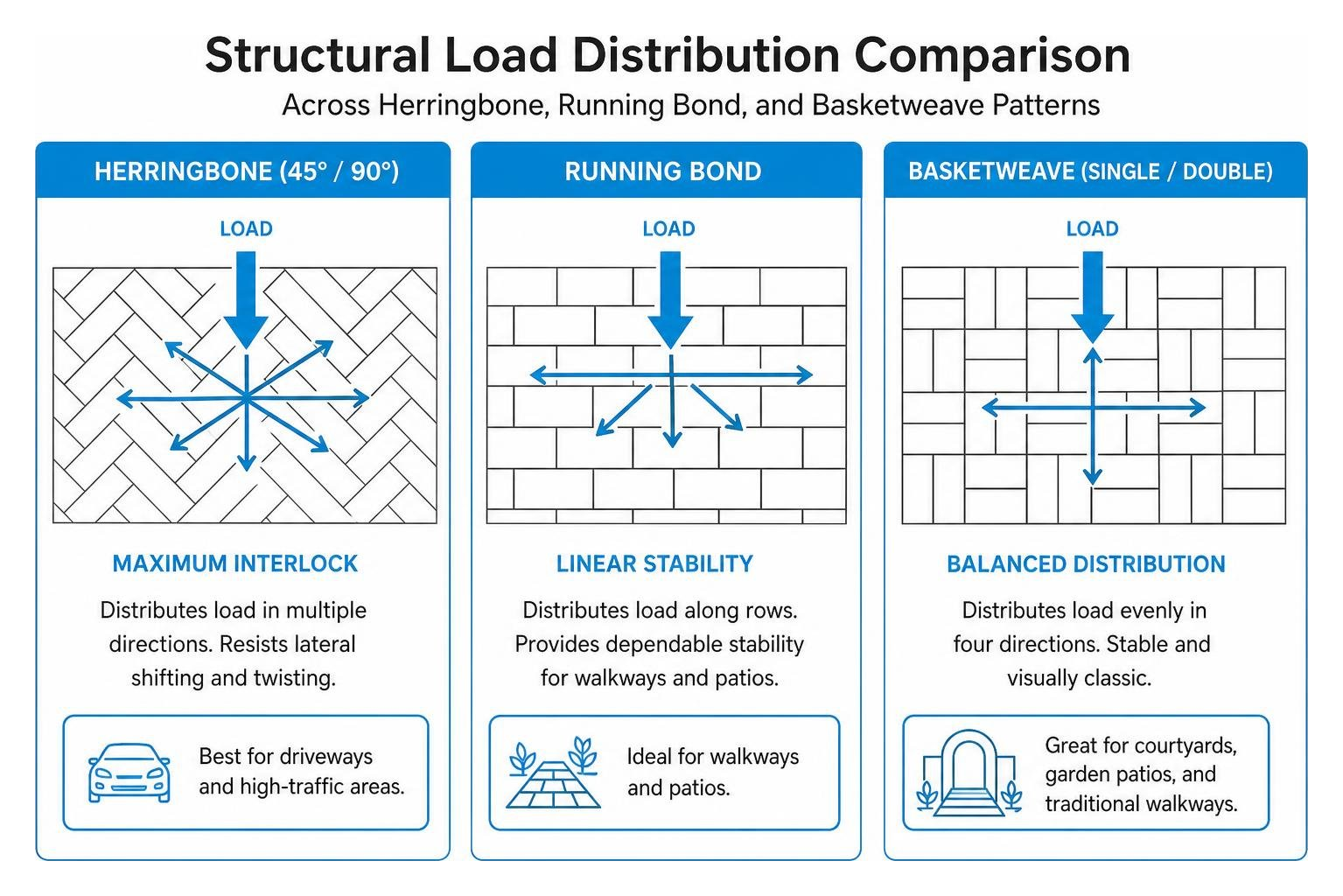
- Herringbone (45° and 90°): Pavers are laid in an alternating, perpendicular zig-zag pattern. This creates maximum mechanical interlock, locking pavers together so they resist lateral shifting under twisting car tires. It is the premier choice for driveways and high-traffic areas. You can view inspiring layout configurations in our overview of driveway paver patterns.
- Running Bond: Bricks are laid in straight parallel rows with each joint offset by half a brick width. This linear pattern visually elongates walkways and modern patios while providing dependable stability.
- Single and Double Basketweave: Pavers are paired horizontally and vertically in repeating checkerboard grids. This classic design works well for historic courtyards, quiet garden patios, and traditional walkways.
- Chevron: Bricks are mitered at angular cuts to create sharp, directional V-shapes. While labor-intensive, it adds refined architectural flair to focal areas and borders. For more creative styling ideas, check out our guide to geometric paver designs.
Outdoor Living Spaces: Driveways, Patios, Walkways, and Pool Decks
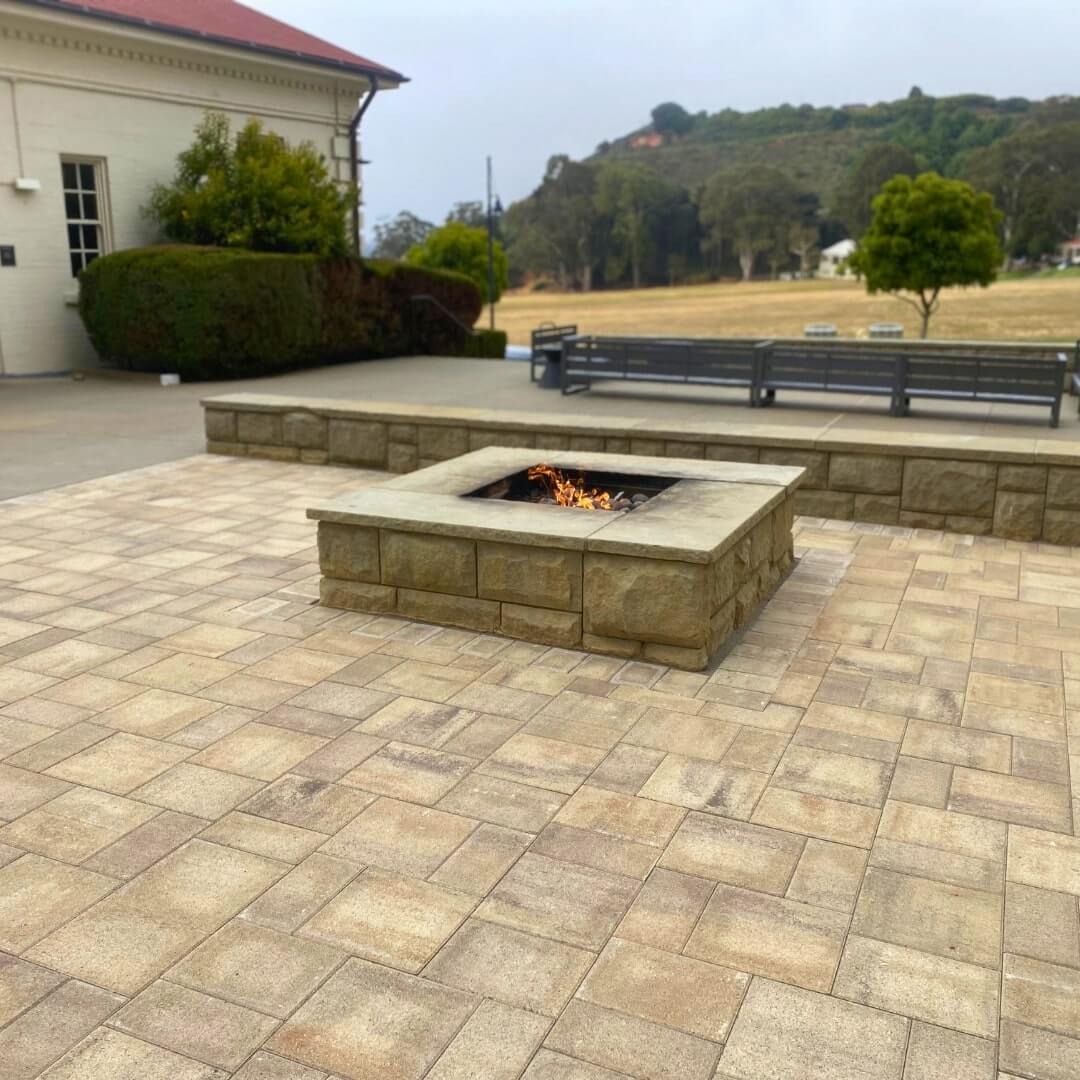
Because clay distributes weight across individual units, it adapts smoothly to various residential hardscape installations:
- Driveways: Heavy vehicles demand robust foundations and durable surfaces. Our custom paver driveway installation uses interlocking layouts like herringbone to manage dynamic vehicle loads without the cracking common to poured concrete.
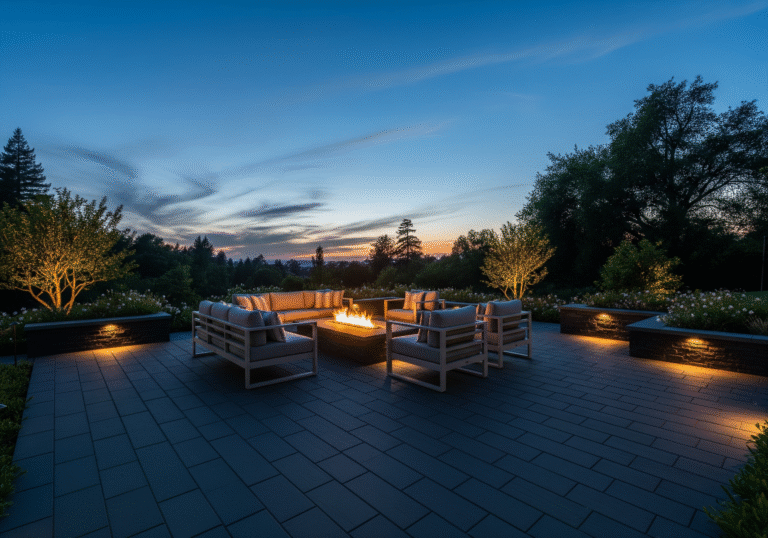
- Patios and Outdoor Kitchens: Brick surfaces remain cool underfoot on sunny afternoons due to their natural thermal density. They handle high-temperature exposure near outdoor cooking zones, making them ideal for a patio paver installation featuring custom fire pits or barbecue islands.
- Pool Decks: Natural clay offers a slip-resistant micro-texture, keeping pool surrounds safe when wet. Review our pool deck pavers guide for moisture management best practices.
- Walkways and Garden Paths: Smooth brick pathways create inviting transitions between garden zones, landscape borders, and main entries. Gather functional layout concepts from our paver walkway ideas.
Installation Methods, Base Preparation, and Site Engineering
Sub-Base Engineering, Edging, and Setting Techniques
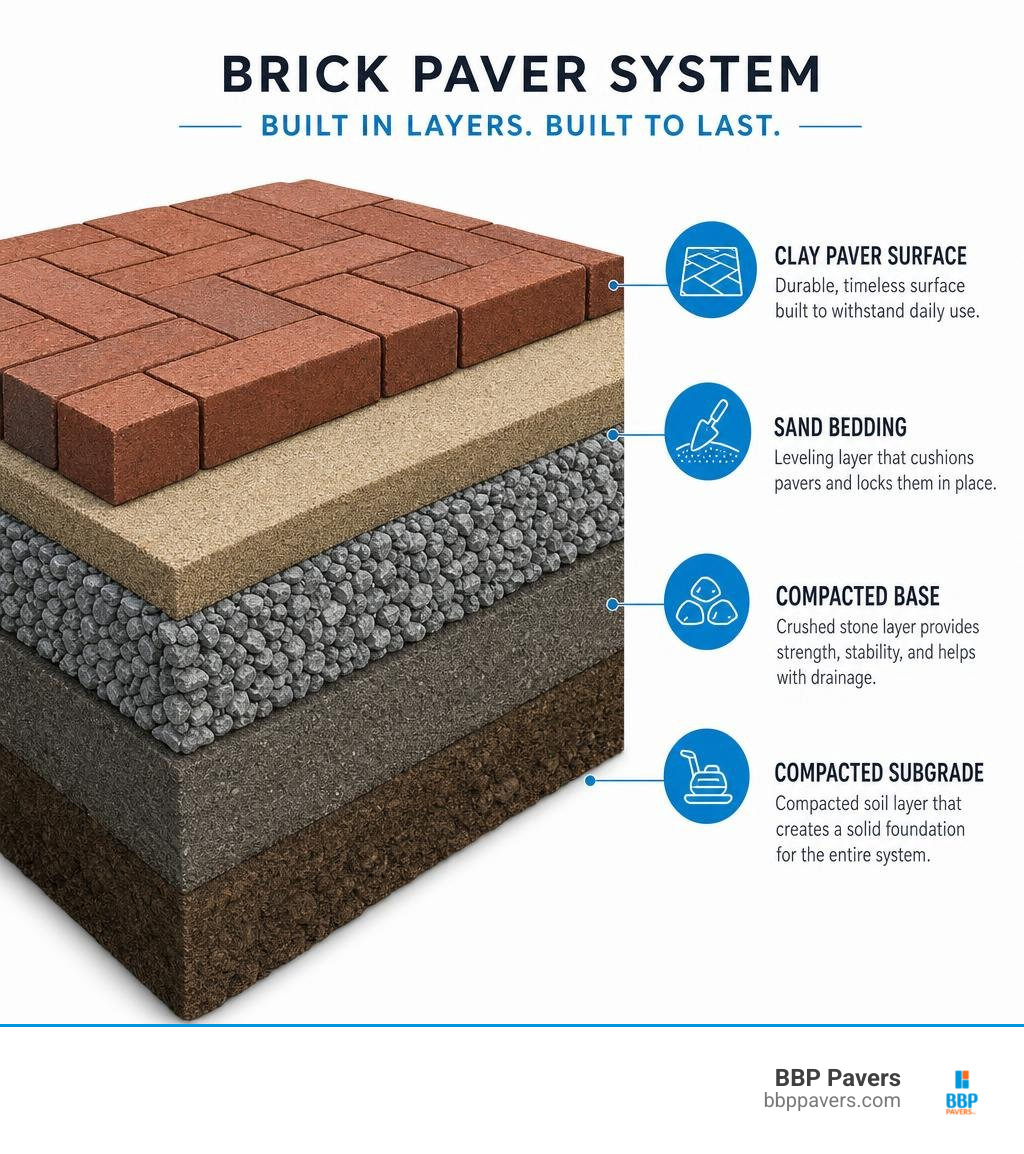
A beautiful paver surface is only as stable as the engineering beneath it. Professional installations rely on industry best practices and standards from the Interlocking Concrete Pavement Institute to create a mortarless, flexible interlocking pavement system that withstands settlement and heavy use without surface cracking.
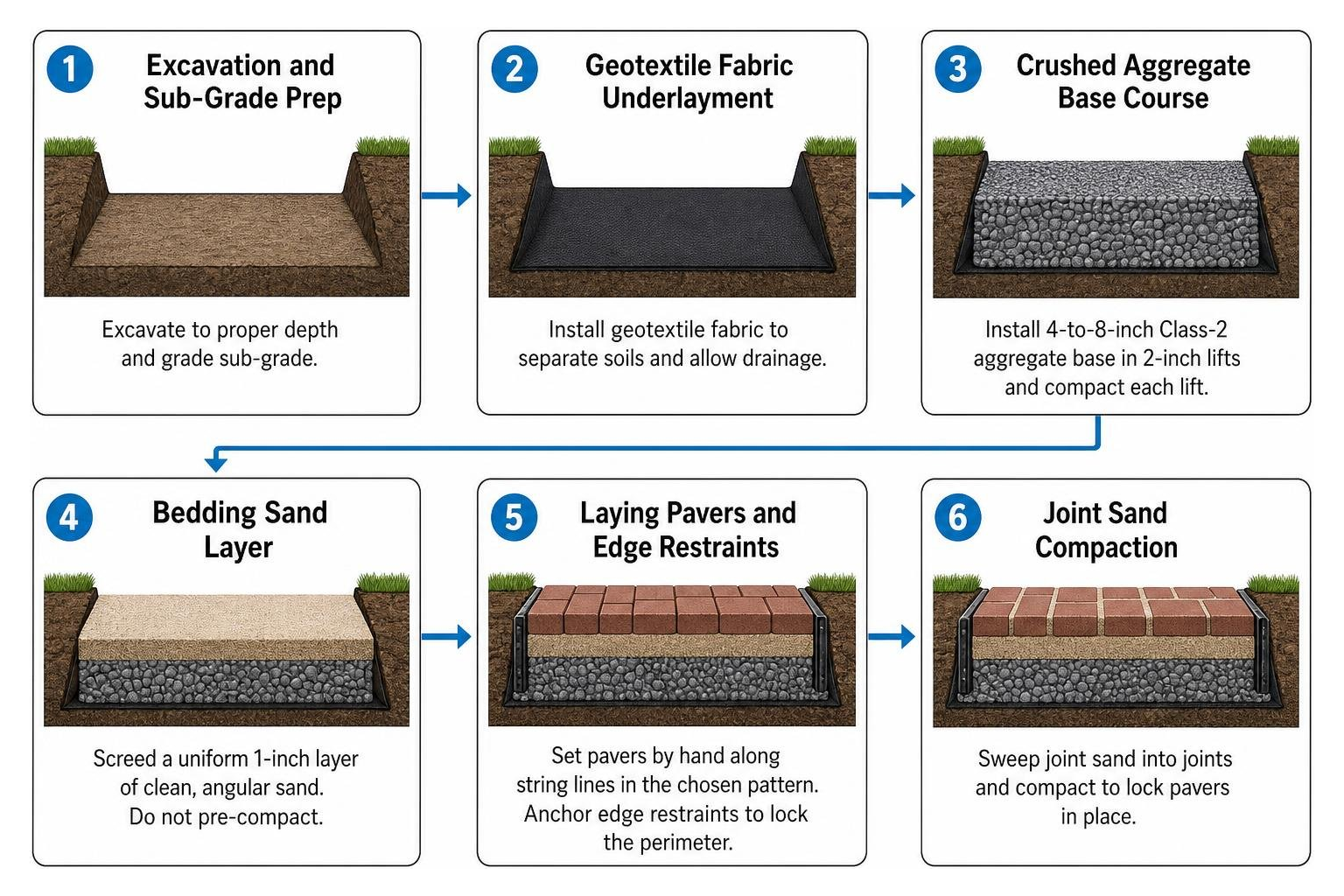
- Excavation and Sub-Grade Prep: The soil is excavated to a depth of 7 to 12 inches depending on soil type and intended loads (pedestrian paths require less depth, while driveways demand more). The native soil is graded to ensure water flows away from home foundations.
- Geotextile Fabric Underlayment: High-strength woven geotextile fabric separates native sub-grade soils from the gravel base, preventing aggregate migration while allowing groundwater drainage.
- Crushed Aggregate Base Course: A 4-to-8-inch layer of Class-2 road base aggregate is installed in 2-inch lifts, with each layer mechanically compacted to over 98% Standard Proctor density.
- Bedding Sand Layer: A uniform 1-inch layer of clean, angular concrete sand is screeded over the compacted gravel base without pre-compaction.
- Laying Pavers and Edge Restraints: Pavers are hand-placed along string lines in the selected pattern. Rigid polymer or reinforced concrete edge restraints are anchored firmly into the aggregate base to lock the perimeter against lateral spread.
- Polymeric Sand Jointing and Compaction: High-performance polymeric sand is swept into joints. A mechanical plate compactor beds the bricks into the sand layer while vibrating joint sand into place. Light misting activates the polymers to create a durable, weed-resistant joint.
To avoid structural settlement, avoid common installation pitfalls by reviewing 5 paver installation mistakes to avoid. For step-by-step guidance, follow our guides on how to lay pavers and paver installation preparation steps.
Climate Considerations: Freeze-Thaw and Regional Conditions
While Bay Area homeowners rarely encounter severe ground frost, seasonal atmospheric shifts, wet winters, and intense summer UV rays still influence hardscape performance:
- Sub-Surface Water Management: Heavy winter rains can saturate uncompacted soils, causing localized sinking. We grade all base profiles with a minimum 1% to 2% slope (⅛ inch to ¼ inch drop per linear foot) away from home foundations.
- UV and Heat Stability: Extreme sun exposure can break down surface dyes in artificial pavers, but natural clay withstands high UV indices without surface degradation or chalking.
- Efflorescence and Salt Resistance: Natural clay bricks resist salt exposure around swimming pools and coastal air, minimizing the white mineral deposits (efflorescence) common in concrete slabs. Explore more regional considerations in our guide on how to select pavers for your project.
Cost Breakdown, Property Value ROI, and Maintenance
Investing in brick pavers elevates your property’s exterior functionality and aesthetic appeal. In the current 2026 market, professional brick paver installations generally range from $18 to $35 per square foot, depending on site access, required excavation depth, drainage modifications, and the specific clay paver style selected.
Here is an overview of standard hardscape budgeting considerations:
- Materials: Standard clay pavers range from $4 to $12 per square foot for materials, while handmade, salvaged, or antique thin brick veneers range from $8 to $18+ per square foot.
- Site Preparation and Sub-Base Labor: Earthmoving, disposal, grading, aggregate base installation, and compaction make up roughly 50% to 65% of overall project costs.
- Return on Investment (ROI): Hardscape improvements consistently deliver strong returns. Quality paver driveways and landscaped patios frequently yield up to a two-fold return upon property resale by enhancing curb appeal and outdoor usable square footage. Compare current pricing trends in our paver patio cost in 2026 analysis and explore whether do pavers increase home value.
Maintenance for clay brick pavers is minimal compared to other surfaces:
- Routine Cleaning: Clear surface debris with a leaf blower or garden hose. Wash periodic dust and organic stains using mild biodegradable soap and water.
- Stain Removal: For motor oil spills or barbecue grease, lift the residue promptly using specialized hardscape degreasers. Learn practical cleaning tips in our walkthrough on how to remove paver stains.
- Joint Sand Maintenance: Polymeric sand joints last 5 to 10 years. Inspect joints occasionally and top them off if settling occurs to deter moss and weeds.
- Optional Sealing: Clay pavers do not require sealers for color protection, but breathable penetrating sealers can provide extra oil and stain resistance in outdoor kitchens. Discover proper sealing techniques in our guide on how to seal pavers properly.
Frequently Asked Questions
How Long Do Clay Pavers Last and Will Color Fade Over Time?
Genuine clay brick pavers routinely last 50 to 100 years or longer, with historic installations dating back two centuries. Because their color comes from natural clays fired through the entire body at 2,000°F rather than surface pigments, color loss is negligible—averaging only 2% over the initial two years and 5% across two decades. You do not need to apply topical sealers to preserve their rich, earthy hues.
Are Brick Pavers DIY-Friendly or Should They Be Professionally Installed?
Small, simple projects like garden stepping stones or flat decorative borders can be tackled by ambitious homeowners over a weekend. However, structural hardscapes such as patios, pool surrounds, and driveways require commercial excavation, precision slope grading, heavy plate compaction, and proper edge restraints. Improper base compaction is the leading cause of shifting and premature failure. Read our deep dive on what nobody tells you about driveway paver installation to see why professional engineering pays off.
How Do You Repair Damaged or Sunken Individual Pavers?
One of the greatest advantages of a sand-set paver system is its simple, localized repair process:
- Extraction: Two flathead pry screwdrivers or a paver puller tool are inserted between joints to lift the targeted brick without disturbing adjacent units.
- Base Correction: If sub-surface settling caused the dip, the bedding sand is adjusted, fresh aggregate is added and compacted, and the sand layer is re-screeded flat.
- Re-installation: The original paver is placed back into the opening, fresh polymeric joint sand is swept in, and the unit is compacted flush with the surrounding surface.
- Utility Access: If you ever need to access underground pipes or electrical wiring, you can lift the pavers, complete the utility work, backfill and compact the trench, and reinstall the original pavers without any unsightly concrete scars.
Conclusion
Brick pavers remain one of the most durable and visually appealing hardscape choices for discerning homeowners. Their natural load strength, permanent kiln-fired tones, and modular flexibility deliver decades of reliable performance across driveways, patios, and outdoor living spaces.
At BBP Pavers, our team brings over 20 years of local Bay Area hardscape expertise to every project. We pair premium materials with a safety-first installation process and a 100% satisfaction guarantee. Whether you want to upgrade your driveway or build a custom backyard entertainment space, our team is here to help.
Ready to bring your outdoor hardscape vision to life? Contact our specialists today to schedule your complimentary on-site design consultation and explore custom brick pavers and professional installation options tailored specifically to your home.