What You Should Expect to Pay per Square Foot for Paver Patios

What You Should Expect to Pay per Square Foot for Paver Patios
What You Should Expect to Pay per Square Foot for a Paver Patio
In 2026, the average cost of a paver patio is about $12 to $35 per square foot installed. In the Bay Area, labor, delivery, access, and site conditions often place projects toward the middle or upper end of that range.
For a fast starting budget, use these benchmarks:
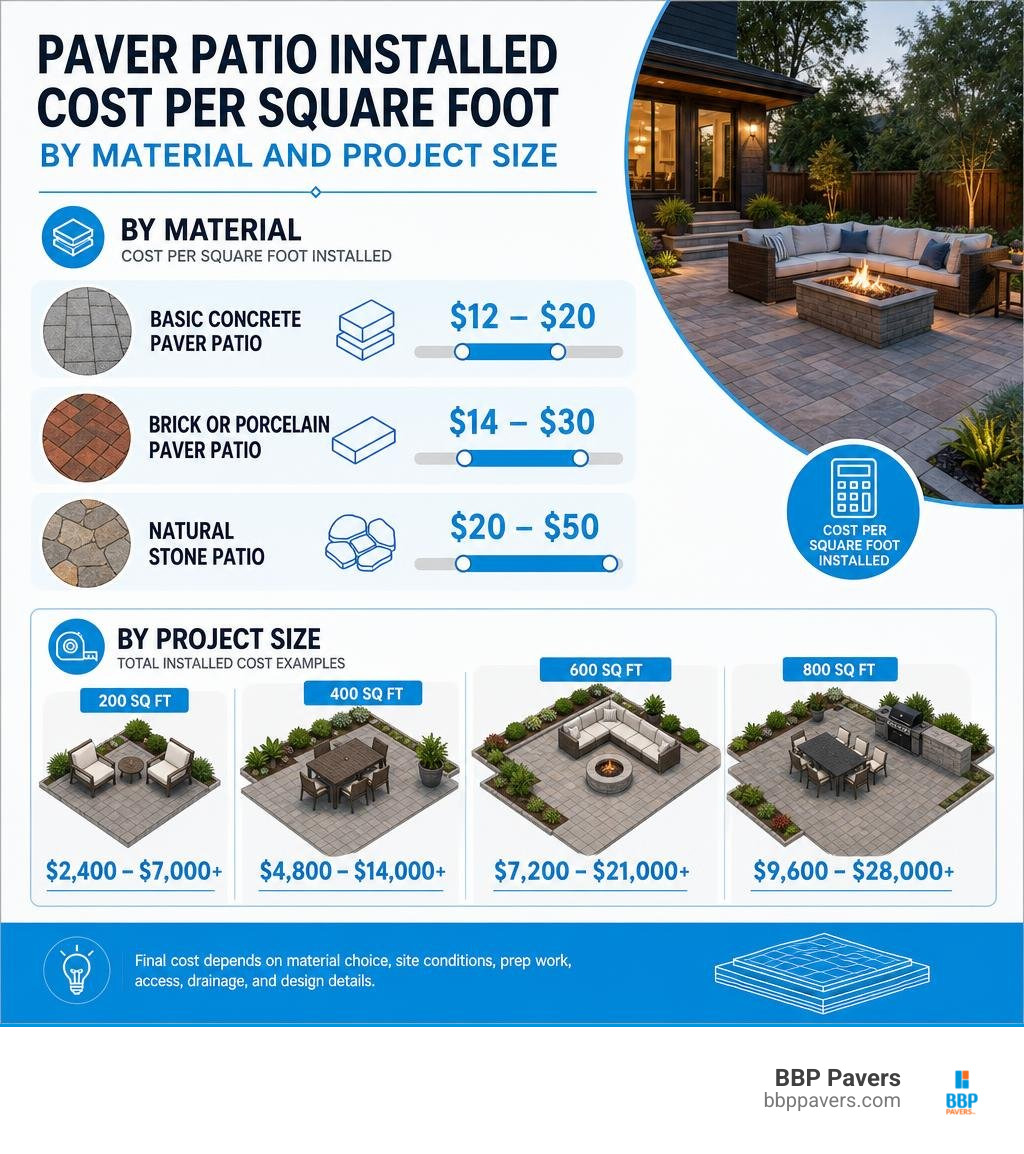
- Basic concrete paver patio: $12 to $20 per square foot
- Brick or porcelain paver patio: $14 to $30 per square foot
- Natural stone patio: $20 to $50 per square foot
- Typical 400-square-foot patio: roughly $8,000 to $16,000+, depending on material, prep work, and design
The pavers themselves are only part of the price. A durable patio needs excavation, a compacted gravel base, edge restraints, proper drainage, and skilled installation. On sloped Bay Area lots or yards with limited equipment access, those behind-the-scenes steps can have a major effect on the final quote.
A clear estimate should show what is included – not just the paver color or pattern, but also base depth, drainage work, demolition, and finishing details. That is how homeowners can compare bids fairly and avoid paying later to fix settling or pooling water.
The Average Cost of Paver Patio Installation in 2026
When evaluating your outdoor space, understanding broad national averages helps establish realistic expectations. Across the United States in 2026, the typical turnkey hardscape installation lands around $6,000 per project, with most residential work falling between $3,000 and $12,000. On a square-foot basis, overall costs range between $10 and $35 per square foot installed, influenced heavily by inflation, rising freight fees, and material manufacturing shifts over the last several years.
Regional price variations play a significant role in where your project lands. According to recent market analysis from UseCalcPro, installed rates fluctuate noticeably across regions:
- West Coast (California, Washington, Oregon): Typically runs +20% to +30% above the national baseline, where standard installations frequently average $18 to $35+ per square foot due to higher municipal permitting fees, specialized seismic grading, and competitive trade labor markets.
- Northeast: Runs +15% to +25% above average, driven by deeper freeze-thaw excavation requirements and dense metropolitan logistical challenges.
- Midwest & Mountain West: Tends to sit within -5% to +10% of national averages, with standard concrete pavers averaging $12 to $22 per square foot.
- Southeast: Averages -10% to -15% below national medians, with entry-level concrete jobs starting as low as $8 to $14 per square foot.
Understanding your local baseline for paver patio cost in 2026 allows you to plan your budget without unexpected surprises. With over 20 years of hands-on experience designing and building hardscapes throughout the San Francisco Bay Area, we always ensure our project planning accounts for local soil behavior, lot grading, and regional building standards.
Average Cost of Paver Patio by Size and Dimensions
Project dimensions influence not only your total invoice but also your effective cost per square foot. Because fixed operational overhead—such as hauling heavy equipment, staging materials, and crew mobilization—remains relatively consistent regardless of scale, larger surface areas benefit from clear economies of scale.
| Patio Size & Dimensions | Square Footage | Typical Price Range (Installed) | Common Application / Layout |
|---|---|---|---|
| Small (10×10 ft) | 100 sq. ft. | $1,200 – $2,500 | Bistro seating, grill landing pad, intimate reading nook |
| Medium (12×12 ft) | 144 sq. ft. | $1,700 – $4,000 | 4-person outdoor dining table, compact conversational fire pit |
| Moderate (12×20 ft) | 240 sq. ft. | $2,800 – $6,500 | Full outdoor dining set plus lounge chairs |
| Standard (15×20 ft) | 300 sq. ft. | $3,600 – $8,500 | Multi-zone layout: lounge area + separate dining table |
| Large (20×20 ft) | 400 sq. ft. | $4,800 – $14,000+ | Large living space with integrated fire feature or outdoor kitchen |
| Executive (20×25+ ft) | 500+ sq. ft. | $6,000 – $20,000+ | Multi-tier entertaining terrace, integrated seat walls, kitchen bar |
A compact 10×10 foot pad often runs closer to the top end of per-square-foot metrics ($20 to $25/sq. ft.) because the machinery transport and base preparation time are spread across a smaller footprint. Conversely, expanding to a 500-square-foot living space brings down the average unit rate significantly, making larger builds more cost-effective per foot of usable space. Homeowners looking to calculate custom configurations can explore online tools like the HomeCostCalc Paver Patio Cost Calculator to model varying footprints.
Paver Material Options and Installed Price Ranges
The paver material you select dictates a significant portion of both aesthetics and material budgets. While base preparation and labor remain relatively stable, the unit cost of raw materials creates distinct pricing tiers.
| Paver Material Tier | Material Cost (Per Sq. Ft.) | Total Installed Cost (Per Sq. Ft.) | Key Advantages & Maintenance Profile |
|---|---|---|---|
| Interlocking Concrete | $2 – $8 | $10 – $20 | Exceptional freeze-thaw durability, high load capacity, extensive color variety. |
| Clay Brick Pavers | $4 – $15 | $14 – $25 | Classic architectural charm, non-fading natural color, long lifespan (50–100 yrs). |
| Porcelain Pavers | $10 – $22 | $18 – $30 | Ultra-low porosity, stain and scratch-resistant, sleek contemporary aesthetic. |
| Natural Stone (Travertine/Slate) | $8 – $25 | $20 – $35 | Naturally cool underfoot, organic patterns, ideal for pool surrounds and patios. |
| Premium Bluestone / Flagstone | $12 – $30 | $22 – $50 | Unmatched luxury look, highly durable, requires expert stonemason cutting. |
When choosing the best pavers, factor in your lifestyle alongside pure aesthetics. Interlocking concrete pavers remain the most popular choice across residential installations because of their balance between structural strength, versatility, and cost efficiency. For modern architectural homes, porcelain slabs deliver an ultra-clean, stain-resistant surface, whereas natural travertine or bluestone provides organic texture and high resale appeal.
Labor, Site Preparation, and Underlying Cost Drivers
A common question many homeowners ask is why quotes can differ dramatically between properties for identical patio sizes. In reality, the pavers themselves typically account for only 20% to 30% of your total budget. The remaining 60% to 70% goes directly toward skilled labor, site excavation, sub-base installation, grading, and compaction.
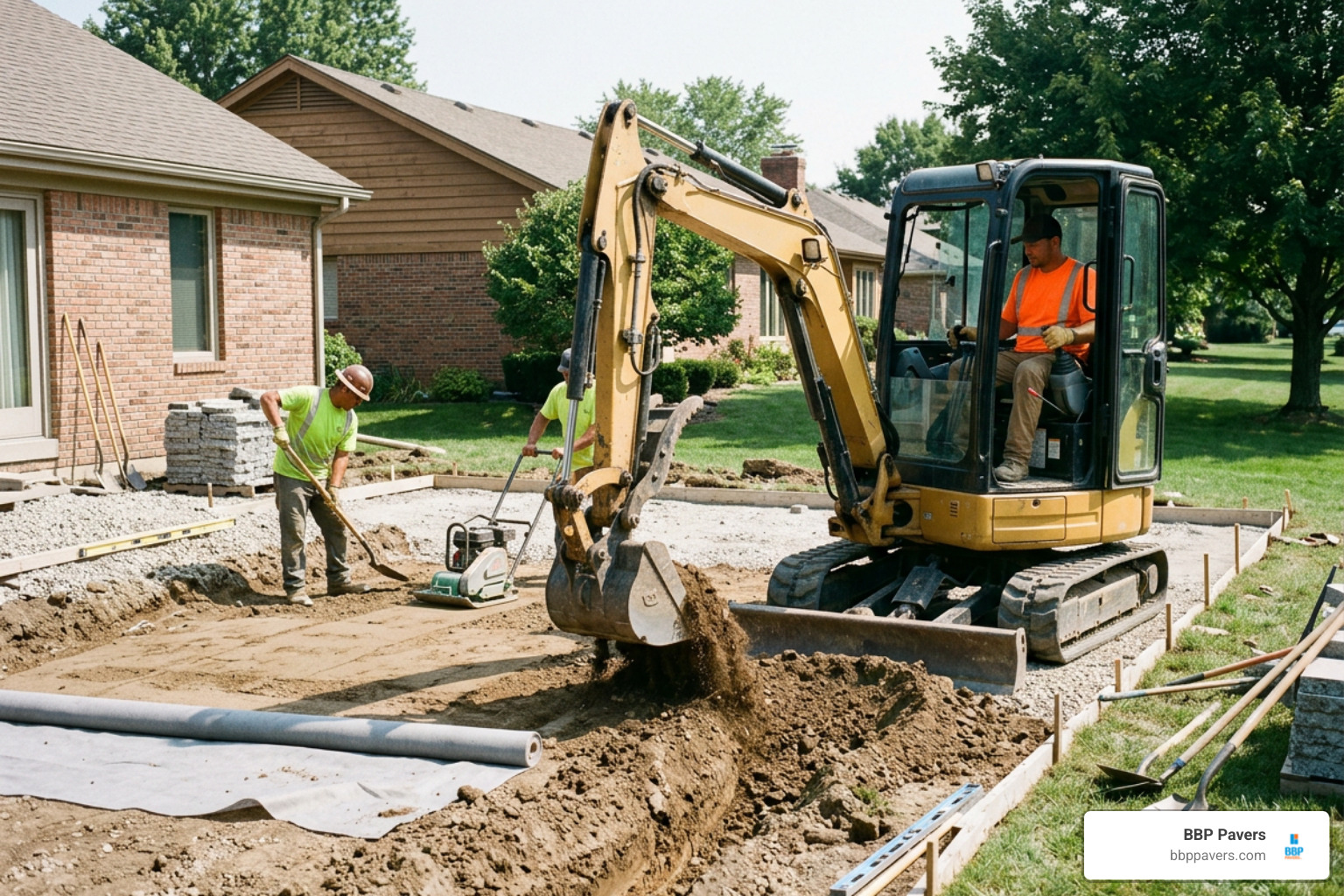
Understanding why pavers cost so much starts below ground level. Without an engineered sub-base, even the most expensive paver will sink, tilt, or shift within a couple of wet seasons.
Excavation, Sub-Base, and Drainage Requirements
Proper structural installation requires a step-by-step sequence to ensure moisture drains away from structures while supporting heavy surface loads without settling:
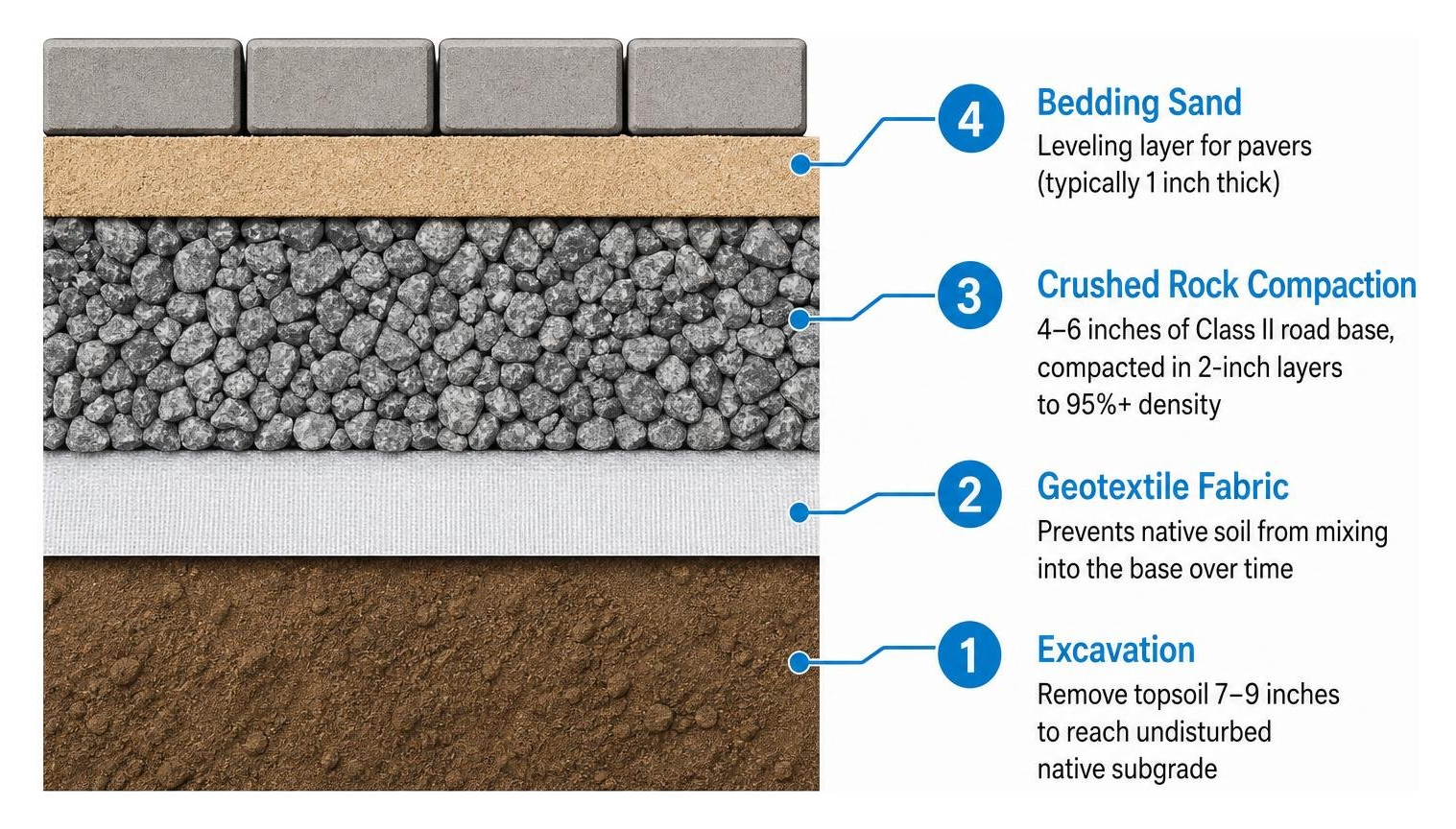
Executing each stage properly protects your financial investment:
- Excavation ($1.50 – $3.50/sq. ft.): Removing raw topsoil down 7 to 9 inches to reach undisturbed native subgrade. Bay Area soils with high expansive clay content require deeper digging to prevent ground heaving.
- Geotextile Separation Fabric ($0.50 – $1.00/sq. ft.): A heavy-duty woven barrier preventing native clay soil from mixing upward into the clean gravel foundation over time.
- Class II Road Base / Crushed Rock ($1.50 – $3.50/sq. ft.): Installing 4 to 6 inches of crushed aggregate (up to 8 inches for driveways or heavy load zones), compacted in distinct 2-inch layers using commercial plate compactors to reach 95%+ density.
- Bedding Sand ($0.50 – $1.00/sq. ft.): Screeding exactly 1 inch of sharp, angular concrete sand to create an even setting bed.
- Edge Restraints & Polymeric Sanding ($1.50 – $3.00/sq. ft.): Securing heavy-duty edge restraints along all open perimeters to prevent lateral movement, followed by sweeping polymeric sand into joint gaps to block weed growth and insect tunneling.
Skipping steps or rushing compaction during paver installation preparation is the primary cause of premature patio failure. Reviewing common installation mistakes to avoid illustrates why professional grading and moisture management are critical components of your project estimate.
Layout Complexity, Access, and Added Features
Beyond the structural base, several site-specific variables drive project pricing up or down:
- Patio Shape and Laying Pattern: Simple square or rectangular patios with running bond or stack patterns require minimal saw-cutting. Intricate herringbone patterns, multi-piece modular designs, circular centerpieces, or sweeping curved borders increase cutting waste and labor by 10% to 25%.
- Yard Accessibility and Elevation: If our installation crews can navigate standard mini-excavators and motorized wheelbarrows directly into your backyard via a wide side gate, labor stays lean. If materials must be transported manually through narrow fence gates, up tiered garden stairs, or through tight side yards, staging labor increases accordingly.
- Demolition & Old Surface Removal: Hauling away an old concrete slab or broken brick terrace typically adds $3.00 to $6.00 per square foot in equipment time and dump fees.
- Integrated Outdoor Living Add-Ons: Integrating functional elements transforms a flat patio into an outdoor living room, but should be budgeted early in the design phase:
- Precast or Stone Fire Pit: $1,200 – $4,500
- Retaining or Integrated Seat Wall (per linear foot): $65 – $150
- Integrated Low-Voltage LED Step/Hardscape Lighting: $1,500 – $3,500
- Custom Outdoor Kitchen Island: $5,000 – $20,000+
- Custom Shade Pergola: $4,000 – $12,000
Long-Term Value and Lifecycle Cost Comparison
When weighing hardscape choices, comparing pavers against traditional concrete surfaces provides clear context on long-term ownership expenses. A thorough breakdown on CostWhale notes that while poured concrete may carry a lower upfront price tag, its vulnerability to thermal shifting and cracking can create higher lifetime repair costs.
As detailed in industry analyses by Well Built Florida, poured slabs cure into a rigid plane that cannot accommodate ground settlement or seasonal moisture fluctuations without cracking along stress points. Exploring our complete guide on paver durability and aesthetics demonstrates how individual interlocking joints distribute weight and absorb ground movement effortlessly.
How Does Paver Patio Quality Impact Long-Term Costs?
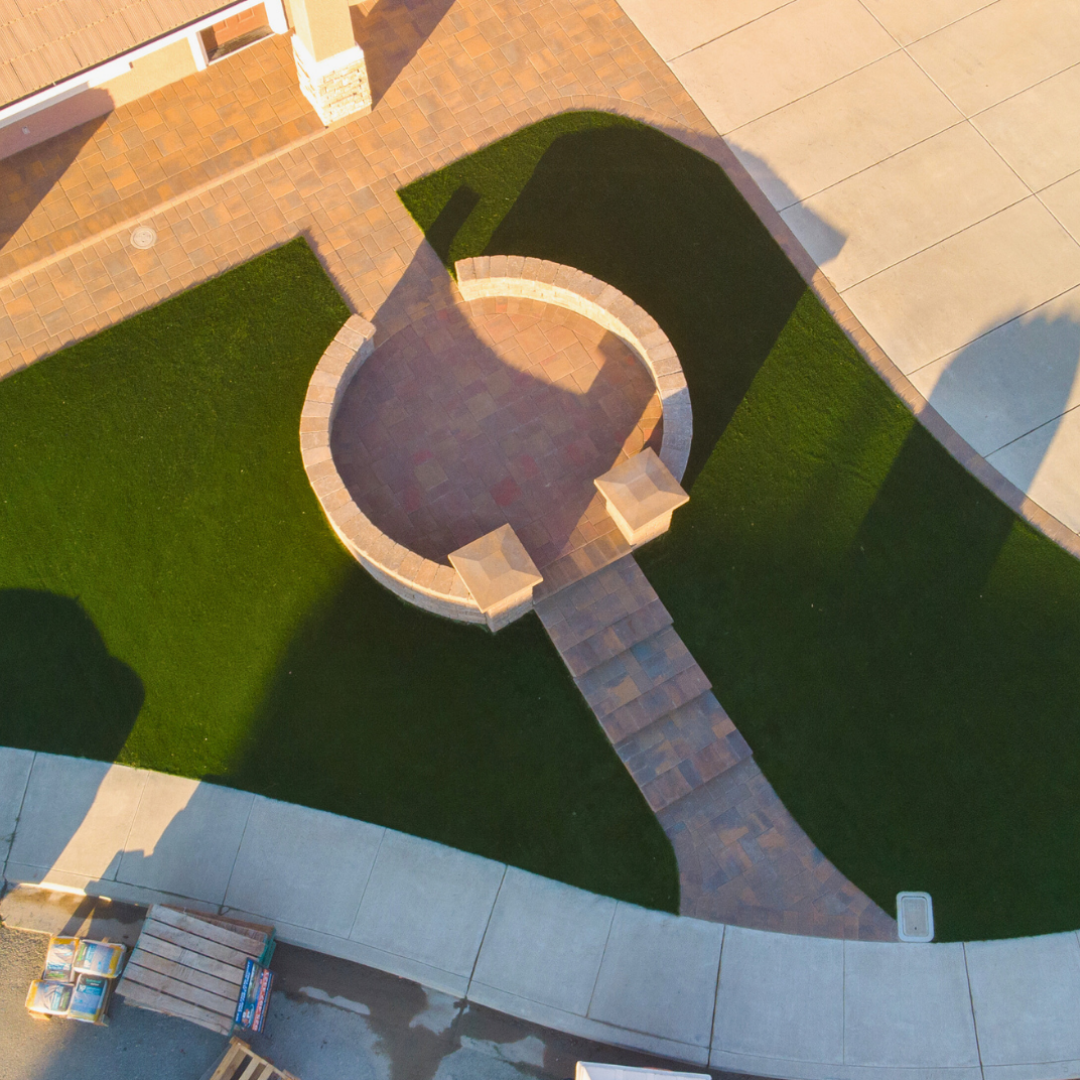
Investing in high-grade manufactured pavers and a deep, well-compacted sub-base delivers unmatched durability. High-density pavers boast compressive strengths exceeding 8,000 PSI—roughly four times stronger than standard residential poured concrete (around 2,500 to 3,000 PSI).
This structural advantage directly translates into minimal long-term maintenance costs. Over a 10-year span, maintenance on a 300-to-400-square-foot paver patio generally averages just $100 to $250 annually. Typical care involves occasional light pressure washing, topping off joint sand, and applying a penetrating sealer every three to four years to keep pavers vibrant and oil-resistant.
If underground plumbing or utility lines ever require servicing beneath the patio, individual pavers can be carefully lifted, set aside, and seamlessly reinstalled once the repair is complete. With a solid poured concrete slab, repairing sub-surface pipes requires jackhammering out the concrete and pouring a visible, mismatched patch.
DIY Installation vs. Hiring a Professional Contractor
Given that labor constitutes a significant portion of an installation quote, ambitious DIY enthusiasts often wonder if taking on the installation themselves is worth the sweat equity.
- The DIY Path: Sourcing raw concrete pavers, base aggregate, edge spikes, and bedding sand independently costs roughly $3.00 to $8.00 per square foot in direct materials. However, hidden costs add up quickly. Homeowners must rent a commercial plate compactor ($100/day), diamond-blade masonry saw ($120/day), and possibly a mini-skid steer, along with paying municipal green-waste dump fees for several tons of excavated dirt. Digging, wheelbarrowing 5 to 10 tons of gravel, and hand-tamping requires 40 to 60+ hours of intense physical labor over multiple weekends.
- The Professional Route: Working with a dedicated hardscape contractor costs between $12.00 and $35.00+ per square foot installed. In exchange, a skilled crew equipped with laser levels, commercial hydraulic compactors, and precision diamond bench saws can finish an entire 400-square-foot patio in three to five days. Crucially, professional builds come backed by structural licensing, liability insurance, proper moisture grading, and workmanship guarantees.
For small, rectangular garden pads under 100 square feet, a DIY weekend project can be manageable. For full-scale living spaces attached to your home foundation, hiring an experienced team ensures long-term stability and code compliance.
Frequently Asked Questions About Paver Patio Costs
How long does a professionally installed paver patio last?
When constructed on an engineered, compacted base with proper drainage slopes, an interlocking paver patio easily lasts 25 to 50 years or longer. Natural stone and premium clay brick pavers can easily endure for over 75 to 100 years. Because individual pavers can be removed and reset if settlement occurs, the system’s longevity is practically indefinite compared to rigid slabs that crack permanently.
Do paver patios increase overall home resale value?
Yes. Quality residential hardscaping delivers a strong return on investment, typically recouping 60% to 75% of its total project cost at resale according to data evaluated by UseCalcPro. In warm regions like Northern California, an attractive, low-maintenance outdoor living room expands your functional square footage and significantly elevates curb appeal, as outlined in our analysis on how pavers increase home value.
What is the most cost-effective paver material for a patio?
Standard concrete interlocking pavers offer the most cost-effective balance between structural performance and affordability. Costing between $10 and $20 per square foot installed, concrete pavers come in dozens of texture blends, multi-piece sizes, and color palettes that replicate expensive natural stone at a fraction of the raw material and masonry labor price.
Conclusion
Transforming your backyard with a custom paver patio is one of the most rewarding home improvements you can make. From small bistro courtyards to expansive entertainment terraces with outdoor fire pits, understanding the primary cost variables—from square footage and material grades to site excavation and base compaction—empowers you to budget with complete confidence.
At BBP Pavers, we bring more than two decades of dedicated Bay Area hardscaping expertise to every project. We handle the entire process from 3D conceptual design and grading to precision paver installation, retaining walls, pergolas, and integrated landscape lighting. Our work is executed with a safety-first approach and supported by our 100% satisfaction guarantee.
Ready to bring your outdoor living vision to life? Contact our design team today for a transparent, fully itemized quote on your professional paver patio installation cost.