Stamped Concrete vs Pavers and What Truly Works Best for Your Home
Stamped Concrete vs Pavers and What Truly Works Best for Your Home
Is Stamped Concrete Better Than Pavers for Your Home?

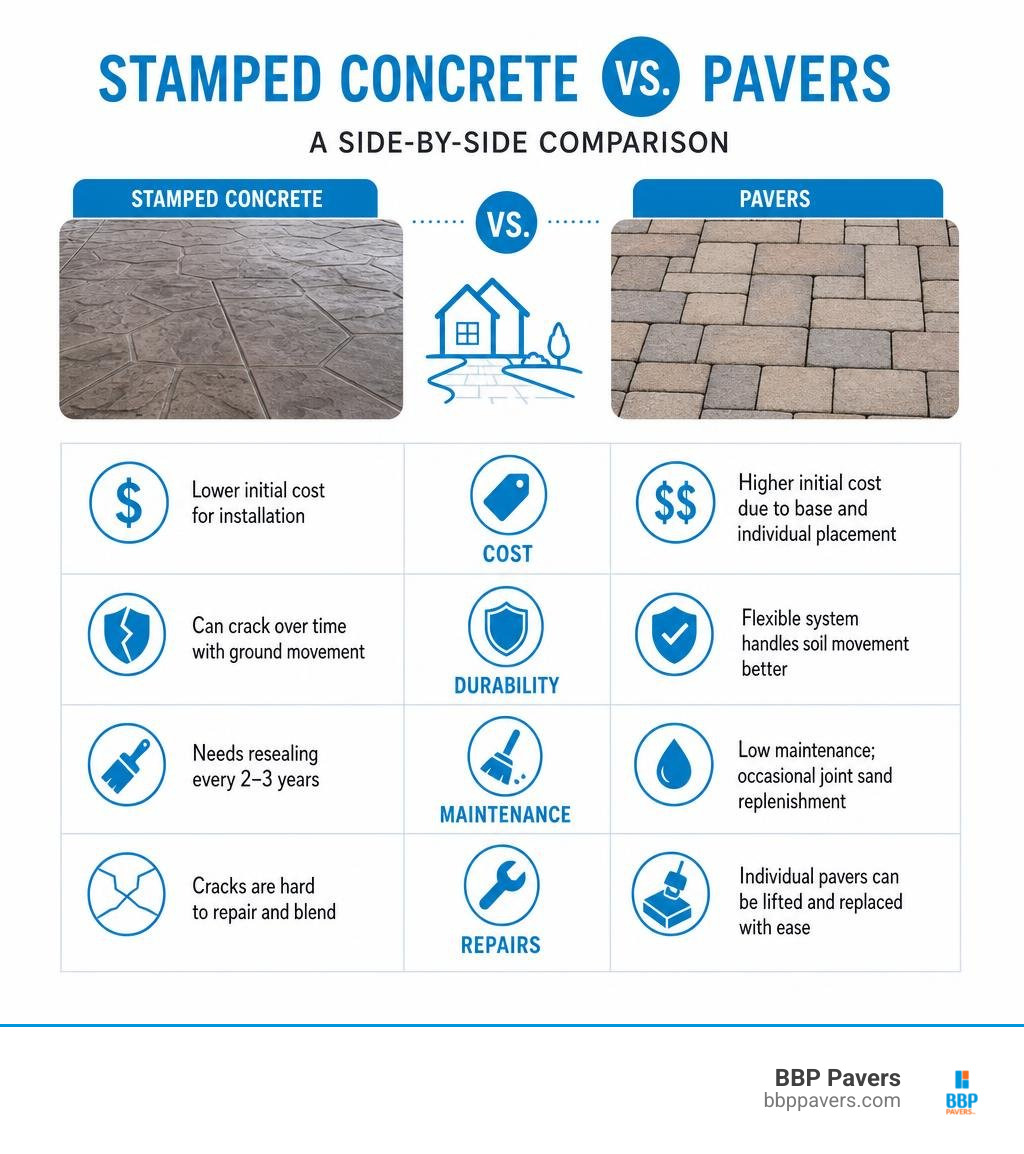
For most Bay Area driveways, patios, and walkways, interlocking pavers are the better long-term choice. Stamped concrete can cost less at installation and creates a smooth, continuous decorative surface. But pavers usually perform better when soil shifts, make repairs far easier, and offer stronger long-term durability for high-traffic areas.
Stamped concrete is not automatically a bad choice. It can work well for a smaller patio where a seamless stone-like look and a lower upfront budget matter most. Still, it needs resealing about every 2 to 3 years, and cracks or surface wear can be hard to disguise.
Pavers cost more in many projects because installation requires a carefully compacted base and individual placement. In return, damaged units can be lifted and replaced, and the flexible joint system can better accommodate normal ground movement.
A simple way to choose:
- Choose stamped concrete for a lower initial cost and a seamless decorative finish.
- Choose pavers for driveways, changing soil conditions, easier repairs, and lasting design flexibility.
- Compare quotes based on the full system, including base preparation, drainage, sealing, and future repair costs – not price per square foot alone.
Is Stamped Concrete Better Than Pavers? Comprehensive Side-by-Side Analysis
When evaluating whether is stamped concrete better than pavers, homeowners frequently discover that the answer depends on balancing immediate affordability against long-term performance. Both materials bring distinct structural characteristics, aesthetic finishes, and engineering philosophies to hardscape design.
A poured concrete slab forms a continuous, monolithic sheet over the earth, textured and pigmented while wet to mimic brick, slate, or cobblestone. Conversely, a paver surface relies on hundreds or thousands of high-density, individual units set over a multi-layered aggregate base, secured with specialized jointing sand.
To help evaluate these options, the table below provides a direct overview across essential performance categories:
| Performance Metric | Stamped Concrete | Interlocking Concrete Pavers |
|---|---|---|
| National Installed Cost Range | $8 to $18 per sq. ft. | $7 to $20 per sq. ft. |
| Regional Pricing (e.g., Charlotte / Long Island) | $12 to $25 per sq. ft. | $15 to $35 per sq. ft. |
| Typical Compressive Strength | 3,000 to 4,000 PSI | 8,000+ PSI |
| Lifespan (with proper care) | 30+ years | 30+ years to lifetime warranty |
| Maintenance Schedule | Reseal every 2–3 years | Joint sand replenishment every 3–5 years |
| Ground Movement Tolerance | Rigid (develops stress cracks) | Flexible (shifts without surface cracking) |
| Repair Complexity | High (difficult color/pattern matching) | Low (individual stones lift and replace) |
| 20-Year Total Ownership Cost (400 sq. ft.) | ~$9,600 – $10,500 | ~$8,900 – $9,100 |
Examining these metrics reveals that a low installation price tag does not automatically translate to a cheaper installation over decades of ownership. Understanding overall paver patio cost requires looking at initial labor alongside the ongoing costs of routine maintenance and patching.
Is Stamped Concrete Better Than Pavers for Initial Budgeting?
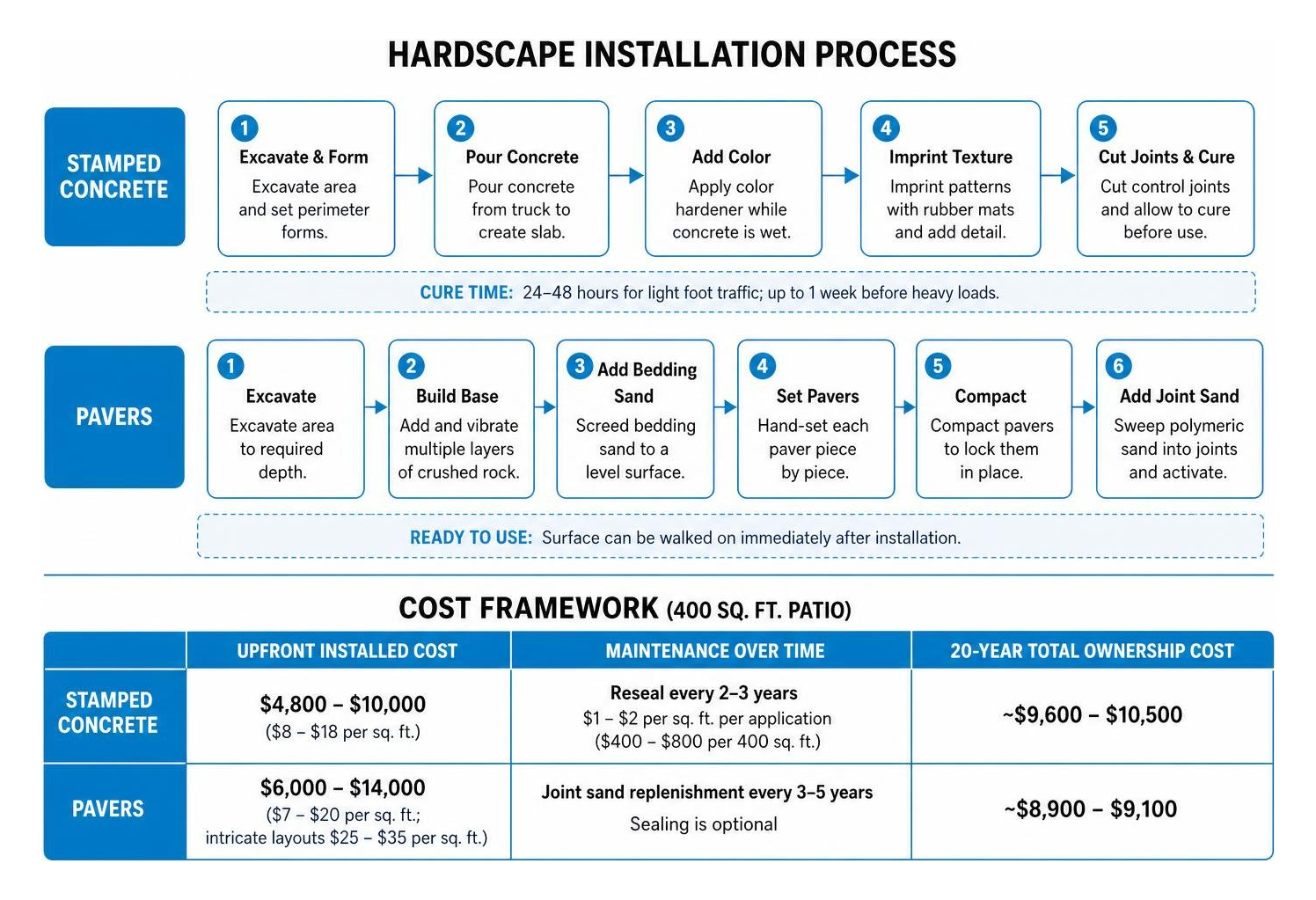
Homeowners working with strict upfront limits often lean toward stamped concrete because of lower upfront labor costs. On average, basic stamped concrete costs between $8 and $18 per square foot installed, while concrete pavers typically range from $7 to $20 per square foot, with intricate layouts reaching $25 to $35 per square foot. For a standard 400-square-foot patio, stamped concrete usually totals $4,800 to $10,000, whereas pavers generally run $6,000 to $14,000.
Many homeowners ask why do pavers cost so much at the outset. The difference comes down to the installation method. Stamped concrete involves excavating, setting perimeter forms, pouring liquid concrete from a truck, applying color hardeners, and imprinting textures with rubber mats before cutting control joints.
In contrast, calculating paver patio installation cost reflects deep subgrade excavation, spreading and vibrating layers of crushed rock base, screeding bedding sand, hand-setting each unit piece by piece, and compacting polymeric sand into the joints. While pavers require more initial labor, the surface can be walked on immediately. Poured concrete, on the other hand, demands 24 to 48 hours for light foot traffic and up to a week before supporting heavy loads.
Maintenance Requirements and 20-Year Lifecycle Expense
Ongoing care shapes the real lifecycle cost of any outdoor living area. Stamped concrete depends heavily on topical acrylic sealers to safeguard its surface pigments and block moisture penetration. In outdoor environments subject to temperature swings and UV exposure, these sealers degrade rapidly. To avoid surface spalling and fading, stamped concrete must be washed and resealed every 2 to 3 years. Professional resealing costs roughly $1 to $2 per square foot, meaning a 400-square-foot patio can cost $400 to $800 every few seasons.
Pavers require a different, less demanding maintenance routine. Knowing how to seal pavers is beneficial for enhancing color or resisting oil stains, but sealing is largely optional because the pigment is distributed throughout each stone rather than applied as a top coat.
The primary maintenance for pavers involves occasional sweeping and replenishing joint sand every few years to keep weeds and ants from taking hold. As a result, over a 20-year timeline, the total ownership cost of a 400-square-foot stamped concrete patio ($9,600–$10,500 including initial pour, periodic resealing, and crack repairs) often meets or exceeds that of an equivalent paver patio ($8,900–$9,100 including installation, occasional joint topping, and resetting individual stones).
Durability and Performance Under Environmental Stress

Structural resilience is a central factor when deciding on hardscape materials. The core physical distinction between the two surfaces comes down to material density and structural configuration. Poured concrete is mixed wet on-site and achieves a compressive strength of roughly 3,000 to 4,000 PSI. Interlocking units are manufactured in controlled factory settings using dense aggregate mixes subjected to extreme hydraulic compaction, consistently achieving compressive strengths of 8,000 PSI or higher.
This strength difference directly influences how each system handles loads and resists environmental wear. Exploring Pavers vs Concrete Durability and Aesthetics for Outdoor Spaces demonstrates that high material density gives pavers superior resistance to surface chipping, scratching, and seasonal temperature swings.
Freeze-Thaw Resistance and Ground Movement
Freeze-thaw cycles and expanding soils place continuous physical stress on outdoor surfaces. When moisture seeps beneath an unyielding, monolithic slab of concrete and freezes, the ground expands upward—a process known as frost heaving. Because rigid concrete cannot bend, tension builds until stress fractures form. Even with control joints cut across the surface, stamped concrete often develops unexpected hairline cracks across its decorative patterns within 5 to 10 years.
Modern interlocking pavers handle ground movement through their segmented construction. Each stone sits independently on a flexible bedding layer, surrounded by sand-filled joints. When seasonal frost or expansive clay soils cause the subgrade to shift, individual pavers make micro-adjustments without cracking. Moisture also drains naturally through the joint system rather than pooling on top, reducing the risk of winter surface spalling.
Heavy Traffic and Driveway Structural Integrity
Vehicle traffic subjects driveways to point-load forces and lateral shear stresses. Standard passenger vehicles, delivery trucks, and utility vans put immense downward pressure on driveways, especially during turning maneuvers. Poured concrete slabs can crack under heavy localized weights if minor voids develop beneath the slab.
Installing premium driveway pavers creates a structural system that distributes wheel loads outward across neighboring units. The interlocking friction between pavers spreads weight over an expansive area, preventing localized sinking. When analyzing what nobody tells you driveway paver installation, proper compaction of the aggregate sub-base provides a reliable foundation that easily supports heavy vehicles without cracking.
Design Flexibility, Maintenance, and Long-Term Repairs
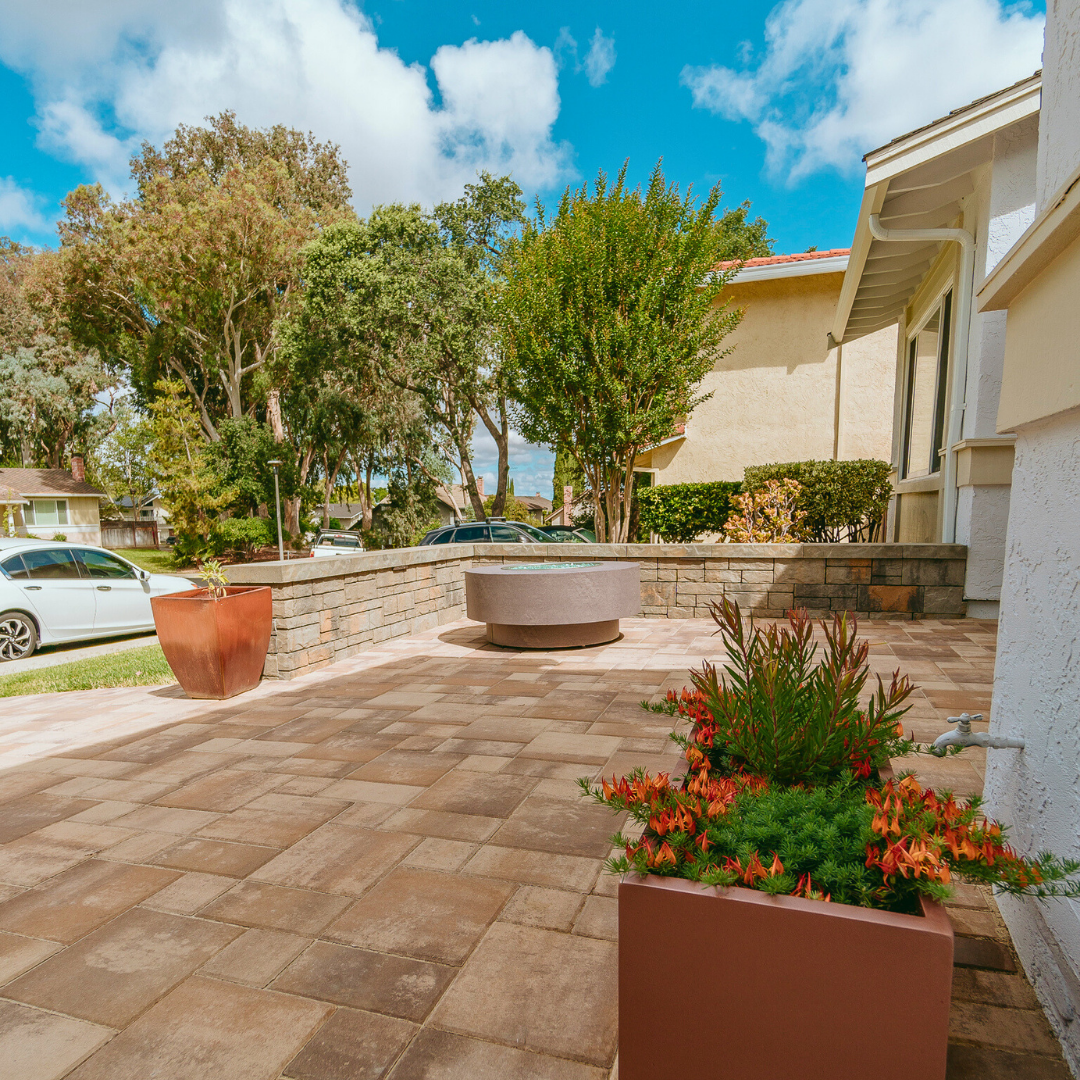
Visual appeal and design adaptability are essential factors when crafting outdoor living spaces. Both hardscape solutions offer distinctive aesthetic choices, but their underlying construction produces noticeably different finishes. Stamped concrete relies on surface textures and coloring agents applied over a single slab, whereas pavers offer physical depth, varied borders, and modular patterns.
Investing in quality patio pavers creates an upscale look with crisp lines and authentic textures. Research confirms that quality hardscapes consistently improve property appeal; exploring whether do pavers increase home value shows that high-end paver installations frequently yield strong returns during appraisals and home sales.
Customization, Textures, and Slip Resistance
Aesthetics and safety must go hand in hand. Stamped concrete provides a wide selection of stamping stamps that replicate textures from English cobblestone to seamless slate. Color blends are achieved using integral pigments mixed into the batch, dry-shake color hardeners on the surface, and secondary release agents. However, topical color hardeners can wear down under steady foot traffic, exposing the plain gray concrete below. Furthermore, smooth acrylic sealers on stamped surfaces can become slippery when wet, requiring anti-slip additives around pool decks and steps.
Paver systems build visual depth with distinct shapes, textures, and color blends. To understand the options, reviewing how to choose the best pavers for your patio helps clarify how standard concrete pavers integrate iron oxide pigments throughout the entire mix. If a stone chips, the exposed aggregate matches the surface color perfectly. The textured top surfaces and natural joints between pavers provide reliable wet traction, making them an excellent choice for pool decks, walkways, and active outdoor kitchens.
Ease of Repair and Future Utility Access
Subsurface work is an unavoidable part of long-term homeownership. Irrigation lines fail, sewer pipes shift, and electrical conduits for landscape lighting require upgrades over time. When utilities beneath a stamped concrete slab need servicing, the only option is cutting through the decorative surface with a concrete saw, digging out the underlying earth, repairing the line, and pouring a new patch. Matching the exact stamp depth, color tone, and aged weathering of the original slab is nearly impossible, leaving a noticeable patch across the patio.
Paver installations make underground access straightforward. Reviewing the basic mechanics of how to lay pavers shows how individual stones can be extracted without heavy demolition equipment. Contractors simply pull up the necessary stones, set them aside, excavate the underlying trench to fix the utility, recompact the aggregate base, and set the original pavers right back in place. When finished, the surface looks completely untouched, saving thousands of dollars in restoration expenses.
Frequently Asked Questions About Hardscape Selection
Is Stamped Concrete Better Than Pavers for Driveways?
No, interlocking pavers are better suited for residential driveways. Vehicle traffic exposes driveways to high point-loads, turning friction, and fluid drips from engine oil and coolants. Concrete pavers feature an 8,000+ PSI compressive strength compared to the 3,000 to 4,000 PSI rating of poured concrete slabs, allowing them to support heavy SUVs and delivery trucks without structural cracking.
Additionally, knowing how to remove paver stains is straightforward; if an oil stain penetrates deeply into a paver, that individual stone can be pulled and replaced in minutes, whereas a stained or cracked stamped concrete driveway requires resurfacing or extensive patching.
How Long Do Stamped Concrete and Interlocking Pavers Last?
Both stamped concrete and interlocking concrete pavers can last 30 years or more with proper installation and routine maintenance. However, pavers often carry long-term or lifetime transferable product warranties against structural failure and degradation. Stamped concrete requires consistent resealing every 2 to 3 years to reach its full lifespan and protect against surface spalling, whereas pavers maintain their structural integrity with simple joint sand maintenance.
Can Damaged Stamped Concrete Be Repaired Seamlessly?
No, repairing cracked or spalled stamped concrete seamlessly is extremely challenging. Because concrete color hardeners and release powders weather gradually under UV sunlight, newly mixed concrete patches rarely match the existing slab’s shade or texture. Most stamped concrete repairs leave visible patch lines, meaning significant damage often requires an expensive decorative overlay across the entire surface or full slab demolition and replacement.
Conclusion: Making the Right Investment for Your Home
Choosing the ideal hardscape material comes down to weighing your immediate installation budget against your long-term goals for durability, maintenance, and resale value. While stamped concrete provides an attractive initial look at a lower entry cost, interlocking pavers offer superior compressive strength, flexible jointing that resists freeze-thaw damage, and straightforward repair options. For an in-depth breakdown of these systems, explore our pavers vs stamped concrete definitive comparison to evaluate all technical considerations.
At BBP Pavers, we bring over 20 years of local Bay Area hardscape expertise to every project. We specialize in designing and installing custom paver driveways, patios, walkways, retaining walls, pergolas, and outdoor lighting tailored to your property’s soil and architecture. With premium materials, a safety-first process, and a 100% satisfaction guarantee, our team helps bring your outdoor vision to life. Contact us today to schedule a consultation and receive a free quote on your next project.