Creative Landscape Stone Border Ideas to Define Your Lawn

Inspiring Landscape Stone Border Ideas for Every Garden Style
The most effective landscape stone border ideas include flush flagstone mowing strips for easy maintenance, curved river rock swales for organic garden beds, rustic dry-stacked fieldstone walls for elevated slopes, and clean geometric cut stone pavers for modern yards. Exploring these creative landscape stone border ideas provides sharp lawn definition, keeps mulch from scattering across turf during seasonal storms, and introduces striking aesthetic contrast against foliage.
Whether your home embraces a contemporary aesthetic or traditional architecture, integrating stone borders into your broader vision of how to landscape your backyard establishes lasting structural beauty across your entire property.
Modern Flagstone Mowing Strips: Clean Landscape Stone Border Ideas

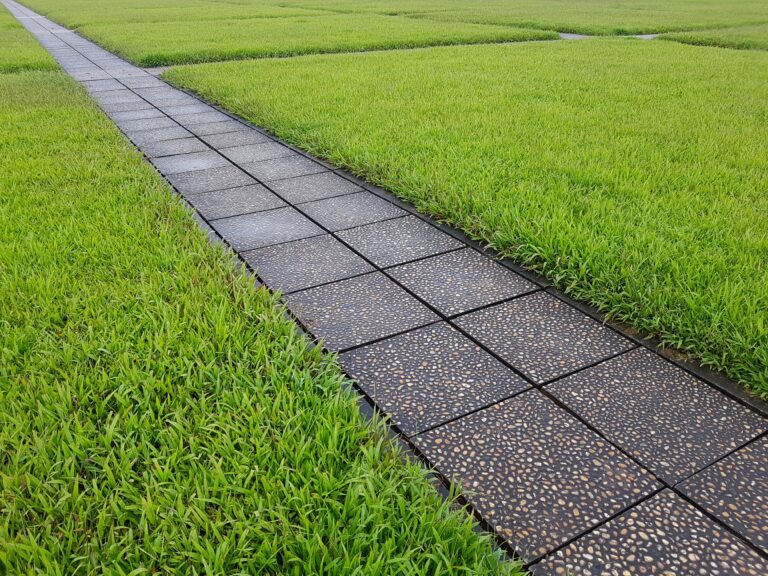
One of the most practical and elegant stone borders is a flat flagstone mowing strip. By sinking broad, flat flagstone pavers flush with the level of your turf, you create an effortless barrier between lawn and garden bed.
- Mower Wheel Clearance: Set the stones level with the soil line so your lawn mower wheels can ride smoothly along the hardscape surface. This eliminates tedious string trimming along bed edges.
- Crisp Lawn Edges: Flat-faced materials like Pennsylvania bluestone or sawn flagstone deliver sleek, low-profile borders that hold back creeping turf grass roots.
- Low Profile Visual: Flush stones visually open up compact spaces, creating clean sightlines that draw attention directly to your ornamental plants.
For homeowners looking to pair flat borders with larger walkways, integrating complementary walkway pavers ensures seamless visual harmony across your front or backyard landscape.
Curved River Rock Accents: Fluid Landscape Stone Border Ideas
For freeform planting beds, curved river rock borders bring organic charm to garden perimeters. Smooth cobblestones and rounded stones lend themselves naturally to undulating serpentine curves, soft berms, and water-inspired features.
- Fluid Geometry: Unlike rigid masonry, river rocks adjust effortlessly around large tree roots, boulders, and changing grades.
- Dry Creek Bed Aesthetics: You can expand a single-stone boundary into a wider swale using mixed stone sizes (1-inch to 4-inch river rock alongside 12-inch accent boulders). This creates a functional dry creek bed that redirects heavy storm runoff.
- Visual Contrast: Dark Mexican beach pebbles or warm earth-tone river stones provide dynamic visual separation when placed adjacent to vibrant emerald turf and light-colored gravel paths.
To explore creative layouts that blend plants with natural rock borders, take inspiration from creative rock garden border design ideas that utilize stones of varied scales.
Rustic Dry-Stacked Fieldstone Walls
If your yard features gentle slopes, terraced plant beds, or a cottage garden layout, a rustic dry-stacked fieldstone border is ideal. Using natural stones stacked without mortar creates a timeless, relaxed boundary that weathers beautifully over decades.
- Permeable Construction: Dry-stacked stone walls allow groundwater to weep naturally through small stone crevices, preventing soil hydrostatic pressure and root rot behind the border.
- Freeze-Thaw Durability: Free from rigid mortar joints that crack during severe cold snaps, dry-stacked stone naturally shifts and resets through regional freeze-thaw cycles.
- Raised Planting Beds: Stacking fieldstones 8 to 18 inches high elevates garden soil, providing better root drainage while acting as an attractive micro-retaining structure.
For larger elevation changes that exceed standard border dimensions, reviewing the factors involved in retaining wall installation cost can help determine whether a decorative border or an engineered retaining wall best suits your slope.
Geometric Concrete Edgers and Cut Stone Pavers
For architectural precision and clean geometric layouts, dimensional cut stone and engineered concrete edgers deliver crisp, contemporary lines.
- Uniform Profiles: Machine-cut granite, limestone blocks, or cafe concrete edgers line up tightly, leaving minimal space for weeds to take hold.
- Versatile Shapes: Tapered trapezoidal stones allow you to form crisp arcs without on-site wet sawing, while rectangular units create sharp right angles for formal courtyards.
- Architectural Harmony: Matching the color and finish of your border blocks to your primary hardscape surfaces creates an upscale, cohesive aesthetic.
Discovering the wide array of top stone edging options every homeowner should know makes it easy to select the right material profile for modern, craftsman, or Mediterranean architectural styles.
How to Choose the Right Stone Border for Your Yard
Selecting the right edging material requires balancing structural durability, local climate challenges, and your garden’s aesthetic requirements:
- Stone Porosity and Climate: In areas with heavy rainfall or intense winter freezes, choose dense, low-porosity stones such as granite, quartzite, or fieldstone. Softer, porous limestones and sandstones can absorb moisture and degrade if left unsealed in severe freeze-thaw climates.
- Garden Formality: Formal garden designs with geometric boxwoods call for uniform, straight-edged pavers or honed bluestone. Informal English cottage gardens or native landscape designs look best with mossy fieldstone or irregular river rock.
- Plant Integration: Account for how mature plant growth will drape over the border edge. Incorporating the best plants to border your paver walkway, such as creeping thyme or dwarf mondo grass, softens hard rock borders without blocking walkways.
- Soil Conditions: Heavy clay soils hold water and expand when wet, requiring a deeper crushed gravel foundation beneath stone edgers to prevent shifting.
Material Comparison: Stone vs. Alternative Edging
Understanding how natural stone compares to synthetic or lightweight edging options ensures you make a smart investment for your property:
| Material | Expected Lifespan | Typical Initial Cost | Maintenance Level | Best For |
|---|---|---|---|---|
| Natural Stone (Granite, Fieldstone) | 30–40+ Years | Medium to High | Very Low | Permanent luxury landscapes, raised borders, sloped beds |
| Concrete Edgers / Pavers | 20–30 Years | Low to Medium | Low | Modern geometric designs, crisp lawn mowing strips |
| Corten / Carbon Steel | 15–25 Years | Medium | Low | Ultra-thin borders, sharp curves, contemporary minimalism |
| Recycled Plastic / Rubber | 3–5 Years | Very Low | High (UV degradation, shifting) | Temporary beds, quick budget fixes |

Step-by-Step Guide to Installing a DIY Stone Landscape Border
Proper foundation prep is the secret to a border that stays straight, level, and stable for years to come.
Tools and Materials Checklist
- Flat spade and trenching shovel
- Marking paint or garden hose (for layout)
- Hand tamper or plate compactor
- Non-woven landscape weed fabric
- Crushed stone base (3/4-inch minus or road base)
- Coarse leveling sand
- Torpedo and 4-foot carpenter’s levels
- Rubber mallet and stone chisel
- Polymeric jointing sand
Trench Excavation and Base Preparation

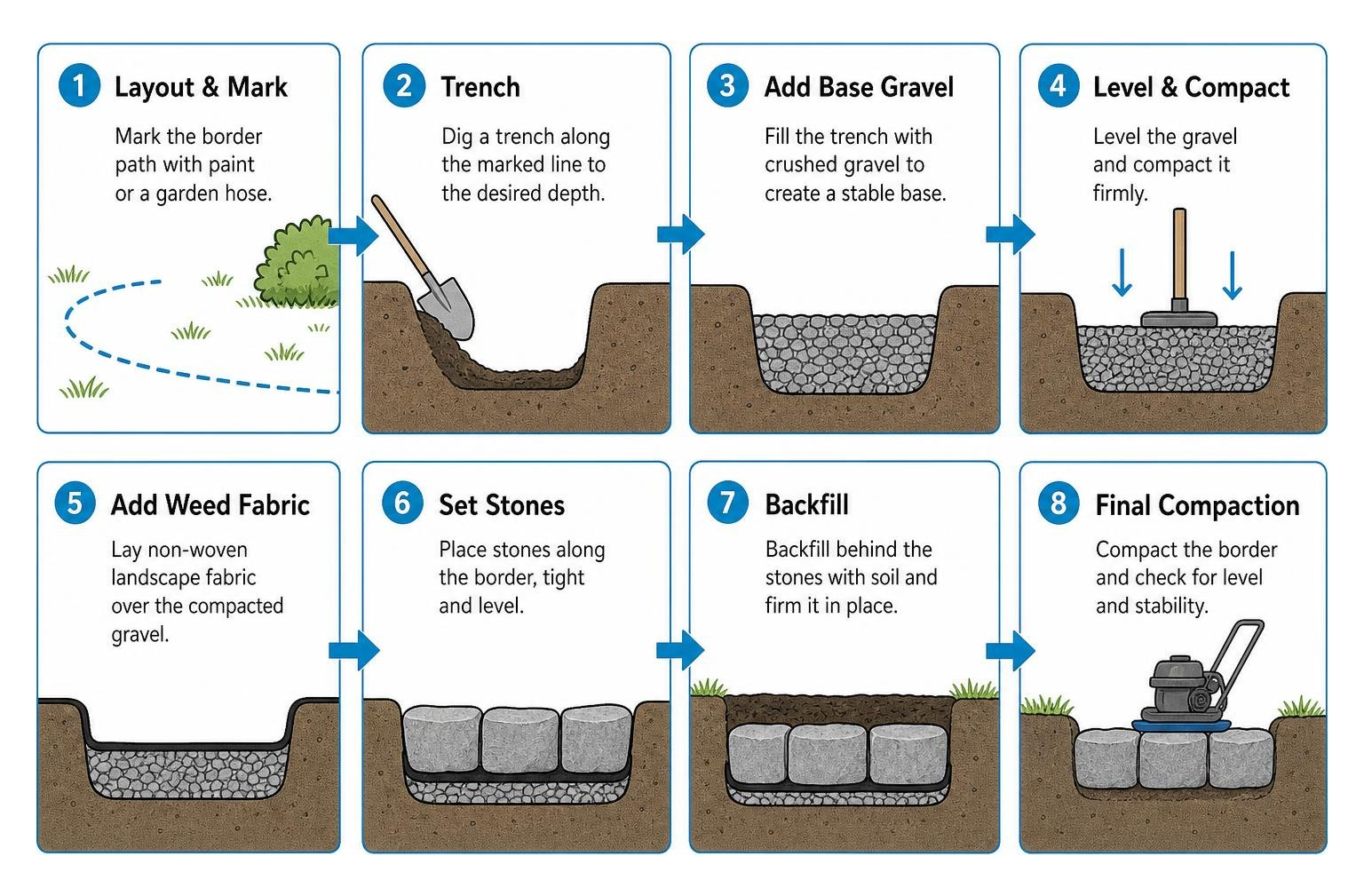
- Mark Your Layout: Use a flexible garden hose to lay out organic curves, or pull a taut mason’s string line between stakes for crisp, straight runs. Mark the perimeter with landscape marking paint.
- Call 811: Always call 811 a few days before digging to locate buried utility cables, gas pipes, and water lines.
- Excavate the Trench: Dig a trench roughly 4 to 6 inches deep and 2 to 3 inches wider than your stones. A helpful rule of thumb is to dig down half the height of your stone plus the thickness of your aggregate base.
- Slope for Drainage: Ensure the base of your trench maintains a slight 1/8-inch to 1/4-inch outward slope per foot away from foundations and garden beds to avoid trapped water.
- Install Landscape Fabric: Line the bottom and vertical sides of the trench with heavy-duty commercial landscape fabric to keep the subsoil from mixing into your stone base.
- Add and Compact the Base: Spread 2 to 3 inches of crushed gravel into the trench. Moisten the material lightly and tamp it until completely solid and firm. Add a 1-inch layer of coarse leveling sand over the gravel.
Setting and Securing the Border Stones
- Lay the First Course: Place your largest, flattest stones into the trench first. Set them down into the leveling sand, checking each unit with a torpedo level both front-to-back and side-to-side.
- Tap into Alignment: Use a rubber mallet to firmly seat each stone into the sand bed until it matches the height of your guide string.
- Stagger Vertical Joints: If stacking multiple tiers, stagger the vertical joints between stones like brickwork to maximize wall strength and prevent toppling.
- Backfill the Trench: Fill the open space behind the border with coarse drainage gravel or garden soil, tamping firmly as you fill to lock the stones in place.
- Fill Joint Gaps: For flat pavers or flagstone edgers, sweep polymeric sand into the joints, mist lightly with water according to manufacturer guidelines, and let it cure to block weeds and burrowing insects.
Long-Term Maintenance and Weed Prevention Strategies
Natural stone borders are exceptionally durable, but seasonal upkeep protects their clean appearance:
- Commercial Weed Barrier: Installing heavy-duty geotextile fabric beneath your base gravel prevents perennial weeds from pushing up through stone joints.
- Polymeric Joint Resealing: Inspect mortared or polymeric sand joints every 2 to 3 years. Reapply jointing sand where heavy rain or pressure washing has eroded seams.
- Spring Thaw Inspections: After winter snowmelt, check for stones shifted by frost heave. Lift any loose units, re-level the underlying sand base, and tap the stone back into place.
- Organic Debris and Pressure Washing: Clean accumulated organic moss, algae, and soil film off stone faces using a garden hose or a low-pressure power washer (under 1,500 PSI) to preserve the stone’s natural surface texture.
- Trimmer Safety: Maintain a 2-inch clearance between motorized string trimmer heads and rough natural stone to prevent premature line wear and stone gouging.
Frequently Asked Questions About Landscape Stone Borders
How deep should a landscape stone border trench be?
For standard borders using 4-to-6-inch tall stones, excavate a trench 4 to 6 inches deep. This allows for a 2-to-3-inch compacted crushed stone base, a 1-inch leveling sand layer, and allows the bottom third of the stone to sit below grade for lateral stability.
How do you prevent weeds from growing between border stones?
The most reliable weed prevention strategy involves three protective layers:
- Lay commercial-grade landscape fabric beneath your gravel base.
- Lock paver and flagstone joints using polymeric sand, which hardens into an impenetrable weed barrier.
- Maintain a 2-to-3-inch layer of clean mulch or gravel behind the border to block airborne weed seeds from taking root in garden soil.
Can stone borders be easily installed along curved garden beds?
Yes! To install stone along fluid curves, use naturally rounded river cobblestones, tapered trapezoidal concrete edgers, or split flagstone. When using rectangular blocks, make minor chisel relief cuts or overlap irregular dry-stacked stones to follow gradual sweeping curves without awkward gaps.
Conclusion
Upgrading your yard with custom stone borders enhances lawn definition, protects planting beds from erosion, and adds lasting curb appeal to your property. While small edging projects can be tackled over a DIY weekend, designing extensive terraced borders, integrated garden paths, and long-lasting structural hardscapes requires specialized equipment, proper base preparation, and skilled craftsmanship.
For homeowners looking for complete peace of mind, our team at BBP Pavers brings over 20 years of Bay Area hardscape expertise to every project. From custom paver driveways and walkways to decorative borders and retaining walls, we deliver top-tier materials, safety-focused installations, and a 100% satisfaction guarantee.
Explore all the possibilities for your yard by reviewing our comprehensive guide to edging stone options for landscaping, and contact us today to schedule your free design consultation and estimate!