What You Should Expect to Pay for a Travertine Pool Deck

What Does a Travertine Pool Deck Cost?
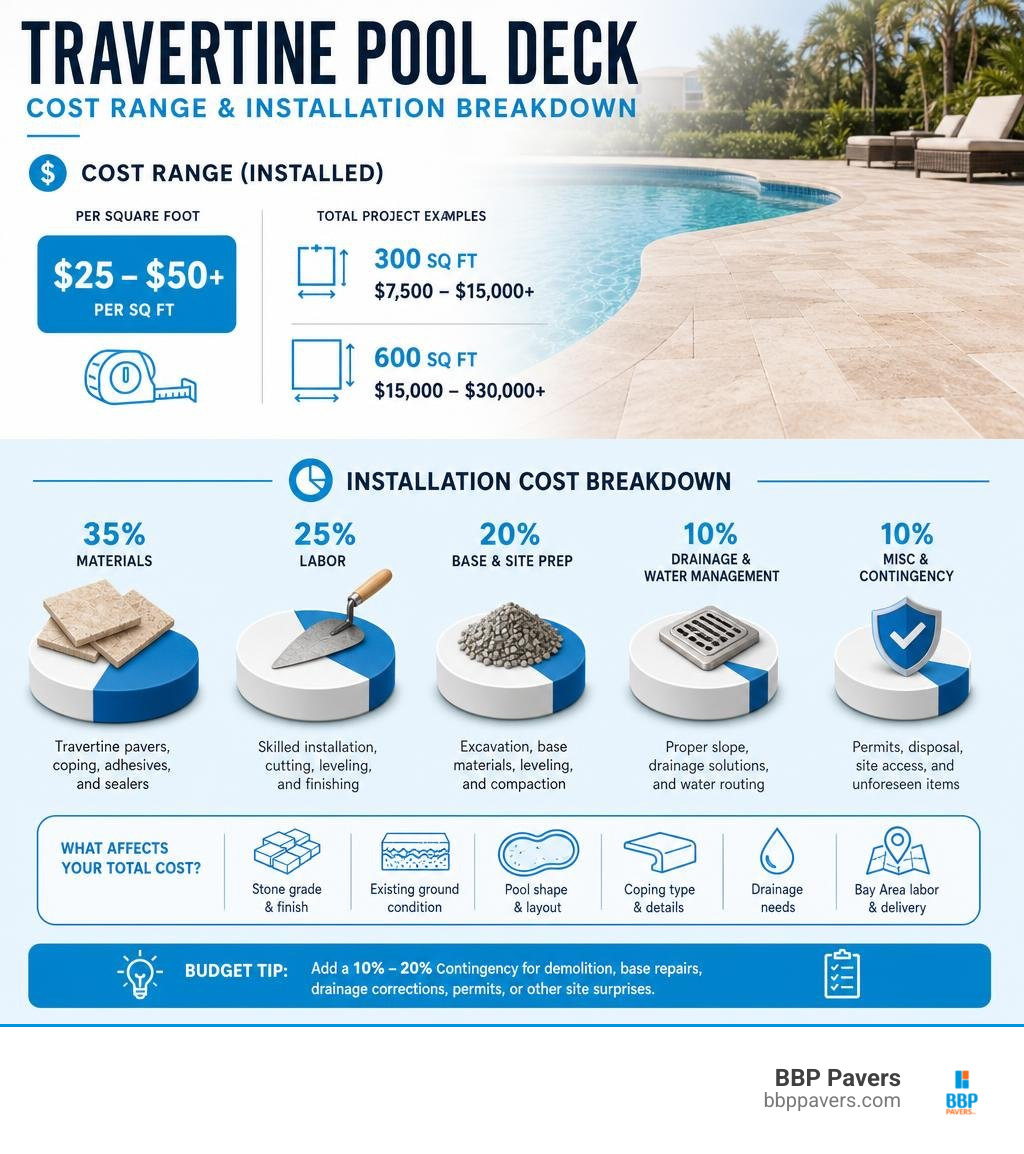
The average cost of a travertine pool deck is typically $25 to $50 or more per square foot installed. For a 300-square-foot pool surround, that puts a realistic starting budget around $7,500 to $15,000 before major extras. A larger 600-square-foot deck may run $15,000 to $30,000+.
Your final price depends on the stone grade and finish, the condition of the existing ground or concrete, drainage needs, pool shape, coping, and Bay Area labor and delivery costs. Simple, open layouts with standard tumbled pavers cost less than curved decks with custom cuts and premium bullnose coping.
Travertine costs more upfront than basic concrete, but many homeowners choose it for its natural look, textured grip around water, and cooler feel in direct sun. Plan on adding a 10% to 20% contingency for demolition, base repairs, drainage corrections, permits, or other site surprises.
Understanding the Average Cost of Travertine Pool Deck Projects
When estimating the financial investment required for an outdoor upgrade, analyzing the true cost per square foot gives you the best starting baseline. Natural travertine—a sedimentary stone forged by calcium carbonate deposits around mineral hot springs—commands a higher upfront price point than standard poured flatwork. However, its longevity, natural slip resistance, and timeless look balance out the initial numbers over time.
According to the latest Pool Decking Costs Guide, decking surfaces generally account for roughly 15% to 20% of an entire pool construction budget. Choosing natural stone requires balancing raw quarry costs against ground stabilization and skilled masonry labor.
Before diving into regional numbers, it helps to understand how travertine stacks up against other popular materials when evaluating the best pool decking options:
| Decking Material | Material Cost (per sq. ft.) | Installed Cost (per sq. ft.) | Expected Lifespan | Heat Retention Under Direct Sun |
|---|---|---|---|---|
| Broom-Finished Concrete | $2.50 – $5.00 | $8.00 – $15.00 | 15 – 25 Years | High (Heats up significantly) |
| Stamped Concrete | $4.00 – $9.00 | $14.00 – $25.00 | 15 – 25 Years | Very High (Dark colors can burn feet) |
| Interlocking Concrete Pavers | $4.00 – $10.00 | $18.00 – $32.00 | 25 – 40 Years | Moderate to High |
| Natural Travertine Pavers | $5.00 – $14.00 | $25.00 – $50.00+ | 30 – 50+ Years | Very Low (Stays 20–35°F cooler) |
| Porcelain Outdoor Pavers | $7.00 – $15.00 | $28.00 – $55.00 | 40 – 50+ Years | Moderate to Low |
| Natural Marble Pavers | $8.00 – $18.00 | $35.00 – $65.00+ | 30 – 50+ Years | Moderate (Denser crystalline matrix) |
Material vs. Labor: Typical Price Breakdown
A professional hardscape quote is broken into two distinct halves: raw materials and skilled installation labor. When using tools like a Travertine Paver Cost Calculator, you will find that materials alone account for approximately 35% to 45% of the invoice, while labor, base preparation, and equipment make up the remaining 55% to 65%.
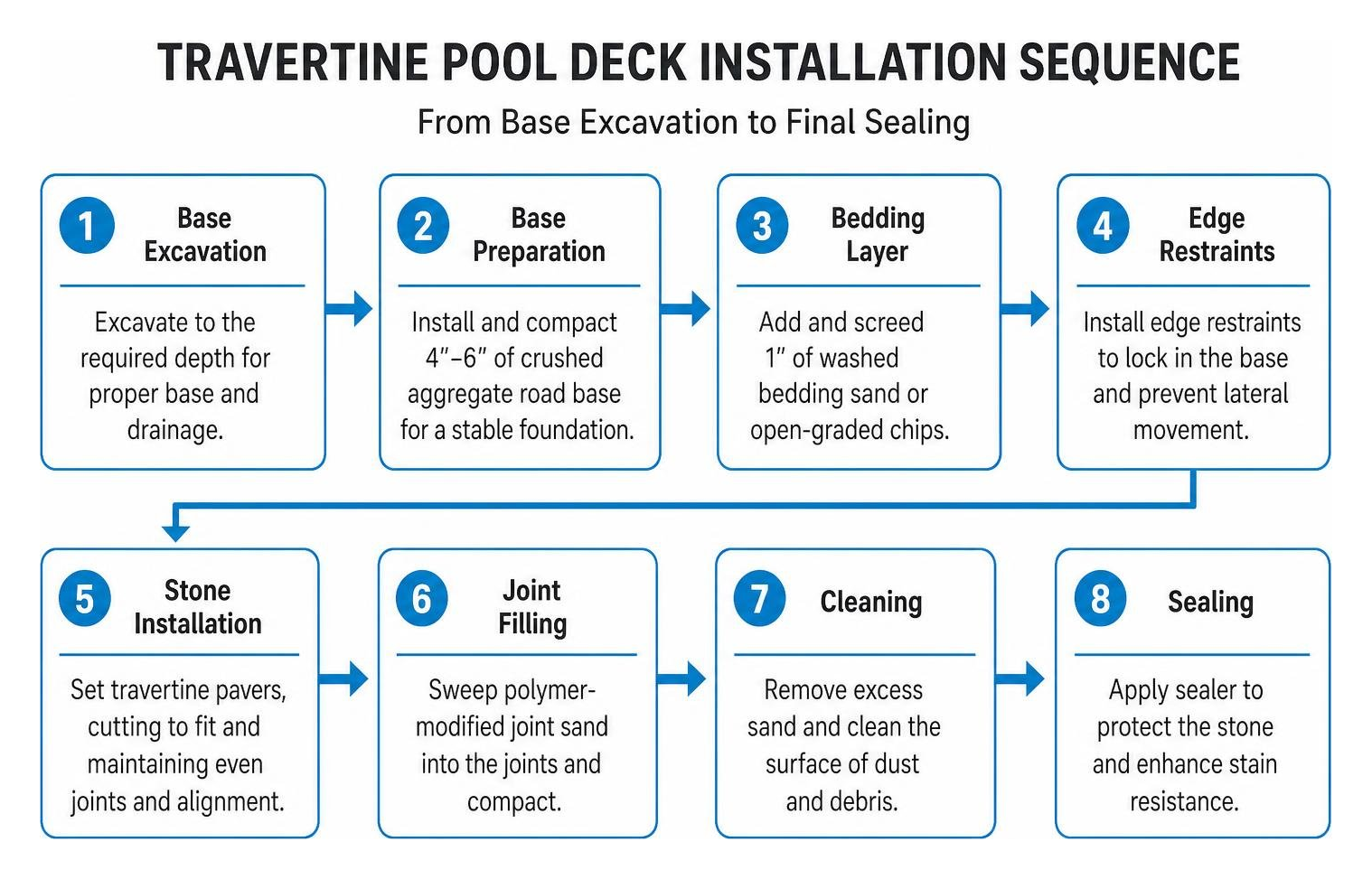
- Stone Sourcing ($5 to $14 per sq. ft.): Travertine is quarried, cut to dimension (often 1.25″ to 2″ thick for exterior pavers), and crated for transport. Variations in thickness and sorting standards dictate these rates.
- Aggregates and Bedding Base ($3 to $6 per sq. ft.): Setting stones directly on raw dirt causes sinking. A reliable installation requires a 4″ to 6″ crushed road base (Class 2 aggregate or crushed limestone), topped with a 1″ layer of washed bedding sand or open-graded chips.
- Joint Sand and Stabilization ($0.50 to $1.50 per sq. ft.): Polymer-modified joint sand locks paver joints together, resists weed intrusion, and prevents washouts caused by heavy pool splashing.
- Specialty Tools and Heavy Machinery: A proper sub-base requires plate compactors, laser levels, wet-masonry table saws with diamond-grit blades, and excavation equipment.
- Skilled Masonry Labor ($12 to $25+ per sq. ft.): Natural stone lacks the uniform, machine-pressed edges of manufactured concrete. Skilled stone setters must balance each paver, hand-level discrepancies, and execute precise radius cuts around pool curves.
Comparing Travertine to Concrete Pavers, Porcelain, and Marble
Homeowners frequently compare travertine with interlocking concrete units, modern porcelain, and marble. When weighing paver durability and aesthetics for outdoor spaces, travertine stands out for several physical reasons:
- Porosity and Thermal Dissipation: Travertine features natural pockets and a cellular structure that averages 26% porosity. These microscopic voids act as natural heat sinks, allowing the stone to breathe and dissipate solar radiation quickly. While poured concrete slabs can exceed 145°F in direct sunlight, light-toned travertine rarely climbs above 108°F to 112°F, protecting bare feet.
- Slip Resistance (DCOF Ratings): Pool deck safety requires a Dynamic Coefficient of Friction (DCOF) of 0.42 or higher under wet conditions. Unfilled, tumbled travertine easily exceeds this safety baseline because its textured micro-pits create strong traction under wet feet.
- Travertine vs. Marble: Marble is a metamorphic rock formed under intense heat and pressure, making it denser than travertine. While gorgeous, its dense structure absorbs and retains more heat, making it warmer under midday sun.
- Travertine vs. Porcelain: When evaluating natural stone versus porcelain pavers, porcelain offers near-zero water absorption, which prevents chemical etching. However, porcelain requires specialized wet-set mortar beds or ped-systems, driving installation labor higher than sand-set travertine installations.
Key Factors That Influence Your Total Project Investment
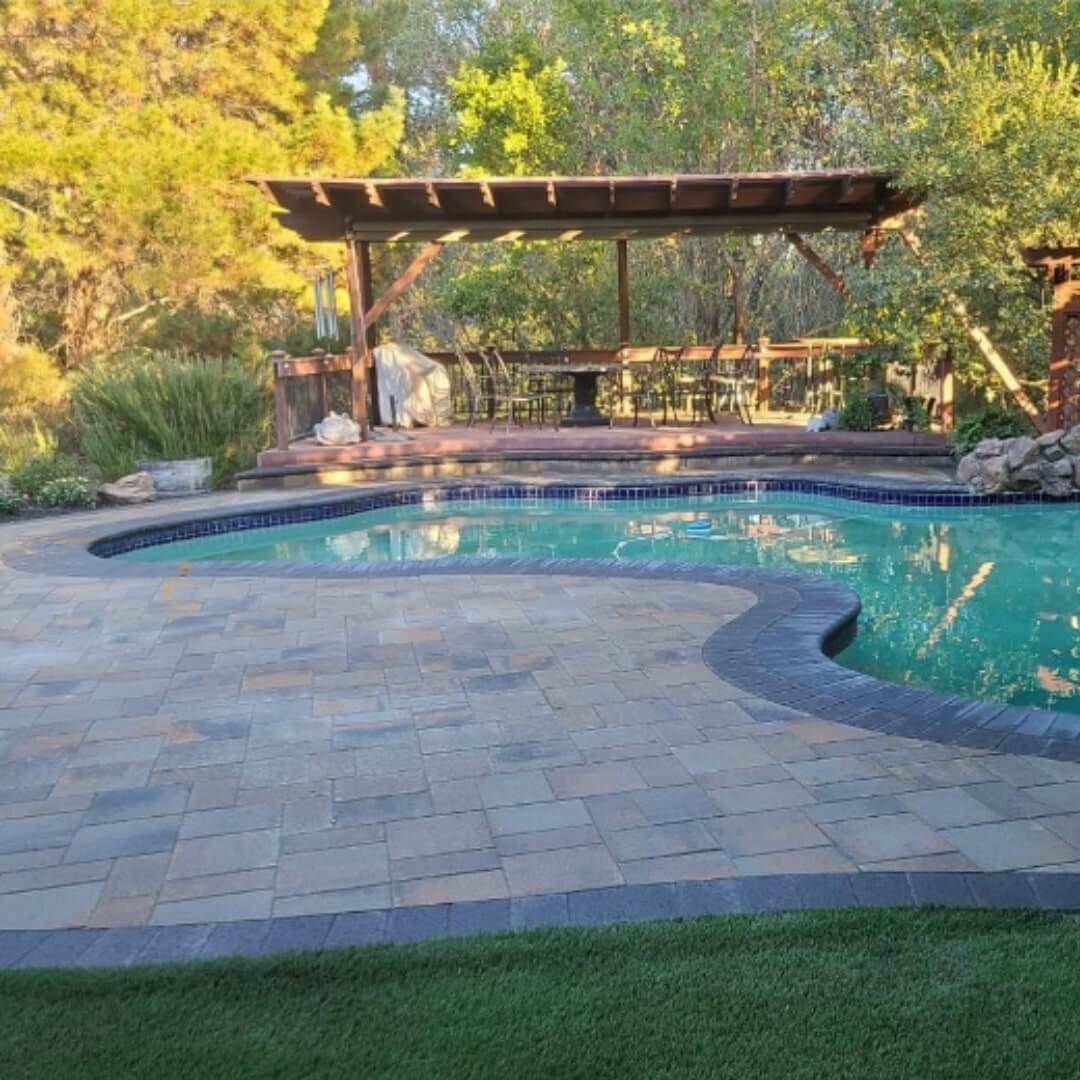
The total price of your pool deck depends heavily on the specific quirks of your yard. Two properties installing identical square footage can see significantly different project totals based on site conditions, styling choices, and the proven long-term paver durability advantages engineered into the sub-base.
Stone Grade, Thickness, and Edge Coping Profiles
Stone selection is the primary aesthetic cost driver when selecting the right pool deck materials:
- Standard / Commercial Grade: Displays wider color variations, larger unfilled voids, and slight dimensional variance. It offers great value for tight budgets but requires more sorting on-site.
- Premium Select Grade: Carefully sorted for uniform thickness, tighter pores, minimal structural cavities, and consistent color tone (such as pure Walnut, Ivory, or Silver).
- Finishes: Tumbled travertine is treated in a rotating drum to soften sharp edges, creating an antique, highly slip-resistant profile perfect for pool surrounds. Honed and Unfilled delivers a modern, matte finish with clean-cut edges.
- Pool Coping Profiles ($30 to $80 per linear foot): Coping is the specialized capstone that forms the pool’s safety lip. Full bullnose coping (rounded, smooth front edge) protects swimmers climbing in and out, while drop-face (drop-down apron) coping creates a thick, modern perimeter. Coping is sourced separately from field pavers and priced by the linear foot.
Calculating the Average Cost of Travertine Pool Deck by Square Footage
Project scale directly affects your bottom-line pricing due to equipment mobilization and aggregate delivery minimums:
- Small Deck / Pool Border (300 sq. ft.): $8,500 – $16,500. Smaller projects carry higher per-square-foot mobilization costs, as site preparation, dump trailers, and crew delivery costs are spread across a smaller footprint.
- Mid-Sized Pool Surround (600 sq. ft.): $16,000 – $32,000. This provides ample deck room for lounge chairs and outdoor seating, landing right at the national sweet spot for labor efficiency.
- Large Outdoor Living Oasis (1,000+ sq. ft.): $26,000 – $52,000+. Large decks unlock volume pricing on stone pallets and bulk aggregate deliveries, bringing the per-square-foot rate toward the lower end of the bracket.
Hidden Expenses, Sub-Base Prep, and Long-Term Maintenance
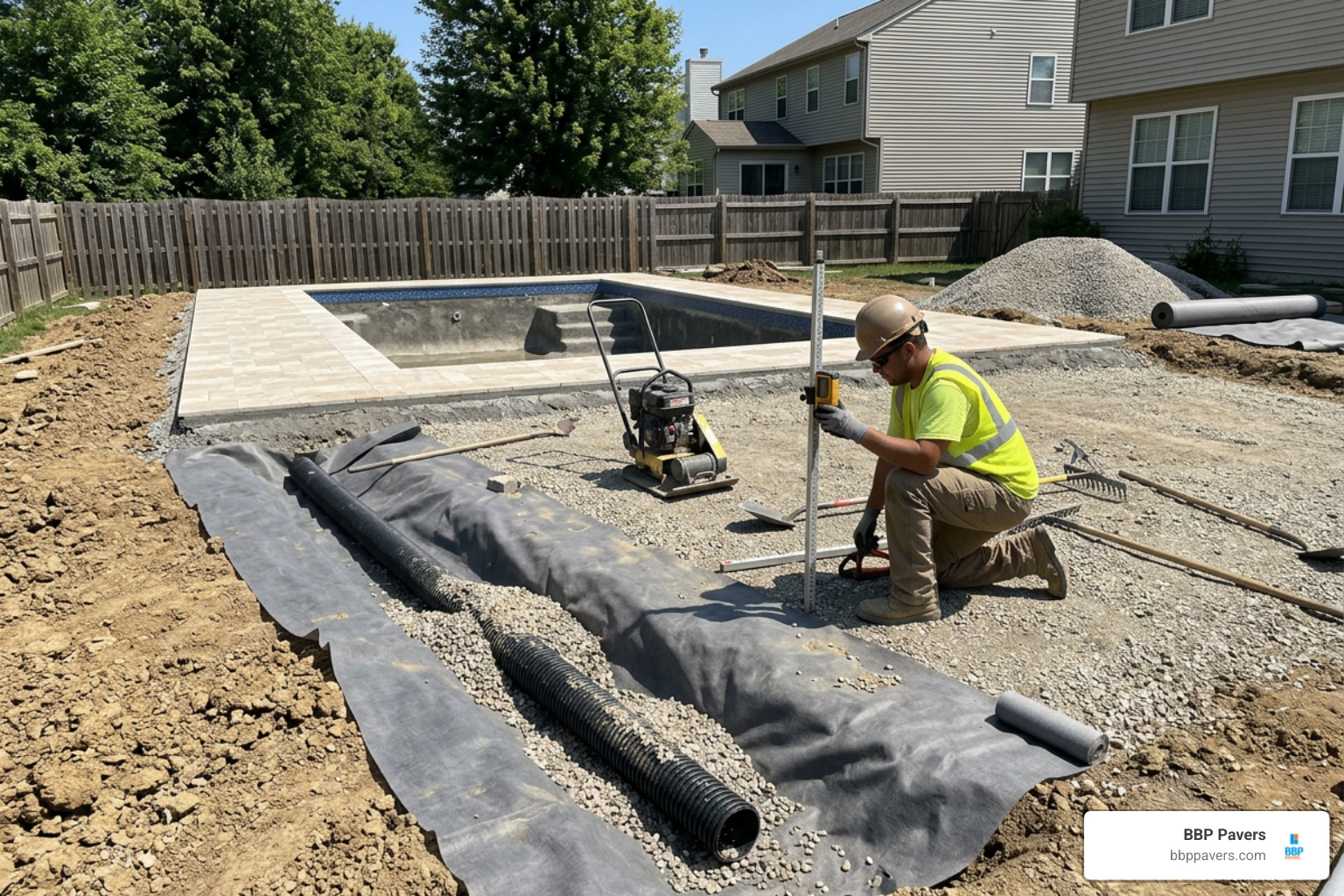
A gorgeous travertine deck is only as good as the foundation beneath it. To keep your project on budget, look out for common line items that can catch homeowners off guard:
- Demolition and Haul-Away ($3 to $8 per sq. ft.): Breaking up an old, cracked concrete deck requires jackhammers, skid-steers, and dump fees.
- Site Grading and Soil Stabilization ($1,200 to $4,000): Over-saturated or expansive clay soils require deep excavation, non-woven geotextile fabric installation, and laser grading to protect against settling.
- Deck Drainage Systems ($15 to $35 per linear foot): Decks must slope away from both the pool coping and your home’s foundation (a minimum 1/4″ drop per foot). Strip drains, deck drains, and integrated French drains keep excess water from pooling.
- Expansion Joints: A dedicated foam expansion strip must separate the rigid pool bond beam from the flexible paver field to prevent seasonal ground shifts from cracking the pool structure.
For a deeper dive into technical requirements, check out our comprehensive pool deck pavers guide.
Why Professional Installation Matters for Paver Pool Decks
Installing natural stone pavers around an inground pool requires precise sub-surface engineering. While a basic garden walkway can be a weekend DIY project, pool surrounds demand exact tolerances.
Inaccurate slopes can send chemical-laden water toward your home’s foundation or wash bedding sand directly into the pool skimmers. Poor base compaction leads to differential settling, creating uneven pavers that become trip hazards.
Hiring our team for professional pool deck installation services ensures your investment is protected with laser-guided grading, correct aggregate compaction rates, properly integrated pool coping, and strong warranty coverage.
Managing Ongoing Maintenance and Sealing Costs
Travertine is low maintenance, but protecting it against pool sanitation systems (like chlorine and saltwater) ensures it lasts for decades:
- Routine Washing: Rinse the deck with fresh water weekly during swim season. Remove organic leaf stains using mild, pH-neutral stone cleaners rather than harsh acids, which can etch natural calcium stone.
- Protective Penetrating Sealers ($1.00 to $2.50 per sq. ft. every 2–3 years): Water-based, breathable, penetrating silane/siloxane sealers sink into the stone’s pores without forming a slick surface film. This barrier protects against saltwater pitting, algae, and sunscreen stains.
- Joint Resanding ($0.50 to $1.00 per sq. ft. every 3–5 years): High-pressure pool water can wash away standard joint sand over time. Periodically topping off paver joints with polymeric sand keeps weeds out and maintains interlock stability.
Frequently Asked Questions About Travertine Pool Decks
What is the average cost of a travertine pool deck per square foot installed?
The typical installed cost across the United States ranges between $25 and $50 per square foot. Simple, straight-edge layouts on clean, well-drained ground sit near the lower end ($25 to $35/sq. ft.), while complex layouts featuring curved cuts, grade changes, custom drainage, and premium bullnose coping often range from $35 to $55+ per square foot.
How much cooler is travertine compared to concrete pavers?
Under direct midday sun, light-colored travertine (such as ivory, beige, or silver) typically runs 20°F to 35°F cooler than standard poured or stamped concrete. Because of its high Solar Reflectance Index (SRI) and natural porous vents, travertine transfers heat down into the bedding layers rather than holding it on the surface, keeping it comfortable for bare feet.
How often do travertine pool decks need to be sealed?
For freshwater pool environments, a high-quality penetrating sealer should be reapplied every 2 to 3 years. For saltwater pool systems, we recommend sealing every 1 to 2 years to protect the stone’s cellular matrix from salt crystallization and surface erosion.
Ready to Transform Your Pool Deck?
A natural travertine pool deck brings timeless Mediterranean character, reliable wet-traction safety, and comfortable, cool-touch surfaces to your backyard.
With over 20 years of local Bay Area hardscaping expertise, BBP Pavers pairs premium materials with meticulous base preparation, backed by our safety-first standards and a 100% satisfaction guarantee.
Review our paver patio and deck installation cost estimates to compare budgets, then contact our team today to schedule your free on-site design consultation and quote.