Block by Block: Eye-Catching Landscaping Block Ideas for Every Garden

Understanding Landscaping Blocks: Types, Materials, and Costs
The most versatile landscaping block ideas include terraced hillside retaining walls, modular raised garden beds, built-in fire pit seating surrounds, and geometric cinder block planters. Whether you are stabilizing an uneven slope or defining crisp garden borders, landscaping blocks combine structural stability with architectural style to maximize your yard’s functional living space.
Unlike surface pavers that lay flat over a bedding layer to support foot traffic, landscaping wall units feature integrated locking flanges, hollow cores for rebar and gravel infill, or textured split faces designed to interlock securely under lateral soil loads.
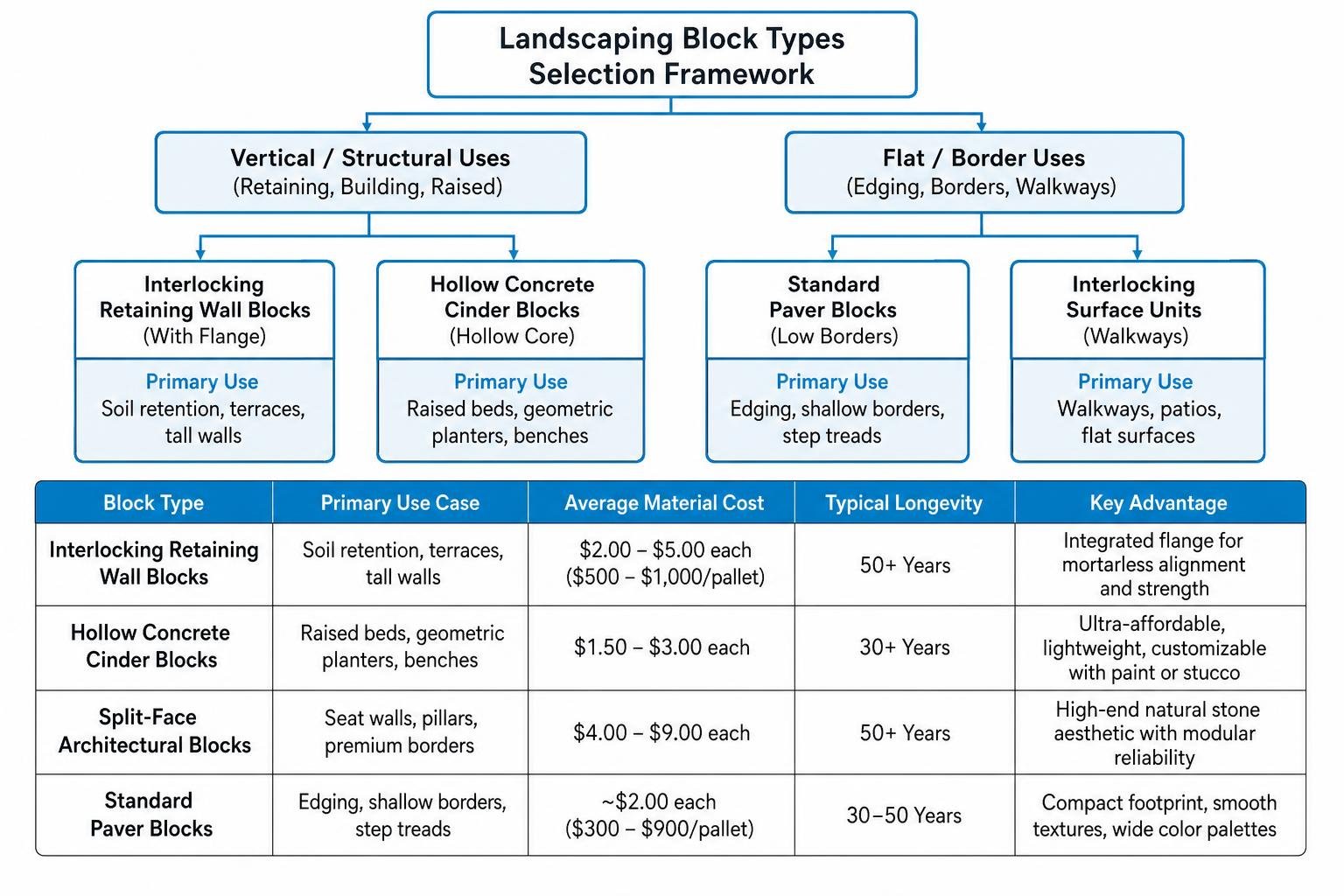
Understanding the differences between common masonry materials ensures you match structural strength with aesthetic appeal:
- Interlocking Concrete Wall Blocks: Manufactured with rear lips or pin systems, these units automatically create the proper setback (batter) against retained soil, making them the gold standard for terracing and garden walls.
- Split-Face Masonry Blocks: Textured on the exterior face to mimic natural quarried stone, these dense concrete units offer an upscale look for freestanding seat walls and entryway pillars.
- Hollow Cinder Blocks (CMUs): Extremely economical concrete masonry units (weighing 25 to 35 pounds each) with hollow cores. When reinforced with rebar and concrete or filled with well-draining soil, they serve as fantastic building blocks for modern planters and utility garden walls.
- Decorative Pavers and Edging Units: Smaller, refined blocks designed primarily for grade separation, border definition, and finishing trim along paths and lawn perimeters. Exploring top stone edging options every homeowner should know can help you pair the right perimeter trim with your vertical walls.
| Block Type | Primary Use Case | Average Material Cost | Typical Longevity | Key Advantage |
|---|---|---|---|---|
| Interlocking Retaining Wall Blocks | Soil retention, terraces, tall walls | $2.00 – $5.00 each ($500 – $1,000/pallet) | 50+ Years | Integrated flange for mortarless alignment and strength |
| Hollow Concrete Cinder Blocks | Raised beds, geometric planters, benches | $1.50 – $3.00 each | 30+ Years | Ultra-affordable, lightweight, customizable with paint or stucco |
| Split-Face Architectural Blocks | Seat walls, pillars, premium borders | $4.00 – $9.00 each | 50+ Years | High-end natural stone aesthetic with modular reliability |
| Standard Paver Blocks | Edging, shallow borders, step treads | ~$2.00 each ($300 – $900/pallet) | 30–50 Years | Compact footprint, smooth textures, wide color palettes |
Inspiring Landscaping Block Ideas for Modern Yards
Modern landscape architecture uses blocks to sculpt space, turning underutilized square footage into purposeful outdoor living zones. By alternating textures, experimenting with curves, and incorporating built-in features, you can blend structural stability with high-end style.
Functional Landscaping Block Ideas for Slopes and Terraces
Steep slopes often render large sections of a yard unusable while inviting severe soil erosion during heavy rains. Installing a stepped system of retaining walls converts sharp inclines into usable, terraced plateaus suitable for turf, gardens, or entertaining spaces.
When building stepped terraces, each tier reduces the hydrostatic pressure exerted on the wall below it. Proper installation requires backfilling behind the block courses with angular crushed drainage gravel and laying a perforated drainage pipe wrapped in geotextile fabric. For homeowners dealing with hillside elevation shifts, our dedicated services for retaining walls provide engineered stabilization built to endure shifting Bay Area clay soils.
Budget-Friendly Landscaping Block Ideas with Cinder Blocks
If you are working on a weekend DIY budget, standard hollow concrete blocks offer immense creative potential. Because they cost less than $2 to $3 each, you can build striking modern features for a fraction of the cost of natural stone.
- Geometric Succulent Grids: Turn hollow cores into individual planting pockets. Stacking blocks in a staggered layout creates a modern, living mosaic wall on a patio edge.
- Custom Painted Feature Planters: Raw grey cinder blocks can look industrial, but a coat of masonry primer followed by an exterior-grade acrylic paint or a skim coat of stucco transforms them into sleek architectural statements.
- Outdoor Benches and Bars: Lay cinder blocks horizontally on their sides, stack them three layers high, and slide smooth 4×4 cedar or redwood posts through the hollow openings to build instant, sturdy garden seating.
Homeowners looking for inspiration often explore creative and functional cinder block garden designs as well as techniques for building vertical succulent planters from concrete blocks to maximize green space in tight footprints.
Raised Garden Beds and Planter Boxes
Raised planter beds constructed from modular wall blocks warm up faster in early spring than in-ground garden beds, promoting rapid root development and superior drainage control. Unlike wood frames that inevitably rot, concrete block planters resist moisture, termites, and burrowing pests indefinitely.
For optimal plant health in a standard 4×8-foot block raised bed, fill the internal cavity with a balanced soil blend:
- 60% Screened Topsoil: Provides the foundational mineral structure and anchorage for root systems.
- 30% Organic Compost: Supplies essential nitrogen, beneficial microbes, and long-term nutrients.
- 10% Horticultural Perlite or Coarse Sand: Ensures rapid aeration and prevents soil compaction over successive growing seasons.
Finishing the top course with smooth masonry capstones gives your planter boxes a comfortable perimeter ledge where you can sit while tending to your herbs and vegetables.
Outdoor Fire Pits and Integrated Seating Walls
A custom fire feature acts as an immediate focal point for backyard gatherings. By using high-density concrete wall blocks paired with fire-rated masonry or a protective steel insert, you can craft circular or square fire pits that integrate seamlessly into the surrounding patio design.
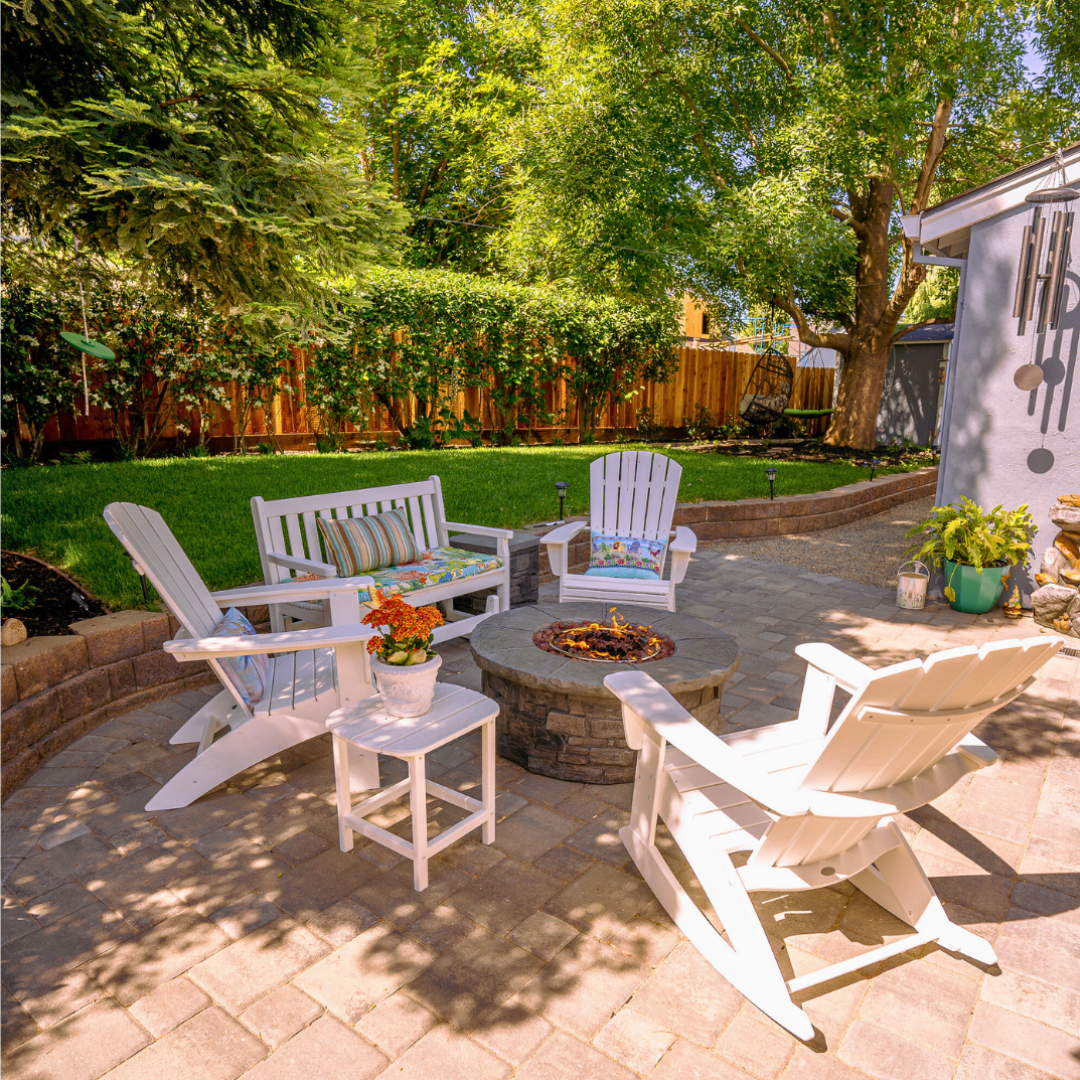
Surrounding the fire feature with a low, semi-circular seating wall (typically 18 to 22 inches high) provides permanent seating that never blows over in high winds. To discover step-by-step techniques for safe clearances and masonry bonding, check out our guide on how to build a backyard fire pit.
Garden Steps, Pathways, and BBQ Islands
Connecting different elevations across your yard with solid block steps enhances safety and landscape flow. Modular wall blocks serve as structural risers, securely backfilled with compacted aggregate and topped with bullnose or chiseled paver treads.
Furthermore, you can construct custom outdoor kitchen surrounds and BBQ islands using structural concrete blocks. Once veneered with stone or stucco and topped with granite or polished concrete counters, block-based kitchen enclosures provide extreme weather resistance and fire safety at a lower cost than full custom frame construction. To plan your wider hardscape budget, reviewing our breakdown on paver patio installation cost will help you align all related elements.
Step-by-Step Guide to Installing Landscaping Block Structures
A durable hardscape feature depends almost entirely on what lies beneath the visible blocks. Cutting corners during base preparation will lead to settling, leaning, or wall collapse.
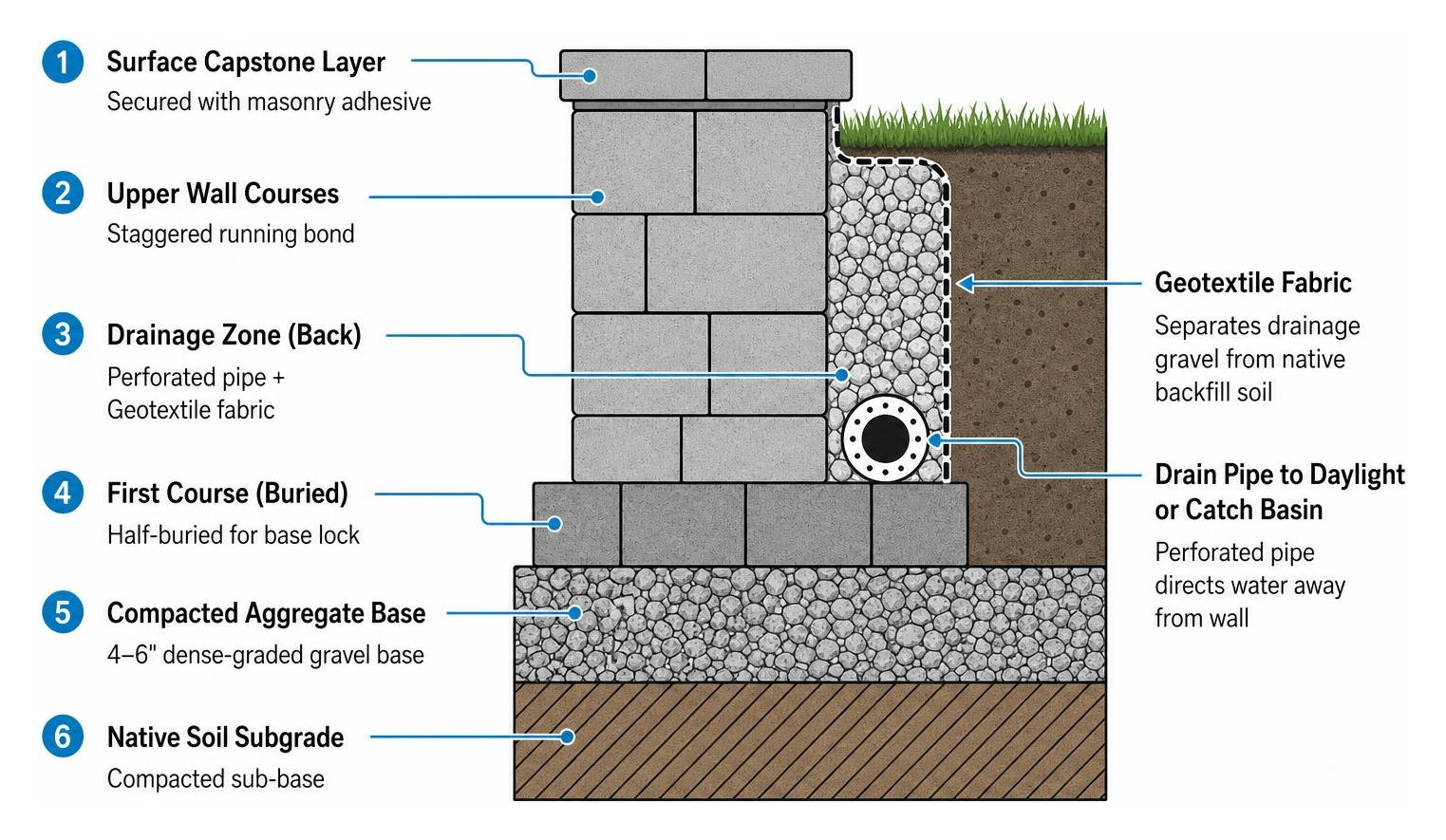
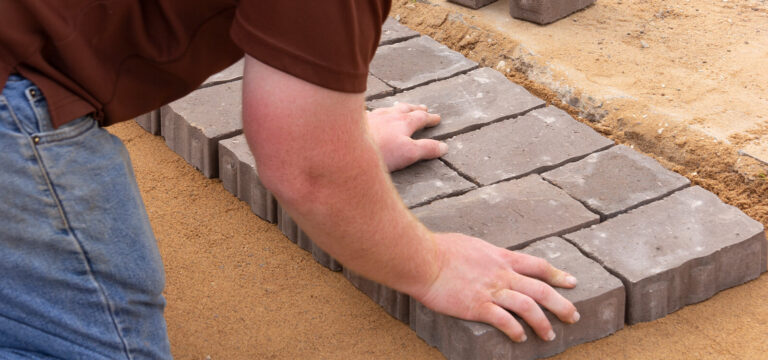
- Site Layout and Excavation: Mark your trench line with stakes and mason’s string. Excavate the trench to a depth equal to the thickness of your aggregate base (typically 4 to 6 inches) plus half the height of your block unit.
- Base Compaction: Fill the excavated trench with dense-graded crushed aggregate (Class 2 permeable or road base). Compact thoroughly using a mechanical plate compactor or heavy hand tamper until firm.
- Laying the First Course: Place your foundation blocks directly onto the compacted base. The first course must be half-buried beneath the finished ground grade. Use a torpedo level on every single unit across both axes, adjusting with a rubber mallet. If the first course isn’t perfectly level, every layer above it will amplify the error.
- Stacking and Interlocking: Stack subsequent courses in a staggered running bond pattern so vertical joints do not align. For blocks with rear locking lips, pull each block forward firmly against the lip of the unit below it.
- Installing Drainage Infrastructure: Lay a 4-inch perforated drainage pipe behind the first above-ground course, routing it to daylight or a dedicated catch basin. Backfill the immediate 12-inch zone behind the wall with washed angular gravel, separating the stone from native backfill soil using non-woven geotextile landscape fabric.
- Capping and Securing: Finish the top edge with decorative cap units. Secure caps using a heavy-duty, polyurethane-based exterior concrete adhesive to prevent dislodgement. To avoid structural pitfalls during base and edging prep, read through our summary of 5 paver installation mistakes to avoid for a perfect finish.
Planning and Execution: DIY vs. Hiring a Professional
While small garden borders and 2-foot planter boxes make rewarding DIY weekend projects, large-scale retaining and structural walls carry significant safety and engineering responsibilities.
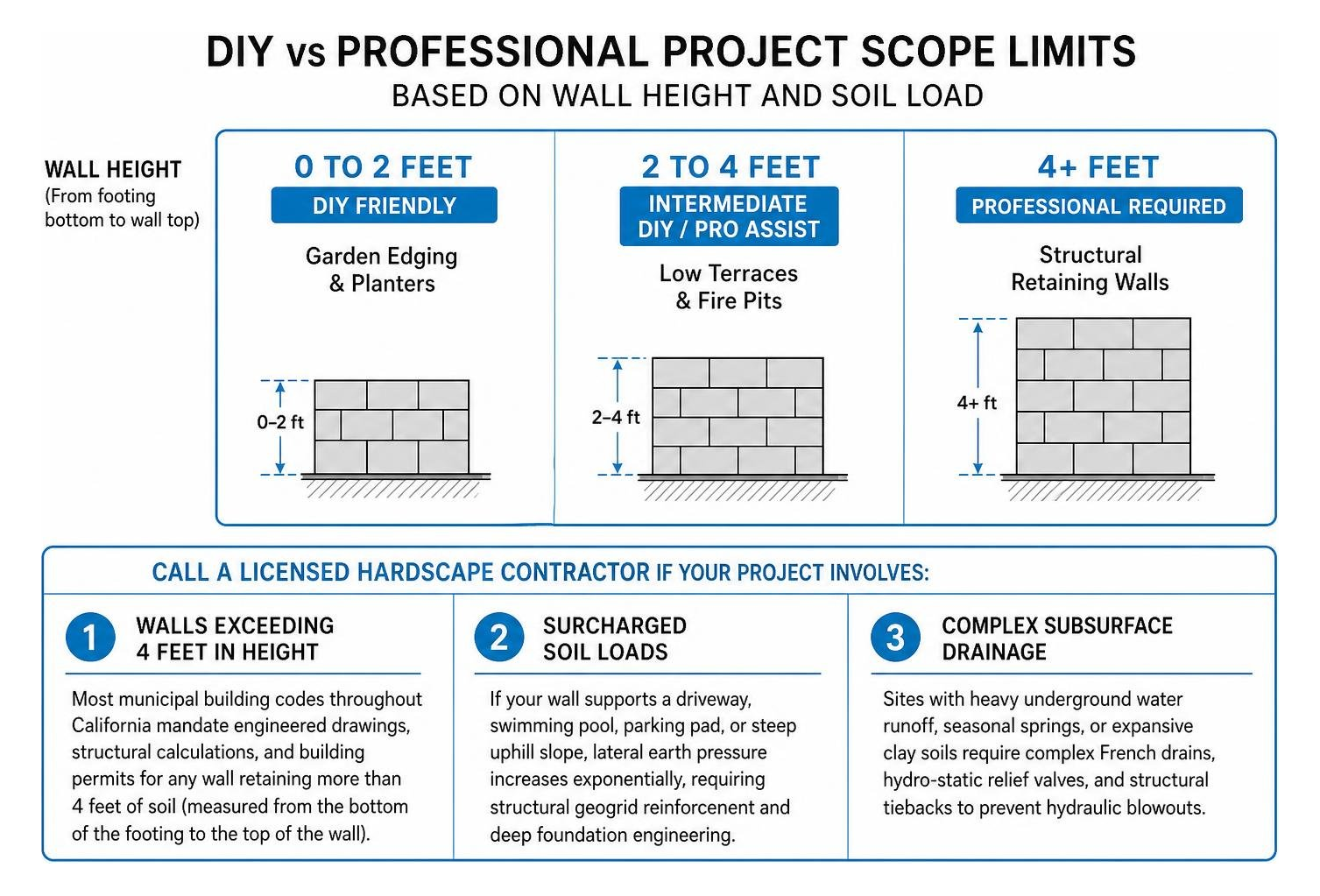
You should call a licensed hardscape contractor if your project involves:
- Walls Exceeding 4 Feet in Height: Most municipal building codes throughout California mandate engineered drawings, structural calculations, and building permits for any wall retaining more than 4 feet of soil (measured from the bottom of the footing to the top of the wall).
- Surcharged Soil Loads: If your wall supports a driveway, swimming pool, parking pad, or steep uphill slope, lateral earth pressure increases exponentially, requiring structural geogrid reinforcement and deep foundation engineering.
- Complex Subsurface Drainage: Sites with heavy underground water runoff, seasonal springs, or expansive clay soils require complex French drains, hydro-static relief valves, and structural tiebacks to prevent hydraulic blowouts.
Frequently Asked Questions About Landscaping Blocks
How do I calculate the number of landscaping blocks needed for a project?
To determine your total block count, calculate the project’s total surface area and divide it by the face area of a single block:
$$\text{Blocks per Row} = \frac{\text{Total Wall Length (in inches)}}{\text{Individual Block Length (in inches)}}$$
$$\text{Total Rows} = \frac{\text{Total Wall Height (in inches)}}{\text{Individual Block Height (in inches)}} + 1 \text{ (for the buried course)}$$
$$\text{Total Blocks} = (\text{Blocks per Row} \times \text{Total Rows}) \times 1.10$$
Always add a 10% contingency factor to account for cuts around curves, corners, and potential transit breakage.
How much do landscaping block projects typically cost?
Material costs vary widely based on block style, site access, and project complexity. Individual cinder blocks cost between $1.50 and $3.00, while interlocking wall blocks range between $2.00 and $5.00 each at major suppliers (or $500 to $1,000 per full pallet). Paver patio surfaces run $8.69 to $22.18 per square foot for materials and installation, while professionally installed outdoor masonry steps average $37 per square foot (ranging from $9 to $65 per square foot depending on finishes).
How do you maintain and clean landscaping block structures?
Landscape blocks require minimal maintenance to stay beautiful:
- Routine Washing: Wash surface grime and airborne dust away using a garden hose or a low-pressure power washer (under 1,500 PSI) with a wide-angle fan tip to protect the concrete aggregate face.
- Efflorescence Removal: Remove white powdery salt deposits (efflorescence) using a specialized, non-acidic efflorescence cleaner and a stiff-bristle nylon brush.
- Joint Inspection and Sealing: Inspect adhesive bonds on capstones and check backfill settling annually. Applying a breathable silane-siloxane penetrating concrete sealer every three to five years protects against color fading, oil staining, and moisture penetration.
Transform Your Outdoor Space with Expert Block Installation
Whether you are carving out flat terraces on a hillside property, building a backyard retreat with custom seating walls, or elevating your curb appeal with decorative garden borders, landscaping blocks offer unbeatable strength and design versatility.
For Bay Area homeowners seeking reliable craftsmanship, BBP Pavers brings over 20 years of dedicated hardscape design and installation experience. Our crew handles everything from grading and permit compliance to soil stabilization, drainage engineering, and precision masonry. Explore our gallery of front yard retaining wall ideas to visualize the possibilities, and contact us today for a free on-site design consultation backed by our 100% satisfaction guarantee.