Retaining Wall Installation Cost: 2026 Guide

How much does retaining wall installation cost — and why do quotes vary so dramatically from one contractor to the next? If you have a sloped yard, erosion problems, or a landscape that needs structural support, you already know the frustration of getting wildly different estimates without understanding what drives the price.
The average retaining wall installation cost in the United States ranges from $3,500 to $10,000 for a standard residential project, but that number can climb significantly depending on the material you choose, the height of the wall, site conditions, and the quality of the contractor you hire.
In this complete 2026 guide, you will learn exactly what influences retaining wall installation cost, how different materials compare in price and durability, what the installation process looks like from start to finish, and how to avoid the most expensive mistakes homeowners make. Whether you are in Concord, Walnut Creek, or anywhere across the Bay Area, this guide will help you make a confident, informed decision.
Continue reading to discover how to get the best value for your investment — and when to call a professional.
Ready to get an accurate estimate for your project? Contact BBP Pavers today for a free quote — serving Concord, CA and surrounding areas.
What Is a Retaining Wall and Why Does It Matter?
A retaining wall is a structure designed to hold back soil, prevent erosion, and create level surfaces on sloped or uneven terrain. Beyond its functional role, a well-built retaining wall adds significant curb appeal, increases usable outdoor space, and protects your property’s foundation from water damage and soil movement.
Without proper retaining structures, sloped yards are vulnerable to erosion, mudslides, and structural damage — especially in regions like the Bay Area, where seasonal rains and clay-heavy soils create real challenges for homeowners.
At BBP Pavers, based in Concord, CA, the team has installed hundreds of retaining walls across Contra Costa County and the greater Bay Area, helping homeowners transform unstable slopes into beautiful, functional outdoor spaces. You can explore their full range of retaining wall services here.
If you are also planning to upgrade your outdoor space, BBP Pavers offers complementary services including patio pavers, driveway pavers, and outdoor kitchens and BBQ islands that pair beautifully with a new retaining wall.
How Much Does Retaining Wall Installation Cost in 2026?
This is the question every homeowner asks first — and the answer depends on several variables. Below is a breakdown of average retaining wall installation cost by material type, which is the single biggest pricing factor.
What Factors Affect Retaining Wall Installation Cost?
Several variables beyond material choice will influence your final retaining wall installation cost:
Wall Height: Taller walls require deeper footings, more material, and additional engineering. A wall over 4 feet typically requires a permit and engineered drawings in most California jurisdictions.
Wall Length: Longer walls mean more material and more labor hours. Most contractors price by the linear foot or square foot.
Site Accessibility: If heavy equipment cannot easily access your yard, labor costs increase. Steep slopes, narrow gates, and existing landscaping all add complexity.
Drainage Requirements: Proper drainage is non-negotiable for a long-lasting retaining wall. Installing drainage pipes, gravel backfill, and weep holes adds to the cost but prevents catastrophic failure.
Soil Conditions: Clay-heavy soils common in the Bay Area require more preparation and sometimes engineered solutions, which increases retaining wall installation cost.
Permits: In Concord and surrounding cities, walls over a certain height require building permits. Permit fees typically range from $200 to $1,500 depending on the municipality.
Demolition of Existing Structures: If you are replacing an old wall, demolition and debris removal add $500 to $2,000 to the project.
What Is the Cheapest Type of Retaining Wall?
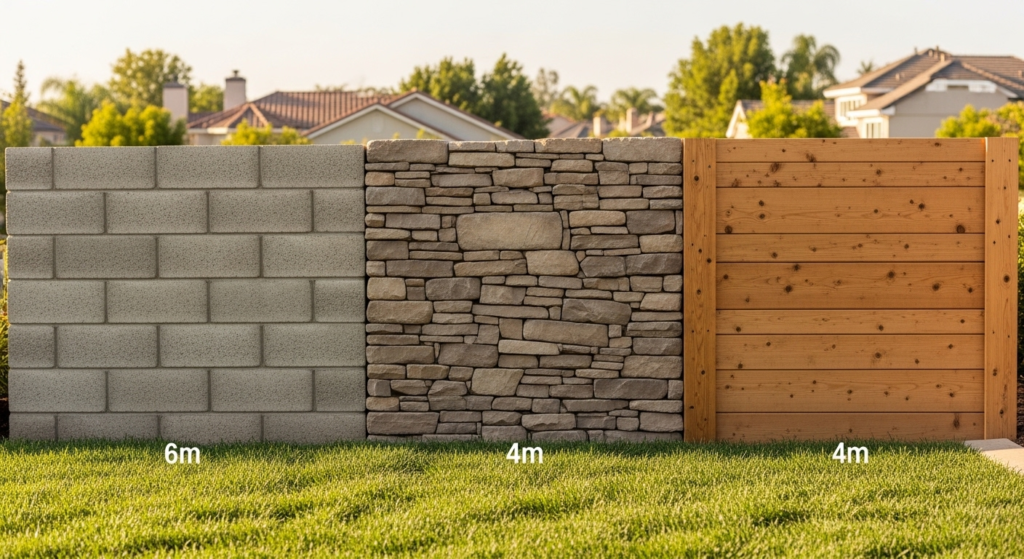
For homeowners working with a tight budget, timber retaining walls offer the lowest upfront retaining wall installation cost, typically between $10 and $20 per square foot. However, wood walls have a significantly shorter lifespan — usually 15 to 20 years — and are susceptible to rot, insects, and moisture damage in wet climates.
Gabion walls and segmental concrete block walls offer a strong middle ground: they are more affordable than natural stone or poured concrete, yet far more durable than timber. For most Bay Area homeowners, segmental retaining walls represent the best balance of cost, durability, and aesthetics.
The Retaining Wall Installation Process: Step by Step
Understanding the installation process helps you evaluate contractor proposals and set realistic expectations for your project timeline. Here is how a professional retaining wall installation unfolds from start to finish.
Step 1: Site Assessment and Planning
A qualified contractor begins with a thorough site assessment. This includes evaluating soil type, slope grade, drainage patterns, and any underground utilities. In the Bay Area, soil conditions vary significantly between cities like Orinda, Lafayette, and Fremont, so this step is critical.
BBP Pavers conducts detailed site assessments before every project, ensuring the design accounts for local soil conditions, drainage requirements, and aesthetic goals. Learn more about paver installation in Concord and how the team approaches each unique property.
Step 2: Permits and Engineering (If Required)
For walls exceeding 4 feet in height, California building codes typically require a permit and, in many cases, engineered drawings stamped by a licensed structural engineer. Your contractor should handle this process on your behalf. Skipping permits is one of the most costly mistakes a homeowner can make — it can result in fines and mandatory demolition.
Step 3: Excavation and Base Preparation
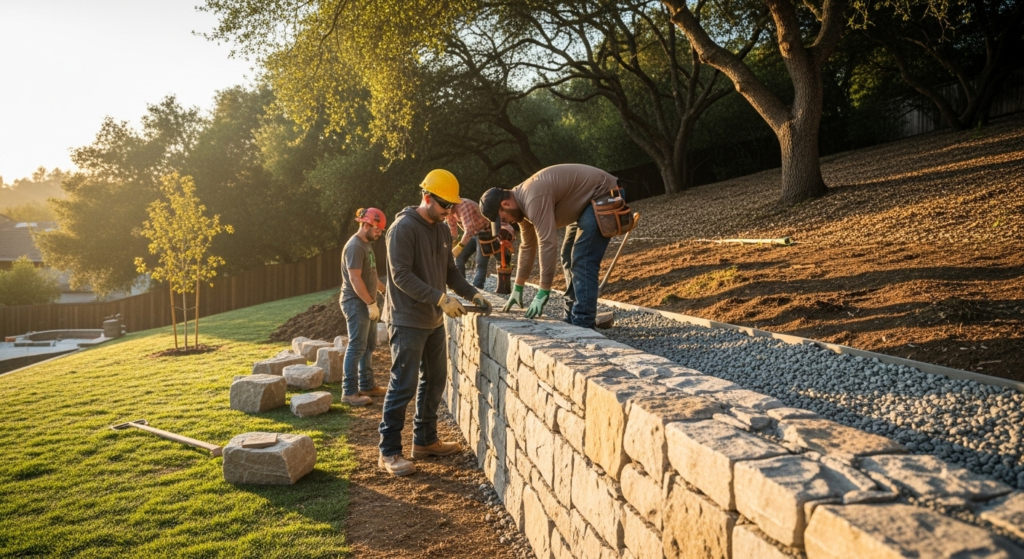
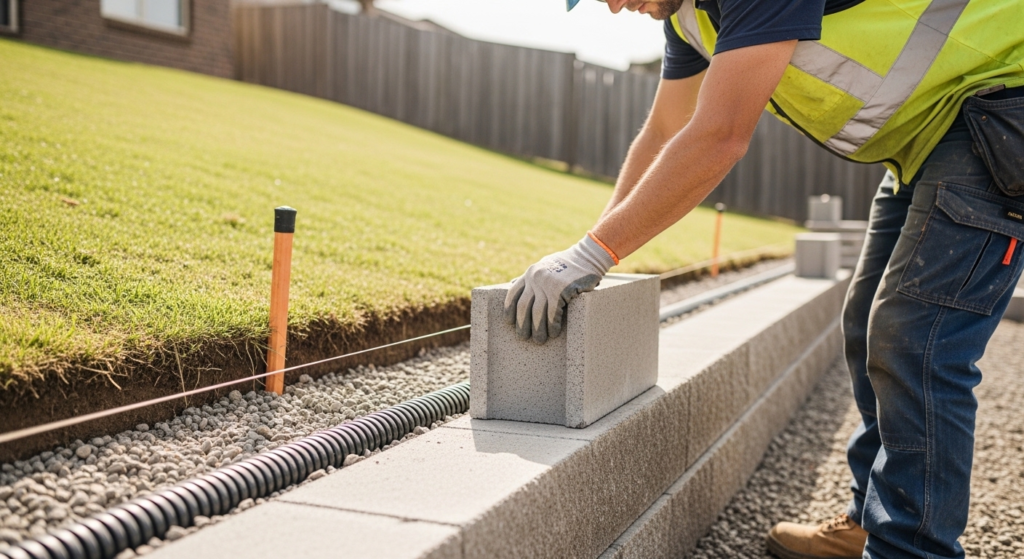
The foundation of any retaining wall is its base. Contractors excavate to the required depth — typically 6 to 12 inches below grade — and compact a gravel base layer. This base provides stability and allows water to drain away from the wall structure.
Step 4: Drainage Installation
Before the wall goes up, drainage infrastructure is installed. This typically includes a perforated drain pipe at the base of the wall, surrounded by crushed gravel. Weep holes are incorporated into the wall face to allow water to escape. Skipping drainage is the number one cause of retaining wall failure.
Step 5: Wall Construction
With the base prepared and drainage in place, construction begins. The specific process varies by material — concrete blocks are stacked and interlocked, natural stone is mortared or dry-stacked, and poured concrete requires formwork. Each course is checked for level and alignment throughout the build.
Step 6: Backfill and Compaction
Once the wall reaches its designed height, the area behind it is backfilled with compacted gravel and soil. Proper compaction prevents settling and reduces lateral pressure on the wall.
Step 7: Finishing and Landscaping
The final step involves finishing the wall surface, cleaning the site, and integrating the wall with surrounding landscaping. Many homeowners choose to add complementary features at this stage, such as walkway pavers, outdoor lighting, or walls and pillars to complete the look.
How Long Does Retaining Wall Installation Take?
For a standard residential retaining wall (50 linear feet, up to 4 feet tall), professional installation typically takes 3 to 7 days. Larger or more complex projects — those requiring permits, engineered drawings, or significant excavation — can take 2 to 4 weeks from start to finish.
Real Customer Experiences: What Bay Area Homeowners Say
Nothing speaks louder than the experience of real customers. Here is what homeowners across the Bay Area have said about working with BBP Pavers:
Maria T., Concord, CA (Google Review): “BBP Pavers transformed our sloped backyard into a beautiful, usable space. The retaining wall they built is solid, looks amazing, and the team was professional from start to finish. Worth every penny.”
James R., Walnut Creek, CA (Yelp Review): “I got three quotes for my retaining wall project and BBP Pavers offered the best combination of price, materials, and professionalism. The crew was on time, clean, and the finished wall exceeded my expectations.”
Sandra L., Lafayette, CA (Google Review): “We had serious erosion issues on our hillside property. BBP Pavers assessed the situation, recommended the right solution, and delivered a retaining wall that has held up perfectly through two rainy seasons. Highly recommend.”
You can read more reviews and see project photos on BBP Pavers’ Google Business Profile and Yelp page.
Thinking about a retaining wall for your property? Request your free estimate from BBP Pavers — the Bay Area’s trusted outdoor construction specialists.
DIY vs. Professional Retaining Wall Installation: Which Is Right for You?
Many homeowners consider DIY retaining wall installation to reduce costs. While small, decorative walls under 2 feet tall can be a manageable weekend project, anything taller or structurally significant should be handled by a licensed professional.
When DIY Makes Sense
A DIY approach may be appropriate when the wall is purely decorative, under 2 feet in height, not subject to significant soil pressure, and located in an area with no drainage concerns. Simple timber or stacked stone garden borders fall into this category.
When You Should Always Hire a Professional
You should hire a licensed contractor when the wall is over 3 feet tall, when the wall is needed to prevent erosion or soil movement, when the project requires permits or engineering, when the site has drainage challenges, or when the wall is near a structure, driveway, or property line.
Attempting to build a structural retaining wall without professional expertise is one of the most common — and costly — mistakes homeowners make. A failed retaining wall can cause property damage, injury, and legal liability. The cost of professional installation is almost always justified by the long-term protection it provides.
For homeowners in Walnut Creek, Lafayette, Moraga, and Orinda, BBP Pavers offers professional retaining wall installation with a clear process, transparent pricing, and a workmanship warranty. Check out their warranty information here.
How to Save Money on Retaining Wall Installation Cost Without Cutting Corners
Reducing retaining wall installation cost does not mean compromising on quality. Here are practical strategies that experienced homeowners use to get the best value:
Get Multiple Quotes: Always obtain at least three written quotes from licensed contractors. This gives you a realistic price range and helps you identify outliers — both suspiciously low bids and inflated ones.
Choose the Right Material for Your Budget: Segmental concrete block and gabion walls offer excellent durability at a lower price point than natural stone or poured concrete. Discuss material options with your contractor to find the best fit.
Plan During the Off-Season: Contractors are often more available and willing to negotiate pricing during fall and winter months. Scheduling your project outside of the spring and summer peak season can reduce retaining wall installation cost by 10 to 20 percent.
Bundle Projects: If you are also planning a patio, driveway, or walkway upgrade, bundling these projects with the same contractor often results in significant savings. BBP Pavers offers comprehensive outdoor construction services — from pool decks to fire pits — making it easy to combine projects efficiently.
Ask About Financing: BBP Pavers offers financing options to help homeowners manage the cost of larger projects. Learn more about financing options here.
Avoid Unnecessary Extras: Decorative caps, custom colors, and premium finishes add to the cost. Focus on structural quality first and add aesthetic upgrades only if your budget allows.
Common Retaining Wall Mistakes and How to Avoid Them
Even well-intentioned homeowners and inexperienced contractors make mistakes that lead to premature wall failure. Here are the most common errors and how to avoid them.
Skipping Drainage
This is the single most common cause of retaining wall failure. Without proper drainage, hydrostatic pressure builds up behind the wall and eventually causes it to bow, crack, or collapse. Always insist on a drainage plan as part of your installation.
Insufficient Base Preparation
A retaining wall is only as strong as its foundation. Inadequate base depth or poor compaction leads to settling and structural failure. Professional contractors follow established engineering standards for base preparation based on wall height and soil conditions.
Ignoring Permit Requirements
In California, walls over 4 feet (measured from the bottom of the footing) typically require a building permit. Unpermitted walls can result in fines, mandatory removal, and complications when selling your property.
Choosing the Wrong Material for the Application
Not all materials are appropriate for all applications. Timber walls, for example, are not suitable for areas with high moisture or significant soil pressure. Always match the material to the structural and environmental demands of the site.
Hiring Unlicensed Contractors
The lowest bid is rarely the best value. Unlicensed contractors may cut corners on drainage, base preparation, and materials — leaving you with a wall that fails within a few years. Always verify that your contractor holds a valid California contractor’s license.
Retaining Wall Installation Cost by Location in the Bay Area
Retaining wall installation cost varies by location due to differences in labor rates, permit fees, and site conditions. Here is a general overview for the areas BBP Pavers serves.
BBP Pavers serves all of these communities and more. Explore service areas including Walnut Creek, Lafayette, Moraga, Orinda, Fremont, Palo Alto, and Atherton.
Case Study: Hillside Erosion Solution in Lafayette, CA
A homeowner in Lafayette contacted BBP Pavers after experiencing significant soil erosion on a steep hillside adjacent to their driveway. The slope had been deteriorating for two rainy seasons, threatening the structural integrity of the driveway and the landscaping above it.
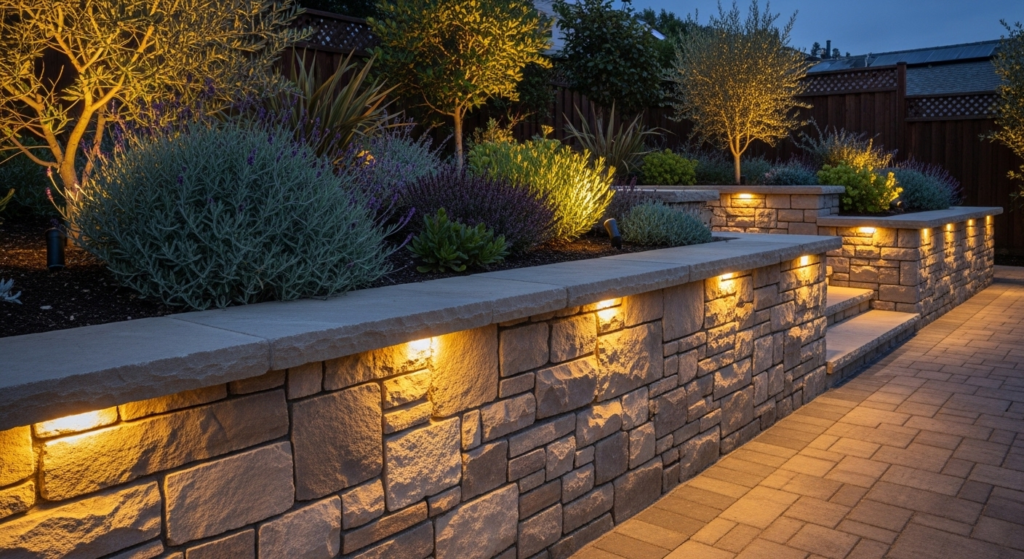
BBP Pavers conducted a site assessment and recommended a tiered natural stone retaining wall system — two walls at different elevations, each 3.5 feet tall, with a planted terrace between them. The design addressed the erosion problem while creating a visually stunning landscape feature.
The project required a building permit, engineered drawings, and careful drainage planning due to the clay soil conditions common in the Lafayette hills. Total project cost was approximately $14,500, which included demolition of an existing timber wall, drainage installation, natural stone construction, and integration with the existing driveway paver system.
The homeowner reported zero erosion issues through the following two rainy seasons and noted a significant increase in their property’s curb appeal. This project illustrates why understanding retaining wall installation cost requires looking at the full scope of work — not just the wall itself.
Frequently Asked Questions About Retaining Wall Installation Cost
How much does it cost to install a retaining wall per linear foot?
The average retaining wall installation cost ranges from $20 to $45 per linear foot, depending on the material, wall height, and site conditions. Timber walls are at the lower end of this range, while natural stone and poured concrete are at the higher end. Labor typically accounts for 40 to 60 percent of the total cost.
Do I need a permit for a retaining wall in California?
In most California cities, including Concord, Walnut Creek, and Lafayette, a building permit is required for retaining walls over 4 feet in height (measured from the bottom of the footing to the top of the wall). Some jurisdictions require permits for walls over 3 feet. Always check with your local building department or ask your contractor before beginning work.
How long does a retaining wall last?
The lifespan of a retaining wall depends heavily on the material and quality of installation. Natural stone walls can last 100 years or more with minimal maintenance. Concrete block and poured concrete walls typically last 50 or more years. Timber walls have the shortest lifespan, usually 15 to 20 years, and require more frequent maintenance.
What is the most cost-effective retaining wall material?
For most homeowners balancing budget and durability, segmental concrete block (also called Allan Block or similar systems) offers the best value. These walls cost between $18 and $30 per square foot installed, last 40 to 60 years, and are available in a wide range of colors and textures. Gabion walls are another cost-effective option, particularly for larger projects.
Can a retaining wall increase my property value?
Yes. A professionally installed retaining wall can increase property value by improving usable outdoor space, enhancing curb appeal, and protecting the property from erosion and water damage. In hillside markets like Lafayette, Orinda, and Moraga, a well-designed retaining wall system is often considered a significant selling point.
Conclusion: Making the Right Investment in Your Property
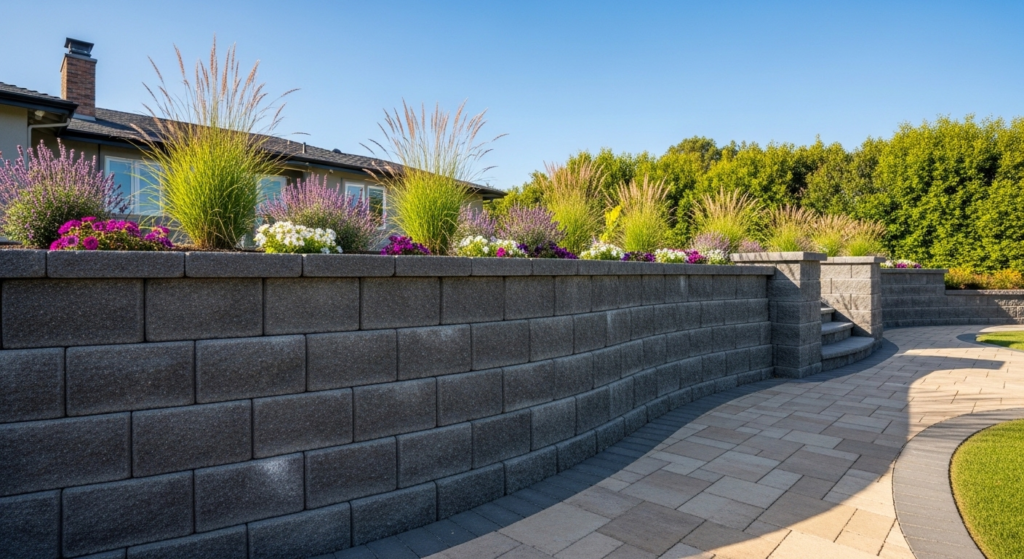
Understanding retaining wall installation cost is about more than finding the lowest price. It is about making a smart, long-term investment in your property’s safety, functionality, and beauty. The right retaining wall — built with quality materials, proper drainage, and professional craftsmanship — will protect your landscape for decades and add real value to your home.
The key takeaways from this guide are clear: material choice is the biggest cost driver, drainage is non-negotiable, permits protect your investment, and hiring a licensed professional is almost always worth the additional cost over DIY for structural walls.
If you are in the Bay Area and ready to move forward with your retaining wall project, BBP Pavers is the team to call. With years of experience serving homeowners in Concord, Walnut Creek, Lafayette, Moraga, Orinda, Fremont, Palo Alto, Atherton, and beyond, BBP Pavers brings expertise, transparency, and craftsmanship to every project.
You can also explore their full range of outdoor services — from artificial turf and pergolas to wood fencing and outdoor lighting — to create a complete outdoor living space that you will enjoy for years to come.
Follow BBP Pavers on Facebook, Instagram, and Pinterest for project inspiration and updates.
Ready to start your retaining wall project in Concord or anywhere in the Bay Area? Request your free, no-obligation estimate from BBP Pavers today. Contact us here or call us at +1 844-497-3321. Our team is available Monday through Friday, 9 AM to 5 PM, and Saturday, 9 AM to 2 PM.
Company Information
BBP Pavers 4918 Clayton Rd, Concord, CA 94521, United States Phone: +1 844-497-3321 Email: bbppavers@gmail.