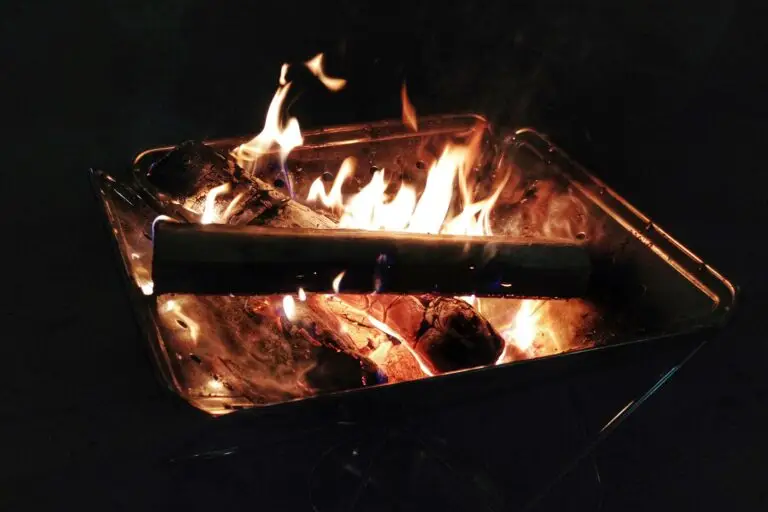
Bay Area Fire Pit: 7 Smart Steps Before Fall Rain
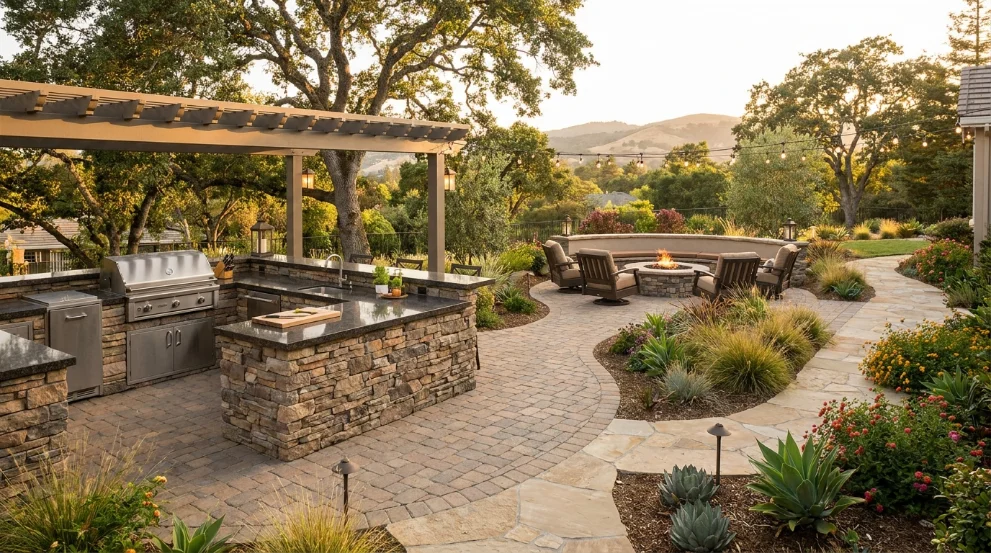
Table of Contents
- Why Is Fall a Good Time to Plan a Fire Pit?
- What Should You Plan Before Installation?
- Where Should a Bay Area Fire Pit Go?
- Should You Choose Gas or Wood?
- How Should You Combine a Fire Pit With an Outdoor Kitchen?
- What Fire Pit Problem Do Homeowners Often Miss?
- How Can Rain Affect a Backyard Project?
- What Could a Finished Backyard Layout Look Like?
- How Do You Maintain a Backyard Fire Feature?
- Frequently Asked Questions
- Do You Need a Permit for a Fire Pit?
- Can You Build a Fire Pit on a Paver Patio?
- Can a Fire Pit and Outdoor Kitchen Share One Backyard?
- What Factors Affect Fire Pit Installation Cost?
- What Should You Ask a Fire Pit Contractor?
Direct Answer: A Bay Area fire pit works best when you plan its location, fuel source, clearances, drainage, utilities, seating, and surrounding hardscape together before installation begins.
Why Is Fall a Good Time to Plan a Fire Pit?
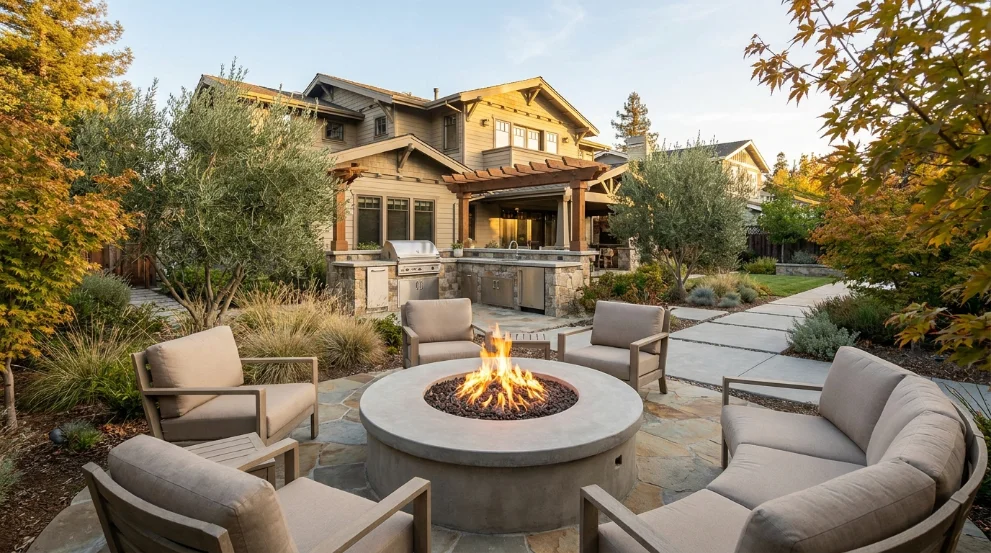
A Bay Area fire pit can become one of the most useful parts of your backyard, especially as evenings become cooler and outdoor gatherings move later into the season.
Fall also gives you a reason to look at the entire backyard before the rainy season arrives. Instead of choosing a fire feature first and figuring out the rest later, you can plan the patio, seating, drainage, utilities, and outdoor kitchen as one connected space.
That approach matters in the Bay Area because properties vary significantly. A backyard in Concord may have different space and drainage challenges from a property in Palo Alto, San Mateo, or San Francisco.
Planning early also gives you time to resolve questions about fuel type, placement, clearances, and utility access before construction begins.
If you are considering a backyard upgrade, contact BBP Pavers to discuss your outdoor living plans before installation starts.
What Should You Plan Before Installation?
The most important planning decisions involve location, fuel, utilities, drainage, seating, and the relationship between the fire feature and the rest of your hardscape.
Start With the Backyard Layout
Look at how you already use the space. Where do people walk? Where do guests naturally gather? Which areas receive the most evening use?
The answers can help determine whether the fire pit should sit near the center of a patio, along one edge, or within a separate outdoor living zone.
Think About Utilities Before Hardscape
Gas fire features may require fuel-line planning, while outdoor kitchens can introduce gas, electrical, water, or drainage requirements.
Coordinate those elements before the finished pavers or other hardscape materials go down. Moving utilities after construction can disrupt completed surfaces and create unnecessary work.
Plan Drainage at the Same Time
Water needs a clear path away from the finished patio and surrounding structures. A new fire pit or outdoor kitchen can change how water moves across an existing yard.
Good grading and drainage planning help protect the surrounding hardscape during wet weather.
Where Should a Bay Area Fire Pit Go?
The best location for a Bay Area fire pit gives people enough room to gather while keeping normal traffic routes open.
Start by looking at the relationship between the fire feature and the house. A direct route from the kitchen to the outdoor living area can make entertaining easier, but the fire pit should not become an obstacle between the two spaces.
Next, consider existing walls, fences, trees, structures, landscaping, and other features. The selected fire system will also have specific clearance requirements that you need to verify before installation.
In Walnut Creek, for example, a larger backyard may allow a fire pit to anchor a dedicated seating area. A smaller Palo Alto property may benefit from a more compact fire feature that works within an existing patio.
The goal is not to find an unused corner. The goal is to create a useful destination within the backyard.
Should You Choose Gas or Wood?
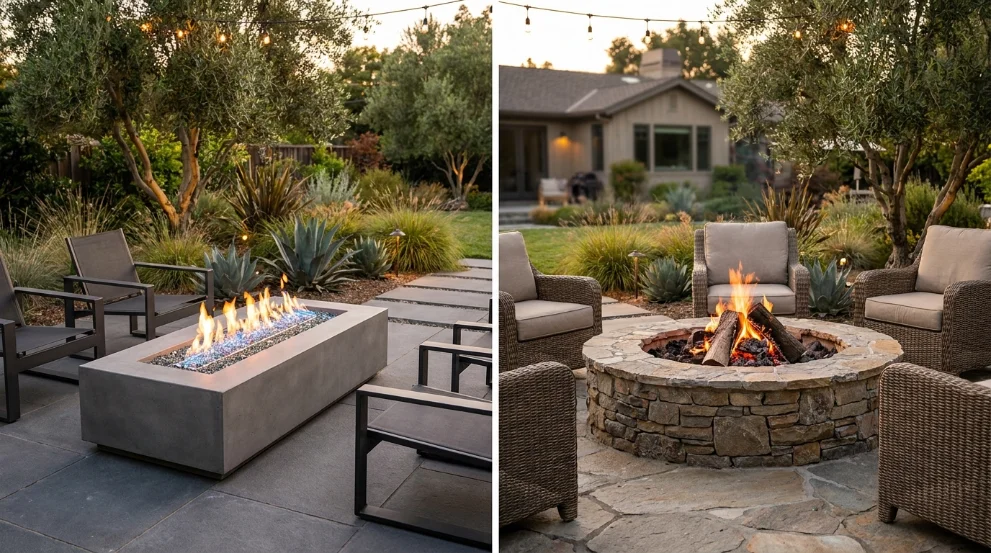
Gas and wood-burning fire pits create different experiences, so your choice should reflect how you plan to use the feature.
| Fire Pit Type | Best For | Planning Consideration |
|---|---|---|
| Gas Fire Pit | Quick ignition and controlled operation | Fuel connection and system requirements |
| Wood-Burning Fire Pit | Traditional fire experience | Smoke, firewood, ash, and clearance considerations |
| Fire Bowl | Compact outdoor spaces | Placement and surrounding seating |
| Built-In Fire Pit | Permanent hardscape integration | Base, materials, drainage, and construction details |
When Does Gas Make More Sense?
A gas system can work well when you want a predictable flame and quick operation. It can also simplify the experience for homeowners who do not want to store and handle firewood.
Fuel routing still requires careful planning. The installation should account for the selected appliance and applicable requirements rather than treating the gas connection as an afterthought.
When Does Wood Make More Sense?
Wood-burning systems appeal to homeowners who want the traditional sound, smell, and appearance of a real wood fire.
They also require more hands-on management. You need space for firewood, a plan for ash, and careful attention to fire safety and surrounding clearances.
How Should You Combine a Fire Pit With an Outdoor Kitchen?
A fire pit and outdoor kitchen can share the same backyard when each feature has a clear purpose and enough space around it.
The kitchen is a work zone. You need room to cook, prepare food, open doors, move between appliances, and serve guests.
The fire pit is a social zone. People need comfortable seating, clear circulation, and an unobstructed view of the flames.
Keeping those functions separate does not mean separating them visually. A paver patio can connect the two areas and create one cohesive outdoor living environment.
Build the Kitchen Around Your Actual Routine
You do not need every outdoor appliance. Start with the way you cook and entertain.
- Grill: Place the main cooking appliance where you can reach it without blocking circulation.
- Preparation surface: Keep usable counter space next to the cooking area.
- Storage: Add outdoor-rated storage where it reduces unnecessary trips inside.
- Refrigeration: Consider it when drinks and ingredients need to stay close to the cooking area.
- Seating: Use counter seating when you want guests close to the cooking zone.
- Lighting: Include practical lighting for cooking and safe movement after sunset.
For more information, see BBP Pavers outdoor kitchens and BBQ islands.
What Fire Pit Problem Do Homeowners Often Miss?
The most overlooked problem is usually the space surrounding the fire feature.
A fire pit may look excellent in a design rendering but feel cramped once chairs, people, walkways, and landscaping occupy the actual space.
Give the seating area enough room for people to move naturally. Keep access routes open and think about how the space will function when several guests are standing and sitting at the same time.
Drainage can create another problem. Poor grading may allow water to collect near the fire pit, outdoor kitchen, or paver patio.
Use This Planning Check
- Confirm the required clearance for the selected fire feature.
- Review the location of nearby structures and landscaping.
- Plan utility routes before installing finished hardscape.
- Check how rainwater will move through the area.
- Leave enough space for seating and circulation.
- Choose exterior materials suited to the environment.
Before hiring a contractor, ask a simple question: How will the fire pit, drainage, utilities, seating, and surrounding hardscape work together after installation?
How Can Rain Affect a Backyard Project?
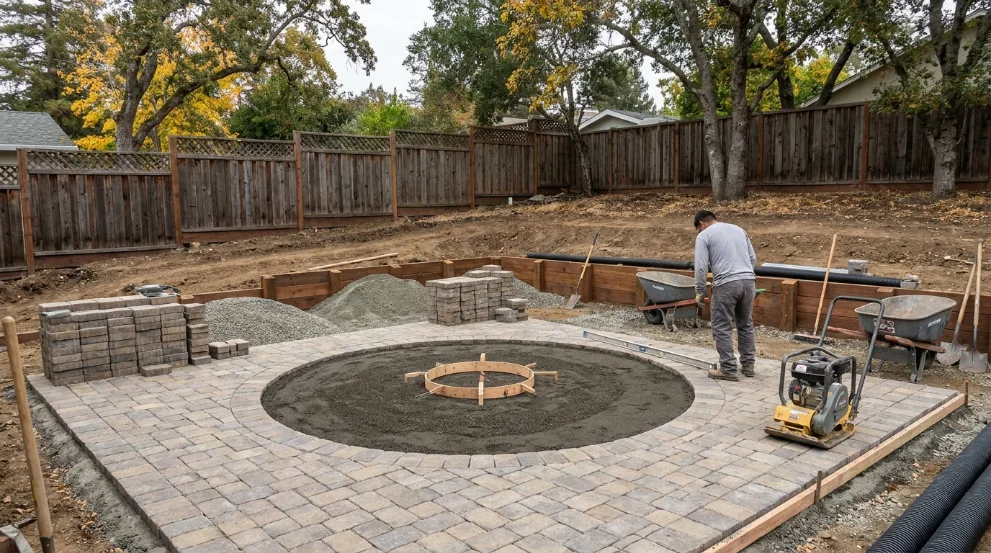
Rain can affect excavation, grading, base preparation, material handling, and the overall sequence of outdoor construction.
That does not mean every project must stop whenever the forecast changes. It does mean the construction plan should account for weather and site conditions.
Paver installations require particular attention to base preparation and drainage. Water should not become trapped beneath or around the finished surface.
A fire pit and outdoor kitchen add more planning variables because utility routes, structural elements, hardscape, and drainage need to work together.
Starting the design before the rainy season gives you more time to identify these dependencies instead of making decisions under pressure.
What Could a Finished Backyard Layout Look Like?
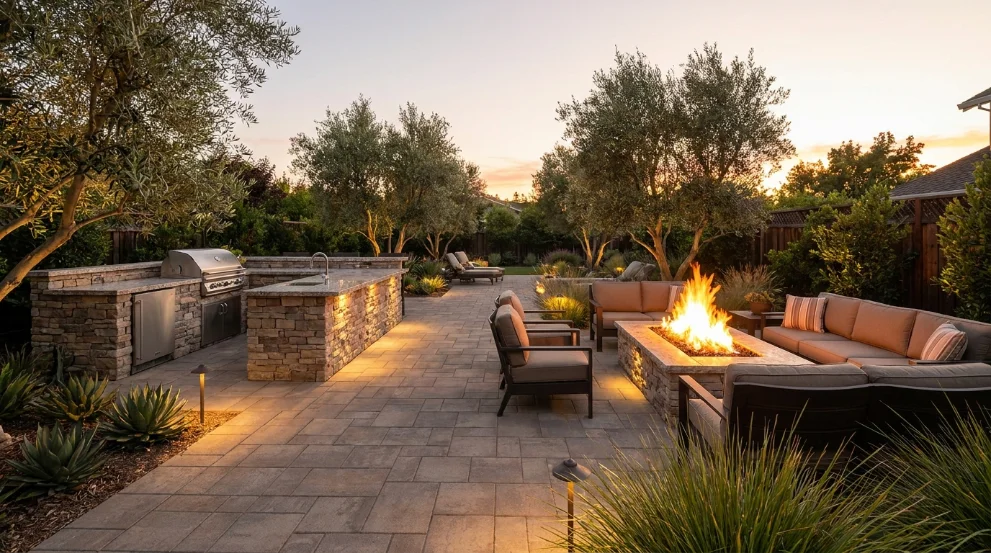
Consider a hypothetical Bay Area homeowner with an existing patio that gets little use after sunset.
The homeowner wants a gas fire feature, a compact BBQ island, and comfortable seating for family gatherings.
One possible approach would place the outdoor kitchen closer to the house and position the fire pit farther into the yard as a separate gathering zone.
The paver patio would visually connect both areas while maintaining a clear walking route between the house, kitchen, and seating.
Before construction, the design team would review drainage, utilities, clearances, material transitions, and access.
This example is hypothetical. It does not represent a named BBP Pavers customer or a fabricated testimonial.
How Do You Maintain a Backyard Fire Feature?
Maintenance depends on the fire feature, fuel source, materials, and manufacturer requirements.
Gas Fire Pit Maintenance
Keep the burner area clean and inspect the system according to the manufacturer’s instructions. Watch for damage, unusual flame behavior, or other signs that require professional attention.
Wood-Burning Fire Pit Maintenance
Remove ash as needed and keep the surrounding area free from combustible debris. Store firewood in a suitable location away from areas where it could interfere with safe circulation.
Protect the Surrounding Hardscape
Keep the patio and surrounding surfaces clean. Address drainage problems promptly if water begins collecting near the installation.
Regular care is much easier when the original installation leaves proper access around the fire feature.
Frequently Asked Questions
Do You Need a Permit for a Fire Pit?
Permit requirements vary by location, fire feature, fuel source, construction method, and local jurisdiction. Do not assume that an outdoor fire pit automatically avoids permitting requirements. Confirm the rules that apply to your property and selected system before construction begins.
Can You Build a Fire Pit on a Paver Patio?
A fire pit can be incorporated into a paver patio when the design accounts for the fire feature, surrounding materials, base preparation, drainage, and required clearances. The fire pit should become part of the patio design rather than an object added after the patio is finished.
Can a Fire Pit and Outdoor Kitchen Share One Backyard?
Yes. A fire pit and outdoor kitchen can work together when the layout creates separate cooking and gathering zones. The kitchen should support food preparation and serving, while the fire pit should provide comfortable seating and clear circulation.
Is a Gas Fire Pit Better Than a Wood-Burning Fire Pit?
Neither option works better for every homeowner. Gas provides convenient operation and a controlled flame, while wood creates a more traditional fire experience. Your preferred experience, available space, fuel requirements, and local restrictions should guide the decision.
How Much Maintenance Does a Fire Pit Need?
Maintenance depends on the type of fire feature and materials. Gas systems need inspection and care around the burner and ignition components, while wood-burning systems also require ash and firewood management. Always follow the manufacturer’s maintenance and operating instructions.
What Factors Affect Fire Pit Installation Cost?
Project requirements can vary based on the fire pit type, fuel source, site preparation, utility connections, hardscape integration, drainage, materials, accessibility, and overall project complexity. A site evaluation provides a more useful scope than relying on a generic number.
What Should You Ask a Fire Pit Contractor?
Ask how the contractor will handle placement, clearances, drainage, utility coordination, materials, installation sequencing, and final inspection. Also ask how the fire pit will integrate with your existing or planned patio, outdoor kitchen, walkways, and landscaping.
Plan Your Bay Area Backyard Before Fall Rain
A successful backyard fire feature starts with planning rather than installation. The location, fuel source, seating, drainage, utilities, hardscape, and outdoor kitchen should all support the way you want to use the space.
If you are considering a Bay Area fire pit, planning before the rainy season gives you more time to make those decisions carefully.
BBP Pavers can help you connect the fire feature with the rest of your outdoor living design. Explore the fire pit service or contact BBP Pavers to discuss your project.
You can also review the company’s Bay Area service areas to see whether your location is covered.